|
| Xinjiang Today |
| Reflections on a year of medical assistance | |
|
|
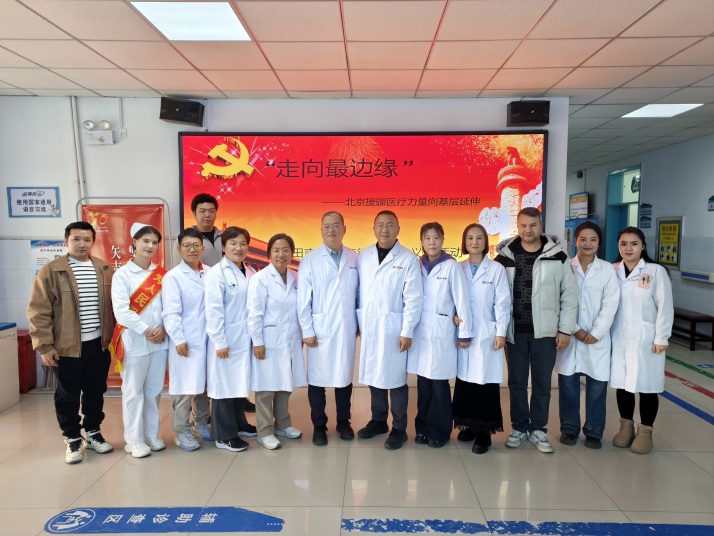 Wang Huiming and his colleagues pose with locals after conducting free medical consultations in Lisikui Town, Hetian (Hotan) Prefecture, on December 10, 2025 (COURTESY PHOTO)
On May 20, 2025, I arrived in Hetian (Hotan) to begin a one-year assignment as director of the Surgery Department at the Hetian Prefectural Hospital for Infectious Diseases. Dispatched by my hospital in Beijing, I carried with me the quiet concern and reluctant farewells of my family.
My first impressions of Hetian remain vivid. The Yurungkash and Karakash rivers, fed by the snowmelt of the Kunlun Mountains, have flowed across this land for thousands of years. Fine dust from the Taklimakan Desert, China's largest desert, drifted through the air, filtering the sunlight and casting a hazy glow over the city. Standing there, I felt both the vastness of the region and the significance of the mission ahead. 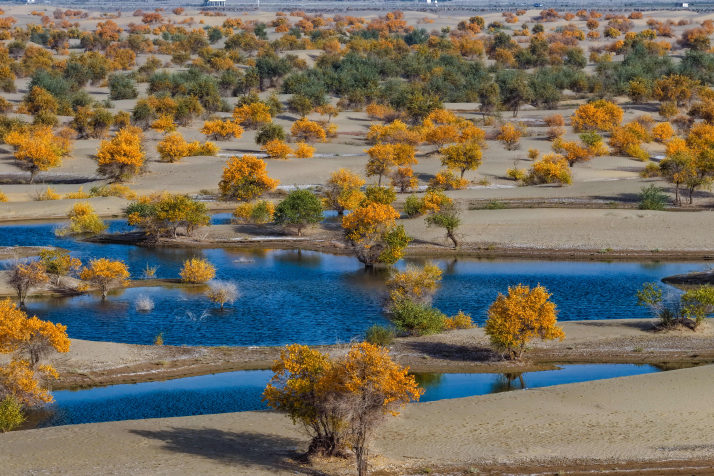 An aerial drone photo taken on October 20, 2025 shows desert poplars in Hetian (Hotan) Prefecture (XINHUA)
Why I came to Xinjiang On the drive from the airport to our residence, I noticed many buildings adorned with an emblem featuring the Temple of Heaven, a renowned heritage site in Beijing. Our team leader explained that these projects are part of Beijing's assistance initiatives. Additionally, city buses displayed "Beijing Aid to Xinjiang" on their back panels and even local students' uniforms sported the distinct Temple of Heaven emblem. Looking around, I found myself asking a simple question: Why have I come to Xinjiang? Before I left Beijing, colleagues who had previously served here often spoke to me about Hetian. It was described as a vast frontier region home to more than 2 million people, where quality medical services remain in high demand. As a physician, participating in the paired assistance program, contributing to healthcare development in Xinjiang and helping strengthen ethnic unity is both a responsibility and an honor. Ever since I came to Xinjiang, I've been thinking about what I can truly do for local doctors and patients. Medical assistance to Xinjiang is about far more than treating illness. It is also about enhancing solidarity among ethnic groups, improving public wellbeing and fostering a stronger sense of community for the Chinese nation. Over the past year, through outpatient consultations, surgical procedures, training programs, free medical outreach events and visits to some of the region's most remote communities, I have gained a profound understanding of the true meaning of medical assistance. Bringing expertise to the grassroots Throughout my service in Xinjiang, I carried out routine outpatient services, ward rounds and surgical consultations. I did this while actively participating in hospital management and contributing recommendations for departmental development and talent cultivation. Given the hospital's patient profile—primarily tuberculosis, brucellosis and fractures with concomitant infections—our medical team from Beijing focused on enhancing the standardization of diagnosis and treatment. We started by systematically explaining disease pathogenesis, clinical features and classification criteria to local doctors, while strictly defining surgical indications. Before each surgery, we carefully evaluated the patient's conditions and developed detailed plans based on his or her imaging and anatomy. We also shared key surgical exposure techniques and provided clear post-op rehabilitation guidelines tailored to each case. One of the most meaningful achievements was performing the hospital's first lumbar vertebral biopsy under local anesthesia. During the procedure, I provided hands-on instruction to local doctors, explaining technical details alongside potential risks and complications. Today, my counterparts in Xinjiang can perform the surgery independently, filling an important clinical gap and providing a reliable pathological basis for diagnosing spinal infections. Yet healthcare extends far beyond hospital walls. The Reaching the Most Remote Communities initiative brought medical services directly to villages across Hetian. These free clinics extended vital healthcare benefits to underserved populations with limited access to specialized treatment. During one outreach visit to Yutian County, we met a teenage student born with congenital syndactyly that had resulted in hand deformities and significant emotional distress. We immediately contacted specialists in Beijing, provided an on-site consultation and coordinated communication between local authorities and medical institutions in Beijing to facilitate future treatment. Witnessing the family's transformation, from anxiety and uncertainty to understanding and renewed hope, was one of the most rewarding moments of my year in Xinjiang. In addition to treating patients, I conducted training sessions at several county-level hospitals across Hetian, covering the diagnosis of common orthopedic conditions and basic trauma management. More than 200 local medical professionals participated in these programs. 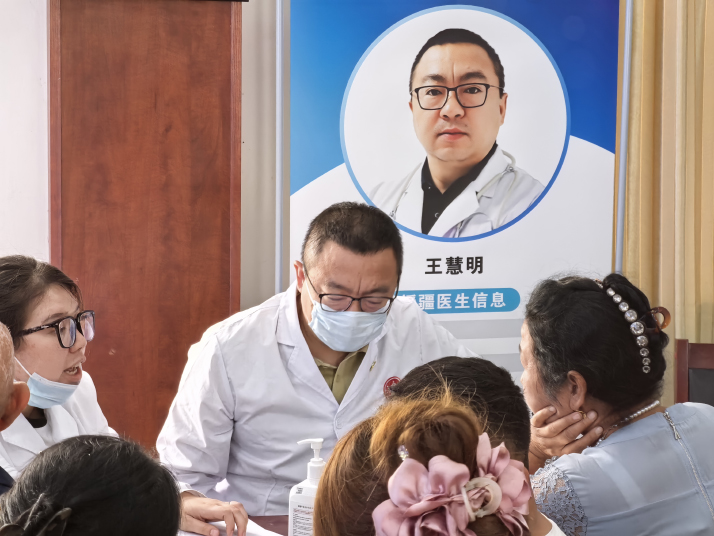 Wang Huiming (second left) provides a free medical consultation in Tuogerigazi Township in Yutian County, Hetian (Hotan) Prefecture, on July 1, 2025 (COURTESY PHOTO)
A year well spent With my year of service in Xinjiang coming to an end, I've been thinking a lot about what I'm leaving behind. On a professional level, it's the knowledge and skills we've shared. Today, local doctors can diagnose and treat many common orthopedic conditions independently, ensuring that patients will still receive quality care even when I'm gone. On a personal level, it's the friendships built through hard work and mutual support. The warmth shown by the hospital leadership and local staff, through countless acts of kindness, has truly made me feel at home far from Beijing. Equally precious are the bonds formed with my teammates from Beijing on this assistance mission. For more than 300 days, 15 of us lived and have worked together nearly 4,000 km from home, supporting one another through challenges and triumphs alike. The friendships we have forged are among the most rewarding aspects of this journey. And yet, despite the fulfillment of a completed mission, I find it difficult to say goodbye. Should the paired assistance program call upon me again, and should the people of Hetian still need my help, I will gladly return. I will bring with me the same commitment, the same sense of responsibility and the same determination to contribute to the continued development of healthcare services in Xinjiang. For me, the story of aiding Xinjiang is not ending; it is simply entering its next chapter. The author is a physician at Beijing Geriatric Hospital and member of Beijing's medical assistance program to Xinjiang Comments to taoxing@cicgamericas.com |
|
||||||||||||||||||||||||||||
|