|
| Xinjiang Today |
| Xinjiang charts its course for the 15th Five-Year Plan | |
|
|
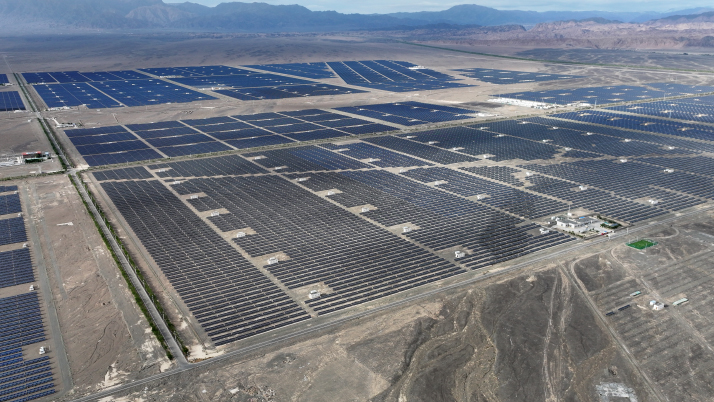 The Shichengzi Photovoltaic Industrial Park in Hami on May 24 (VCG)
The year 2026 marks the start of China's 15th Five-Year Plan period (2026-30). In March, the National People's Congress, the country's top legislature, adopted the Outline of the 15th Five-Year Plan for National Economic and Social Development, setting out the country's development blueprint for the next five years.
Since 1953, China has used five-year plans to set long-term development goals and guide major projects, productive capacity distribution and key economic balances. Within this national framework, each provincial-level region draws up its own plan based on national priorities and local conditions, including its resource endowments, stage of development and strategic role in national development. As a major energy and resources hub in northwest China and a key gateway for the country's opening up, Xinjiang Uygur Autonomous Region plays an indispensable role in China's modernization drive. During the 14th Five-Year Plan period (2021-25), its GDP and per-capita residential disposable income grew by an annual average of 5.9 percent and 6.6 percent, respectively, placing the region among the country's leaders on both measures. As the new five-year plan period begins, charting a sound course is critical to Xinjiang's long-term stability and high-quality development. 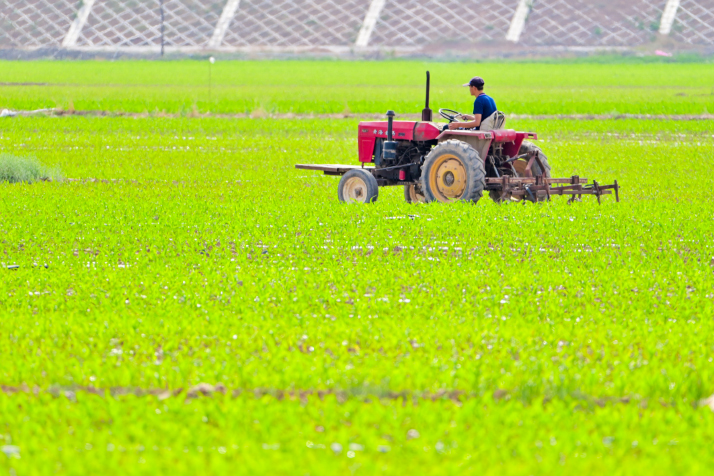 A farmer drives a tractor through a cornfield in Hutubi County, Changji Hui Autonomous Prefecture, on May 4 (VCG)
Five strategic roles In September 2025, President Xi Jinping led a central delegation to Xinjiang for celebrations marking the 70th anniversary of the founding of the autonomous region. On September 24, after hearing work reports from the regional Communist Party of China (CPC) committee and the regional government, Xi highlighted five strategic roles for Xinjiang: a golden channel across the Eurasian continent and a gateway for opening up to the west, a strategic pivot for fostering a new development paradigm, a strategic base of China's energy resources, a national base for high-quality agricultural and livestock products and a strategic barrier for safeguarding national geopolitical security. These roles will guide Xinjiang's development during the 15th Five-Year Plan period. First, Xinjiang is China's largest provincial-level region by land area. It also has the country's longest land border and borders more countries than any other provincial-level region. As China has increasingly opened up, partly due to the advance of cooperation under the China-proposed Belt and Road Initiative (BRI), Xinjiang has transformed from a relatively closed inland region into a gateway for the country's opening up to the west. The BRI, consisting of the Silk Road Economic Belt and the 21st-Century Maritime Silk Road, aims to boost connectivity along and beyond the ancient Silk Road routes. During the 14th Five-Year Plan period, Xinjiang's foreign trade surged from 240 billion yuan ($35.2 billion) in 2022 to 520.37 billion yuan ($76.3 billion) in 2025, when its year-on-year growth rate ranked first nationwide. The national 15th Five-Year Plan calls for expanded trade and investment cooperation with BRI partner countries, along with broader cooperation in green development, AI, the digital economy, healthcare, tourism, agriculture and meteorology. In keeping with the aims outlined in the national plan, the region will reinforce its role as a golden channel across the Eurasian continent and a gateway for opening up to the west, while advancing its high-quality development as the core area of the Silk Road Economic Belt. Second, Xinjiang is deepening economic and trade ties with neighboring countries while integrating more closely into the unified national market. The region is also attracting businesses to invest and establish operations. Building on this momentum, Xinjiang is pursuing a three-pronged industrial strategy: upgrading traditional sectors, strengthening industries with distinctive local advantages and cultivating emerging industries and industries of the future. Efforts are underway to transition its oil and gas, coal and mining sectors toward higher-value, smarter and greener development. This strategy aims to bolster the nationwide competitiveness of traditional industries, including textiles, apparel and cultural tourism, while cultivating next-generation growth engines such as advanced equipment manufacturing, the low-altitude economy and new materials. Furthermore, the focus is on securing global leadership in frontier sectors like AI, biomanufacturing as well as hydrogen and its derivatives. Third, Xinjiang is rich in natural resources and is accelerating efforts to translate this wealth into broader development and economic gains. During the 14th Five-Year Plan period, the region contributed nearly a quarter of the nationwide increase in energy output, making it a key driver of growth in China's energy production. For six consecutive years until 2025, Xinjiang has transmitted more than 100 billion kilowatt-hours of electricity annually to 22 other provincial-level regions across the country, with green power accounting for one third of the total. The environmental benefits are equivalent to cutting carbon dioxide emissions by 240 million tons a year or planting 24 million hectares of forest. During the 15th Five-Year Plan period, Xinjiang aims to strengthen its role as a strategic base of national energy security and stand at the forefront of China's energy transition. Fourth, Xinjiang serves as a major national base for high-quality agricultural and livestock products. During the 14th Five-Year Plan period, its grain output reached record highs, with yield per unit area ranking first nationwide for two consecutive years since 2024. The region accounted for 18.7 percent of the nationwide increase in grain output, more than any other provincial-level region. Its cotton output exceeded 90 percent of the national total for four consecutive years until 2025. Xinjiang also ranks second nationwide in beef and mutton production, leads northwest China in aquatic output, and supplies 14 million tons of premium fruit and nuts each year. During the 15th Five-Year Plan period, the region will build on these strengths to develop leading national bases for grain, fruit, livestock products and aquatic products, while expanding value-added processing. The aim is to bring more high-quality Xinjiang products to consumers nationwide while enabling farmers and herders to move further up the value chain and receive a greater share of the benefits. Fifth, social stability and lasting peace and security in Xinjiang are of overarching importance to overall reform, development and stability in China. During the 15th Five-Year Plan period, the region will keep stability at the top of its agenda, better balance development and openness with security and work proactively to prevent and defuse risks across sectors. This will create a stable and harmonious environment where people can live and work in peace and businesses can invest and thrive. Forging a stronger sense of community for the Chinese nation will remain central to Xinjiang's agenda. By expanding culture and tourism, among other initiatives, the region will promote greater interaction, mutual understanding and integration among people of all ethnic groups, bringing them closer together like the seeds of a pomegranate as they build their shared home. Unlocking south Xinjiang's potential The persistent development gap between north and south Xinjiang, geographically demarcated by the Tianshan Mountains, remains a major constraint on Xinjiang's overall progress. Characterized by the expansive Taklimakan Desert, China's largest desert, and the rugged Pamir Plateau, the southern part faces severe natural constraints. In response, regional authorities have implemented targeted initiatives and made notable strides in improving local quality of life. At a press conference on May 9, Erkin Tuniyaz, Deputy Secretary of the CPC Xinjiang Uygur Autonomous Regional Committee and Chairman of the regional government, elaborated on the outcomes, drawing on his personal experience. Having previously worked in Hetian (Hotan) Prefecture, one of the underdeveloped prefectures in south Xinjiang, he described the area's transformation as extraordinary. South Xinjiang once accounted for 2.73 million of Xinjiang's more than 3 million residents living in poverty. Today, those lifted out of poverty live in new homes with access to natural gas and running water, while paved roads reach their doorsteps. Local communities now feature full 5G and gigabit broadband coverage. Residents also benefit from 15 years of free education and free health check-ups, while all township-level health centers and village clinics meet standardization requirements. Over the next five years, efforts will be concentrated on tackling south Xinjiang's most pressing development challenges and ensuring that the gains are broadly shared. This will include advancing major infrastructure projects such as the Kuitun-Dushanzi-Kuche (Kuqa or Kucha) Expressway. Spanning 392 km and with an estimated investment of over 70 billion yuan ($10.3 billion), the expressway is scheduled for completion in 2032. Once operational, it will reduce travel time between Kuitun in north Xinjiang's Yili (Ili) Kazak Autonomous Prefecture and Kuche in south Xinjiang's Aksu Prefecture from 14 hours to just four hours. By leveraging its strategic location, natural resources, labor pool and state policy support, south Xinjiang aims to unlock its immense economic potential. These compounding advantages will drive the creation of signature products, the cultivation of flagship enterprises and the establishment of robust, locally anchored industrial clusters. Improving wellbeing for all Delivering benefits to the people lies at the heart of Chinese modernization. During the 15th Five-Year Plan period, Xinjiang will continue to improve essential public services and strengthen the social safety net, enabling people of all ethnic groups to benefit more fully from development. Employment is fundamental to people's wellbeing. The regional government has made job creation and income growth a top priority in industrial planning, project implementation and investment attraction. During the 15th Five-Year Plan period, Xinjiang aims to create more than 470,000 new urban jobs each year on average. Xinjiang will improve education at every level by expanding access to quality basic education, raising standards and capacity in higher education, and strengthening vocational education and its integration with industrial development. The region aims to increase the average years of schooling for the working-age population to 11.7 by 2030 from 11.3 in 2025. It will also strengthen primary healthcare services, with the goal of raising life expectancy to 79 years by 2030 from 77 years in 2025. Meanwhile, Xinjiang will further improve its multi-tiered social security system and maintain basic medical insurance coverage at around 95 percent. In the housing sector, the region will optimize its supply system by integrating market-based provision with robust affordable housing support. Concurrently, it will continue reinforcing rural residences to enhance their resilience against earthquakes and other natural disasters. By 2030, more than 65 percent of residents are expected to live in urban areas. "The goals and tasks are now clear. We have the determination, confidence and ability to fulfill the objectives set out in the 15th Five-Year Plan and deliver results that live up to the expectations of the CPC Central Committee and people of all ethnic groups across Xinjiang," Erkin said at the press conference. With a clear blueprint for the next five years, Xinjiang is now focused on turning its plans into results that will stand the test of time and benefit its people. Comments to liangxiao@cicgamericas.com |
|
||||||||||||||||||||||||||||
|