image
Advance Search      RSS
image
Register | Subscribe
Home
Nation World Business Science/Technology Photo Gallery Arts & Culture 2008 Olympics Health
Print Edition
Current Issue
· Table of Contents
· Editor's Desk
· Previous Issues
· Subscribe to Mag
Business Category
Subscribe Now >>
Expert's View
World
Nation
Business
Finance
State of the Market
Legal-Ease
North American Report
Forum
Government Documents
Arts & Culture
Expat's Eye
Health
Science/Technology
The Good Life
Books
Movies
Backgrounders
2008 Olympics
Photo Gallery
Blogs
image
Reader's Service
E-mail us
RSS Feeds
PDF Edition
Web-magazine
Reader's Letters
Make Beijing Review your homepage
Hot Links
· China.org.cn
· Xinhua News Agency
· People's Daily
· China Daily
· China Radio International
· CCTV
· CHINAFRICA
North American Report Home> North American Report
UPDATED: December-25-2006 Web Exclusive
Remembering a Raped City
A Western scholar documents a dark moment in the history of China and Japan
By CHEN WEN

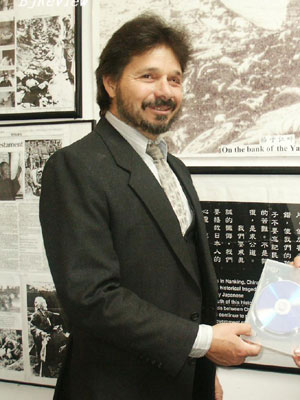
According to Joseph, some local viewers who went to watch the movie several times said that they were shocked by the atrocities shown in the movie and they really wanted to know more about this historic period.

Currently, the film Rape of Nanking is available in English and Chinese. The Chinese edition is narrated by Haiyan Wu, a co-producer of this film who once worked as a journalist for China Central Television.

In addition, Joseph and his team are working on a Japanese version, planning to put it online for free so that more "Japanese people can learn the truth about the Rape of Nanking."

Joseph told Beijing Review that he has been contacted by two "film-festival" organizers in Japan who would like to show his film in Japan next summer. And he has also been contacted by people who would like him to create 100,000 DVDs of this film in Japanese.

Joseph emphasized that in making this film, he did not mean to create hatred, but to "educate and to bring peace." Forgiveness, as he said, is a form of education.

But he did encounter attacks and threats from some Japanese who considered the film as a kind of Chinese propaganda and who believed that it would bring shame on Japan.

In response to those unfriendly reactions, Joseph said, "It is those Japanese who lie about the past who make Japan look shameful. It is shameful to lie. It is honorable to tell the truth."

He believed that the best way for China and Japan to deal with both their past and current relations is to educate the children about the past and to forgive the past. "Never forget but forgive," Joseph said, adding, "Education and forgiveness is the true path to peace."

(Reported from New York)

   Previous   1  2  Next  


Top Story
- China, ASEAN Sign Trade Agreement
- Rosy Outlook for China-ASEAN Ties in 2007
- Deconstructing An Oil Monopoly
- Energy Jitters
- Why Is the Income Gap Widening?
Related Stories
- Abe's Political Views
- Chilly Ties Persist
- A Break in the Ice?
 
More North American Report
- All in the Family
- Doing What's Best for the Children
- No Midas Touch for 'Golden Flower'
- Remembering a Raped City
- A Serious Atmosphere
- A Chinese Emperor--and His Maker--Comes to New York
Most Popular
About BEIJINGREVIEW | About beijingreview.com | Rss Feeds | Contact us | Advertising | Subscribe & Service | Make Beijing Review your homepage
Copyright Beijing Review All right reserved