Responding to surging international oil prices, the National Development and Reform Commission (NDRC) sharply increased the prices of gasoline and diesel oil twice from March to May this year, bringing a shock to the whole society. The latest adjustment on May 24 raised the price of refined oil products by over 10 percent. Now, people are not only worried about the impact of the two price adjustments. They are more concerned about the prices of gasoline and diesel oil after China fully opens the retail and wholesale markets for refined oil products at the end of 2006.
Recently, the NDRC told the media that the price of refined oil products will follow the international market, which is an inevitable trend. Some experts believe it probably means the state will speed up the reform of the price of refined oil products and there may be further price increases before the end of this year.
After the two price adjustments, those who own private cars are among the first to feel the heavy burden. Some are reducing the frequency of car use and others are thinking of selling their cars. For those who were planning to buy cars, the high fuel prices made them flinch. A recent online survey shows that 43.4 percent of consumers polled have decided to suspend car purchases, 23.9 percent planned to give up their idea of buying a car, and only 23 percent said they were not affected by the price increases.
Auto manufacturers were also struck by the rise in fuel prices. Since the beginning of this year, when the consumption tax was adjusted and the limitations on small gasoline engines were lifted, many middle- and top-ranked auto brands have been struggling to change their products. For them, the increased prices of gasoline and diesel oil undoubtedly made the situation worse. Now SUV manufacturers throughout the country are encountering a severe test. Large manufacturers like Great Wall Motor Co. Ltd. and Zhongxing Automobile Co. Ltd. have been looking for overseas markets, while small companies with a single product are likely to be acquired or go out of business.
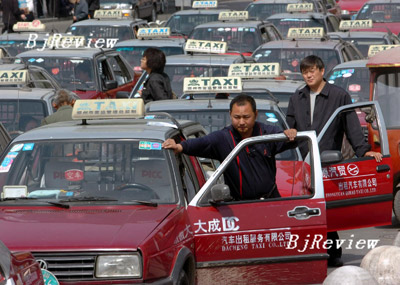
The transportation sector made the quickest and most direct reaction to the price increases. On April 10, the Ministry of Railways announced an increase in the average price of railway cargo transportation nationwide by 0.0044 yuan per ton-kilometer. On the same day, the Civil Aviation Administration of China issued a notice lifting the fuel surcharge for domestic airline passengers from 20 yuan to 30 yuan per person if the distance traveled is within 800 km. The surcharge for distances of over 800 km was increased from 40 yuan to 60 yuan per person. Meanwhile, ocean shipping and highway transportation companies also made adjustments to their transportation fees. Some cities increased taxi fares.
The deep impact of high fuel prices on the manufacturing sector or the economy as a whole may be visible in about half a year or a year, experts say. The influence is inevitable, because the increase in fuel prices leads to an increase in transportation and manufacturing costs. Now, many experts have begun to worry that there may be a new round of cost-push inflation, which will sooner or later affect the exports of Chinese manufactured products and put more pressure on export-oriented enterprises.
According to the World Bank, if the price of crude oil rises by $10 per barrel and the increase lasts for one year, the growth rate of the world economy will be reduced by 0.5 percent and that of the developing countries will be cut by 0.75 percent. Although in recent years the rise in oil prices did not have a great impact on China's GDP growth-in 2004 the international oil price rose by $10 per barrel, causing a 0.4 percent reduction in China's GDP growth rate-in the coming years, when domestic price of refined oil products completely follows the international market, an increase in oil prices will surely exert a bigger influence on the growth of Chinese economy.
|