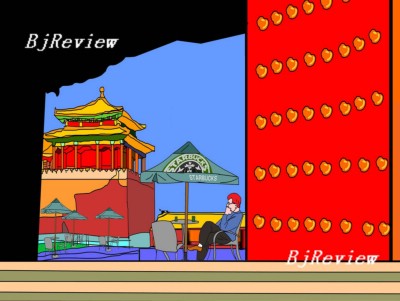
As the symbol of China's feudal reign during the Ming and Qing dynasties (1368-1911), Beijing's Forbidden City represents all that is rich and creative about China's history and ancient architecture. And because of that Rui Chenggang, an anchorman at China's national TV broadcaster's English service, is not happy to have a shop of coffee giant Starbucks inside the hallowed grounds of the country's most famous building complex. In fact, Rui was so incensed that he fired off an e-mail of complaint to the CEO of Starbucks, saying that the company's presence in the Forbidden City damages China's historical image and should be removed immediately. The protest posted on Rui's blog must have touched a nerve as he received over 500,000 hits in a matter of days, igniting a huge debate.
Most netizens opposed a Starbucks in the Forbidden City, saying that while exchanges should be encouraged, not all aspects of different cultures can be thrown into the blender. Some comments said it was an insult for this great symbol of China's magnificent ancient civilization to be lowered in tone by a Starbucks outlet.
Rui stressed the protection of the integrity of cultural and historical heritage over the more commercial aspect of providing tourists with a place to eat and drink in the palace.
Starbucks argued that they showed no disrespect for China's traditional culture and have no intention of taking advantage of the business location. In a reply to Rui's protesting e-mail, President and CEO of Starbucks Jim Donald emphasized that Starbucks was sensitive to the location where this branch was. "When Starbucks was invited by museum officials to open a store six years ago, we did so with great sensitivity to, and respect for, the historic and cultural heritage of the Forbidden City. We have shown and will continue to show our respect for local history, culture and social customs, and have made serious efforts to fit in with the environment of the Forbidden City," he said.
|