|
 |
|
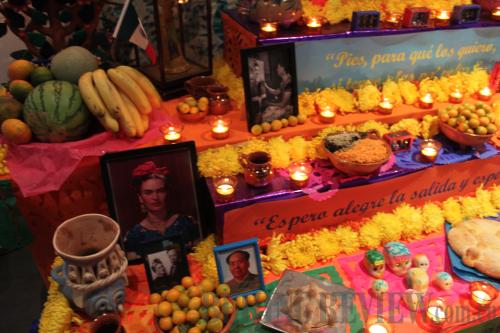
EYE-CATCHING ALTAR: An altar is decorated colorfully with marigolds, bread, sugar skulls and portraits to celebrate the Day of the Dead at the Mexican Embassy in Beijing on November 2 (YU YAN) |
The Mexican Embassy in Beijing celebrated the Day of the Dead on November 2.
The Day of the Dead, one of the most widely known Mexican festivals, appeals to many foreigners. The holiday is celebrated throughout Mexico and in Mexican communities around the world on November 1-2.
The festival reflects the Mexican philosophy regarding death. Like people everywhere, Mexicans fear death, but they also mock it, tease it, dance with it and create art around it.
The origins of the Day of the Dead stretch into the distant past of both Europe and Mexico. More than 500 years ago, when Spanish colonists landed in what is now Mexico, they encountered natives engaged in a ritual that seemed to mock death. Indigenous people had been practicing the ritual for at least 3,000 years, and it has remained relevant in modern times.
 |
|
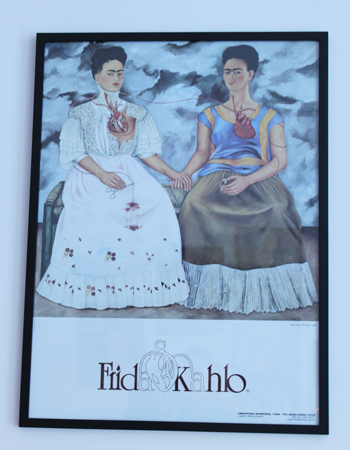
FAMOUS PAINTING: A picture of Frida Kahlo (1907-54) is presented in memory of this world-renowned Mexican painter at the Mexican Embassy in Beijing on November 2 (YU YAN) |
During the Day of the Dead, people construct altars in homes, businesses and cemeteries, dedicating them to the dead--deceased relatives are often honored in this way. They surround the altar with flowers, food and pictures of the deceased. Candles are also lit and placed next to the altar.
People often use bunches of bright marigolds and a strong-smelling purple flower, which act as beckoning beacons. They also create piles of bread of the dead--decorated sweet bread intended to provide the spirits with sustenance once they've found their way.
Skeletons and sugar skulls are also indispensible decorations for the altar. People place the names of the dead on foreheads of the sugar skulls.
The Mexican Embassy's Beijing celebration was dedicated to Frida Kahlo (1907-54), a world-renowned Mexican painter. Her pictures are mostly self-portraits and still-life paintings and she once said, "I paint self portraits because I am the person I know best."
Her pictures, admired for their style, are filled with bright colors and the flattened forms of the Mexican folk art she loved. |