Most filmmakers would be thrilled at the thought of being nominated for an Oscar. It's the golden statue that tells the world you've arrived. Yet for the director of The Blood of Yingzhou District, Yang Ziye, the idea of winning is of little meaning. She is more concerned about whether she is making a difference to the world around her.
Three days after The Blood of Yingzhou District was nominated for the 2007 Academy Awards in the documentary short subject category, the 49-year-old Yang began talking about her plans to retire from China AIDS Media Project (CAMP). The Beijing-based studio dedicated to producing public service announcements (PSAs) and documentaries promoting AIDS awareness and prevention, CAMP's productions are broadcast widely in China.
"I will spend one more year shooting PSAs, and then move aside to let other promising Chinese filmmakers take over," said the American Chinese animation expert and founder of CAMP. Yang had a blossoming career in documentary making in the United States until she found a new interest in promoting AIDS awareness through her films in the most populous country in 2004.
Actually, a string of achievements Yang achieved in the last three years with CAMP means she can leave the industry with her head held high, whatever happens. Even if the nominated work fails to win her the first Oscar for a documentary made in China, CAMP's other PSAs and documentaries have already broken new ground in the country's AIDS awareness campaigns.
CAMP pulls no punches
In October 2004, CAMP initiated the first major AIDS public-awareness campaign on Chinese television by launching a PSA featuring Chinese NBA (National Basketball Association) player Yao Ming and Magic Johnson, the retired basketball superstar who has been living with HIV since 1991. In the one-minute video clip, one scene shows the Chinese star center teaching Johnson how to use chopsticks while the two are sharing a meal of Chinese food together. Before the airing of the PSA, the most die-hard misconception on the transmission of AIDS in the country was that people could get the disease by eating together with an HIV positive person, as they would with those who have other contagious diseases.
During China's 2004-2005 basketball broadcast season, the NBA distributed these AIDS-awareness ads to its 14 broadcast partners throughout China to an audience estimated to be 100 million strong. Throughout 2005 and 2006, this PSA has been broadcast in buses, train carriages and railway stations to reach the floating population, which is most vulnerable to HIV/AIDS, especially rural laborers migrating to cities in search of jobs.
In CAMP's first documentary titled Julia's Story, a young university student named Julia became the first person to go on Chinese airwaves to explain that she had contracted the HIV virus through sexual contact with her American boyfriend. The 28-minute personal profile is one of the most candid discussions of pre-marital sex and its health consequences on Chinese TV screens, as the girl uses her real name and voice and shows her face. The documentary has been aired on China Central Television, the national TV network and dozens of local TV stations. The director Yang, who had worried that government officials might not like in-your-face style, was surprised when permission was granted to air the show. "It is really a breakthrough," Yang said.
Powerful documentary
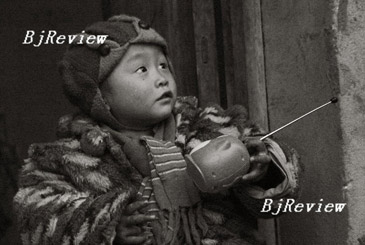
But no project under CAMP has been more emotionally demanding and rewarding to its cast and crew as The Blood of Yingzhou District.
|