|
Although Beijing has only been the capital of the People's Republic of China for nearly 60 years, it has a history of more than 3,000 years. Many important historical sites make the city a treasure trove for visitors and locals alike. Here we list some of the sites that are closely linked to the imperial life in old China.
The Forbidden City
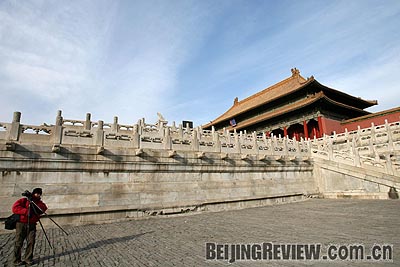
Located in the heart of Beijing, the Forbidden City was home to 24 Chinese emperors during the Ming and Qing dynasties (1368-1911). Initially built in 1406 and finished in 1420, the Forbidden City, exemplifying Chinese imperial architecture, is the largest and one of the most magnificent royal palaces in the world. In 1987, it was included in the list of world cultural heritage sites by the United Nations Educational, Scientific and Cultural Organization (UNESCO). In addition it is listed by UNESCO as having the largest collection of preserved ancient wooden structures in the world. Besides the rooms and meeting halls where emperors lived and worked, the palace houses special museums for Chinese paintings, ancient pottery and other priceless treasures.
The Ming Tombs
The Ming Tombs, including the tombs of 13 Ming emperors, are located in northern Changping District, 50 km north of the city-a 40-minute drive. Set in a small beautifully landscaped basin, the tombs are surrounded by hills in east, west and north. Ancient fengshui masters (persons who make divinations) said that the position of this piece of land is very propitious, which is why it was chosen by the Ming emperors for their afterlife. Built between 1409 to 1644, the mausoleum covers an area of 40 square km, making it the largest group of imperial tombs and also the mausoleum housing the most tombs of emperors anywhere in China and the world.
The Summer Palace
Located in the western suburb of Beijing, the Summer Palace is the best classical garden in China and also one of the largest royal gardens in the world. First built in 1750, the garden, originally named Qingyi Yuan, was devastated by the British and French forces in 1860. It was then rebuilt and was changed to the current name Yihe Yuan, known by the
|