
|
| China |
| Hydropower plant under construction in Xizang unleashes transformative dividends | |
|
|
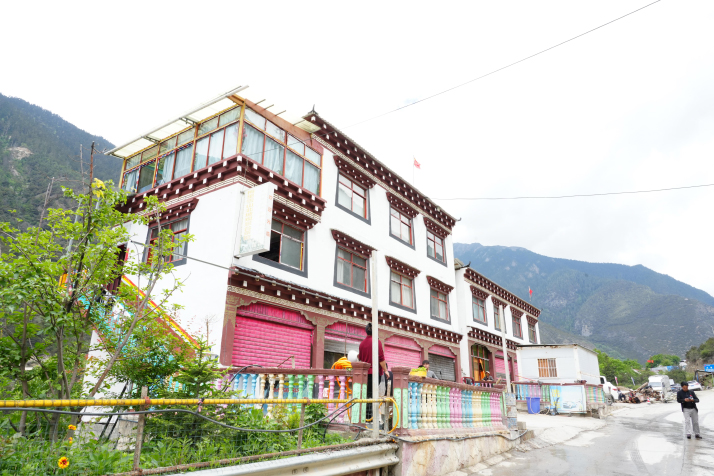 The new house built by Gesang Ciren, a resident in Zhalang Village, Zogang County in Xizang Autonomous Region, following his relocation from the Datang Zala Hydropower Station construction site (CHINA REPORT)
Years ago, when survey crews first appeared along the Yuqu River in Zogang County, Xizang Autonomous Region, local residents sensed something was coming. Soon, word spread through a dozen riverside settlements: a hydropower station was planned for their valley. Construction began on the Datang Zala Hydropower Station on June 9, 2023. It is the first 1,000-megawatt hydropower project to be approved and launched in Xizang and will be completed by the end of 2027. With an average annual power generation of more than 3.94 billion kilowatt-hours, it will save approximately 1.3 million tons of standard coal equivalent and cut carbon dioxide emissions by around 3.42 million tons each year. 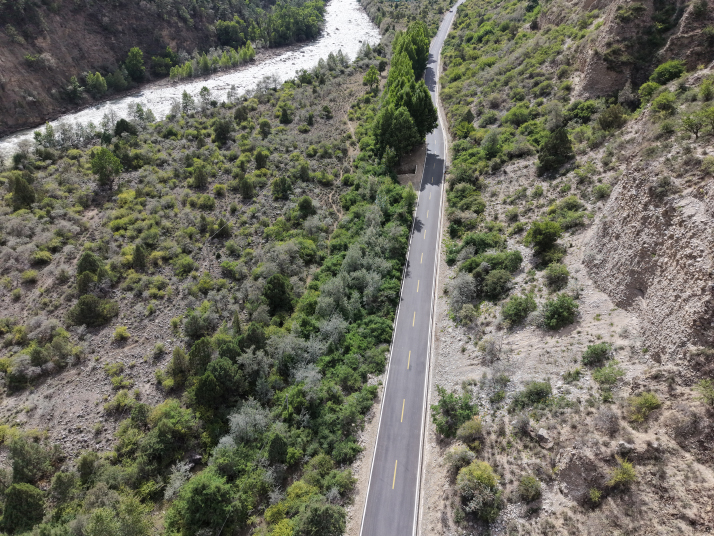 The Zuobi Highway runs alongside the Yuqu River on June 15 (CHINA REPORT)
A widened road The hydropower station lies deep in the Hengduan Mountains, a land known as "the folds of Earth." To the south, the Meili Snow Mountain rises above 6,000 meters, forming a natural barrier between Yunnan Province and Xizang. To move materials in, there was only one route: Provincial Highway S203, a 135-km ribbon of asphalt winding through the mountains. It was the project's lifeline—but at first, it almost brought the project to a halt. During construction, moving oversize equipment weighing over 100 tons was routine. But the old road averaged just 3.5 to 4.5 meters wide. Two vehicles could barely pass; one always had to yield. Road improvement became an urgent necessity. The S203 expansion project, costing over 1.1 billion yuan ($160 million), officially began in November 2023. Its progress was far from smooth. Zogang, normally a semi-arid highland so dry that it causes nosebleeds, was hit by days of unseasonable downpours in July 2024. Rain came fast and fierce, triggering mudslides along multiple sections of the road used by construction crews. "One evening, we got word that mudslides had cut off the road," recalled He Liuyi, safety director of Bureau 9 of Sinohydro, one of the companies responsible for the project. "We immediately deployed personnel and machinery. Almost the entire team was on duty that night." By the time the project was complete more than two years later, the S203, now known as the Zuobi Highway, was not only wider; slopes in rockfall-prone sections had also been reinforced. By summer 2025, those frightening rainy nights were a thing of the past. Throughout the project, construction crews prioritized environmental protection. The route spans an elevation difference of nearly 1,000 meters, passing snowy peaks, highlands and river valleys. Marker K28+700 was the project's designated spoil ground, where soil that had been excavated from the road expansion was placed. The workers spreading the soil mixed in seeds of Galsang flowers and annual bluegrass suited to the local climate and watered the area regularly, according to He. As the flowers bloomed, the construction waste became a contribution to the beauty of the landscape. Currently, the 6-meter-wide, two-lane asphalt highway cuts freight transport time from eight hours to just three. Beyond serving as a supply line for the hydropower station, it is also a lifeline for the tens of thousands of residents of Zogang, passing through more than 10 villages and towns, including Make Village and Zhayu Town. Villagers rely on it for daily shopping, children for school and the elderly for medical visits. With the road wider and smoother, travel deep in the mountains has become safer and more reassuring. Prospering at their own doorstep The increased prosperity brought by the new road has allowed many Tibetan villagers along the route to build new homes. The three-story house Yixi Jiangcuo's family is building is already nearing completion. He earned his heavy-truck license back in 2016 and when he heard the S203 highway would be expanded, he bought two large freight trucks—one for himself, one for lease. After more than two years on the project, he has recouped his costs and built considerable savings. Many other young people have seized the new opportunities on their doorstep. Xie Qiang, a 32-year-old from Zhalang Village, found work at the Zala project. Since July 2023, he has worked as a concrete worker constructing the hydropower station's shafts, fully involved in pouring, compaction and curing. His steady labor has reinforced both project's construction and his own family's living conditions. To date, the hydropower project has employed over 200 farmers and herders from townships along the route as drivers, porters, rebar workers, concrete workers, security guards, cleaners and logistics staff. Large machinery is also preferentially leased from local villagers, boosting their incomes. Many villages have coordinated internally to rotate residents in and out of construction work so everyone could earn. In Zhayu, the entire village of Chengde is participating, bringing 28 dump trucks, one excavator and four loaders. As a result, each villager's annual income has increased by an average of more than 30,000 yuan ($4,414). Some earn through labor; others spot service opportunities. Baima Ciwang had learned cooking in Lhasa, capital of Xizang, with his elder sister. In 2022, before Zala's large-scale construction began, he decided to return home and start up a venture. "With development coming, opening a business here has real potential," he said. As the hydropower station took shape, roads were renovated and infrastructure was improved, he foresaw the arrival of more workers and merchants, and rising demand for food and drink. "I've always enjoyed chatting with people. Running a tea house earns me a living, and along the way I get to hear stories from all corners." His Gala Changmu Tea House has been operating in Bitu Township for over four years and has gained local renown. By the end of 2025, farmers and herders in Zogang and neighboring Zayu County had accumulated a combined 160 million yuan ($23.5 million) in increased income through project work, machinery leasing and transportation services. New roots Even greater changes have come to those relocated for the hydropower project. Though it was hard to leave homes where families have lived for generations, doing so has brought improvements to their lives. The Zala project has relocated 23 households totaling 122 people from Zogang and Zayu. Gesang Ciren from the village of Zhalang is among them. His new house sits beside the Zuobi Highway. He decided to cash in on this prime location: The ground floor of his house contains a tea house and billiards hall; the second floor contains five one-room units rented mostly to project workers, and the third floor is for his family. Many villagers have made similar choices, converting their properties into sources of income. Gesang Ciren's mother-in-law, also a resettled resident, has built over a dozen rooms for rent. Though Yixi Jiangcuo's house is unfinished, the ground-floor storefront has already been pre-leased for 50,000 yuan ($7,357) a year. Behind these new lives and livelihoods is the full implementation of resettlement policies. Private property compensation has all been paid in full and all relocated households have moved into new homes equipped with modern sanitation facilities that were not present in their former dwellings. Related fiscal investment reached 75.35 million yuan ($11 million) in Zogang. Local governments and project contractors are also working together to help relocated residents truly put down new roots and thrive on their own by providing a wide variety of skills training programs. As part of the initiative to further raise local incomes, a new road is under construction in Zogang, connecting several previously lesser-known natural attractions and drastically reducing travel time to and from surrounding areas. Upon completion, it is expected to provide a strong boost to the county's tourism sector. (Print edition title: More Than a Grid) The author is a reporter for China Report, in which this article was originally published Copyedited by G.P. Wilson Comments to linan@cicgamericas.com |
|
||||||||||||||||||||||||||||
|