
|
| China |
| Border village blooms | |
|
|
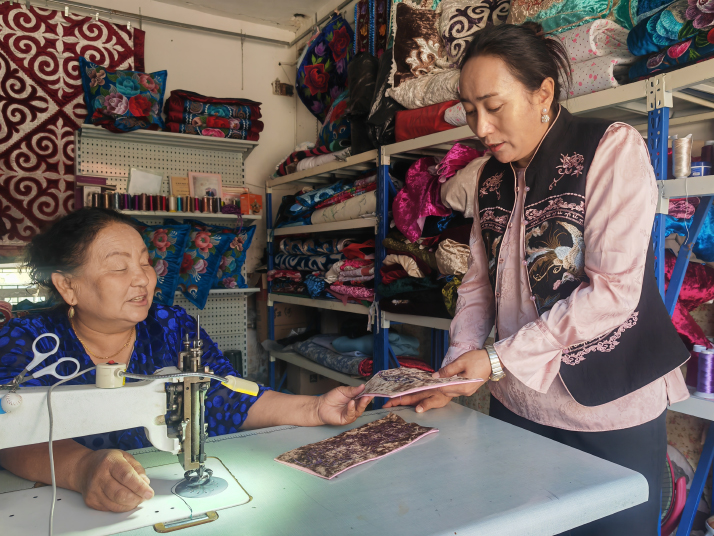 Gulimila Dawulieti (right) at work in her community in Altay (COURTESY PHOTO)
The air in Xiaerhete Village carries the sweet scent of apples. Perched on the border between China and Kazakhstan, this small settlement feels like a pastoral retreat—a quiet testament to years of steady, unspoken effort. Yet its location tells another story. The village sits in Jimunai County, Altay Prefecture, Xinjiang Uygur Autonomous Region, a place of strategic importance as much as natural beauty. Once a modest hamlet, it has since transformed into something far more vibrant. At the heart of this change is Gulimila Dawulieti, a local Kazak woman who grew up in these mountains. In 2019, armed with a degree in environmental resources, she took over as head of the villagers committee and set out to reshape the place. Renewed tradition The biggest headache Gulimila faced after taking the post was a 13-acre sprawling landfill sitting right at the village entrance, beside the main road. The village lies in a natural wind corridor, and in the blistering summer heat, the stench of rotting refuse would drift to every home. Gulimila spent months lobbying the township government for 500,000 yuan ($72,000). Eventually, the funds came through, and she used them to bury the trash and restore the soil. Drawing on the local tradition of tree planting, she decided to transform the dump into an apple orchard. Working alongside the villagers, she helped clear tons of waste; treat the contaminated soil and plant saplings. Once the rows of young trees took root, she pushed further, securing additional funding to build a 400-square-meter platform for drying grain—a strategic move to kick-start a local processing chain. As the village environment improved, tourists began to arrive in growing numbers. Gulimila encouraged a few households to open family-run restaurants, which turned a profit in just three months. The early success inspired more villagers to join in. On Friday nights, the grain-drying platform transforms into a lively hub for the night economy. The village hosts bonfires and cultural performances, creating a bustling market where residents sell homemade dairy products and snacks. On a good night, a single stall can bring in between 500 ($72) and 800 yuan ($116). What was once a landfill is now both a scenic landmark and an engine for the village collective, generating steady annual income through orchard leases. This year, Gulimila intends to survey the village's vacant properties, which were left empty by those working in cities far away, and turn them into homestays, with yards to grow vegetables and flowers, to meet growing visitor demand. The daily tourist influx has already jumped from six tour bus loads to 11. The television series To the Wonder, which aired in 2024 and quickly gained popularity, has also contributed to the growing number of tourists visiting villages in Altay. It has brought waves of urbanites to the borderlands, drawn by the region's romanticized image of a slower pace of life and the allure of traditional nomadic herding practices. To Gulimila, the pastoral life of her childhood was, admittedly, a bit bitter. Back then, she followed her grandparents on those migrations between pastures. Home was a drafty felt yurt. Light came from a flickering candle or a crude lamp. The journey across the pastures often took a grueling seven days, spent entirely at the mercy of the elements. Today, backed by national support, the herders live in modern settlements—equipped with showers, boilers and reliable electricity. Even the migration routes have been modernized. What was once a seven-day trek now takes only two or three, conducted with greater organization and environmental care. To Gulimila, these seasonal moves are the "root and soul" of Kazak culture. It must be protected, she insists, but protection does not mean forcing her neighbors back into the past. "People ask if we're losing our soul by building roads and installing boilers," she said. "I tell them there is nothing soulful about being cold and exhausted. We keep the migration because it's who we are—it's in our bones. But now, that seven-day trek takes two days. We have electricity. We have showers. Only when your life is stable can you afford to worry about your heritage." Today, the village has forged a path of integrated development, one that honors the tradition of nomadic migration while transforming pastoral culture into a tourism asset. Villagers no longer need to leave their homeland in search of work. They can earn a stable income by opening agritainment businesses or engaging in small-scale commerce right in their own community. This approach allows them to hold onto their cultural heritage while securing financial prosperity. The results are reflected in the ledgers. Under Gulimila's tenure, the village collective's economy grew from 80,000 yuan ($10,600) in 2019 to 710,000 yuan ($102,800) in 2025. Once a forgotten outpost on the frontier, this small border village is now firmly on a development path. 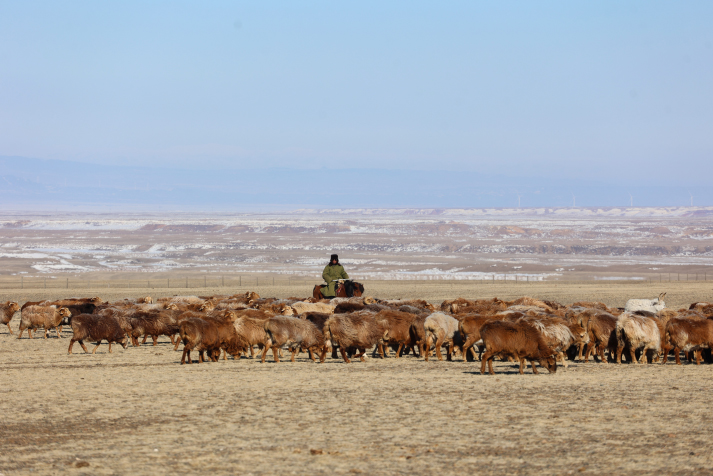 A herder drives his livestock along a pasture trail in Jimunai County, Altay Prefecture, Xinjiang Uygur Autonomous Region, on March 20 (VCG)
The language of unity In Xiaerhete, the younger generation is fluent in standard Chinese, yet many of the village elders speak only Kazak. When Gulimila is explaining a new policy, mediating a neighborly dispute or simply engaging in casual conversation, she switches naturally between the two tongues. For Gulimila, in this multi-ethnic border outpost, unity is woven into these daily dialogues and mutual assistance. When one family faces a heavy harvest, neighbors step in to help. When an emergency strikes, the whole village arrives as one. In late February, a fierce cold snap tore through the village, bringing gale-force winds. More than 20 households found their front doors completely buried under massive snowdrifts, leaving families trapped inside. The village mobilized quickly and cleared the doorways within two hours. Yet for Gulimila, the most persistent challenge hasn't been managing crises; it has been guiding her neighbors toward a more prosperous future. Initially, many villagers were hesitant to step beyond their traditional circles. Gulimila began sharing stories of families in neighboring counties who had found success. She then organized field trips, taking village leaders, youth and women's representatives to see firsthand how people elsewhere were building businesses and earning wages. Upon their return, the village supported two or three families in their own entrepreneurial ventures. Once these pioneers saw their lives tangibly improve, Gulimila invited them to share their transformations with the rest of the village. A neighbor's success story, she realized, carried far more weight than any official's lecture. Gulimila's work continues, guided by a philosophy as simple as it is steadfast: improve the environment, solidify local industries and ensure her neighbors' livelihoods are secure. BR Copyedited by G.P. Wilson Comments to shangzhouhao@cicgamericas.com |
|
||||||||||||||||||||||||||||
|