
|
| Business |
| How Hainan is rewriting its international playbook | |
| Hainan plays a critical role in developing cross-border trade in services and in aligning with, and even helping shape, high-standard international economic and trade rules | |
|
|
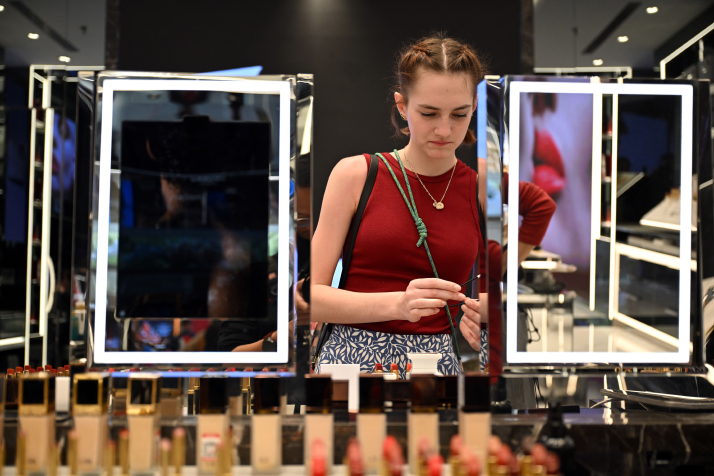 A consumer browse products at Sanya International Duty Free Shopping Complex in Sanya, Hainan Province, on January 10 (XINHUA)
On December 18, 2025, Pakistani physician Saud Khan collected his work and residence permits at the Yangpu Government Service Center in Danzhou, a city in the southern Chinese island province of Hainan. Khan had arrived in Hainan three months earlier to participate in a medical training program at Hainan Western Central Hospital. By the time the program concluded, he had made up his mind to stay and broaden his professional experience and long-term career prospects in Hainan. The province, home to the world's largest free trade port (FTP) by area, which covers the entirety of the 33,900-square-km Hainan Island, is offering substantial opportunities. Before coming to China, Khan had already obtained his medical license in Pakistan. Under the Hainan FTP's foreign physician skills recognition mechanism, he was not required to sit China's national medical licensing exam. After signing a formal employment contract, his credentials will be recognized through a mutual recognition process, allowing him to convert his qualifications and obtain legal authorization to practice. "To further facilitate the entry of foreign professionals, we have established an agency that provides one-stop service encompassing work and residence permit application and company registration consulting for international professionals," Li Xianqiu, an official with the Talent Division of the Organization Department of the Communist Party of China Danzhou Municipal Committee, said. "For a doctor who already holds licenses overseas, once his or her formal work contract with a local hospital is in place, the agency assists the employer with the certification process, enabling the doctor to practice legally in Danzhou." Khan's experience offers a vivid example of how Hainan is aligning its medical services sector with high-standard international economic and trade rules in practice. The CPC Central Committee's recommendations for formulating China's 15th Five-Year Plan (2026-30), adopted in October 2025, call for promoting high-standard opening up. "We should promote alignment with high-standard international economic and trade rules, expand market access and open up more areas, in particular in the service sector," it said. "The Hainan FTP is a testing ground for institutional innovation with a distinct mission," Dun Zhigang, a research fellow with the Chongyang Institute for Financial Studies at Renmin University of China, said. "It plays a critical role in developing cross-border trade in services and in aligning with, and even helping shape, high-standard international economic and trade rules." 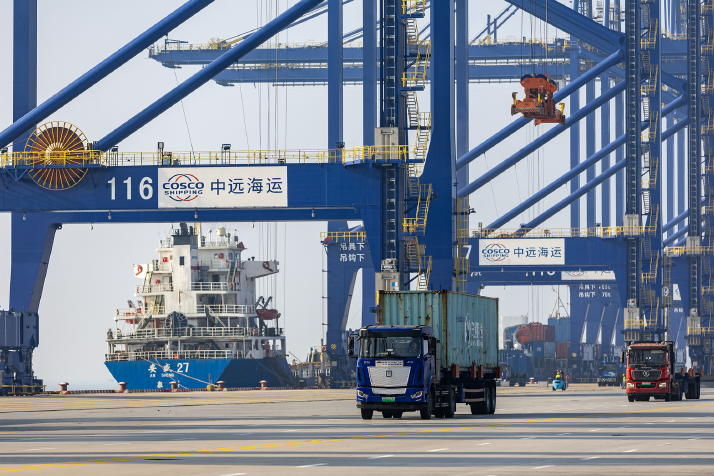 The Yangpu International Container Port in the Yangpu Economic Development Zone in Danzhou, Hainan Province, on January 16 (DUAN WEI)
Boon for trade in services According to the Hainan Provincial Department of Commerce, the province's total imports and exports of services reached 56.05 billion yuan ($8 billion) in the first 10 months in 2025, up 23.4 percent year on year, which was more than three times the national average. On December 18, 2025, the Hainan FTP formally launched island-wide special customs operations, which enable free trade between Hainan and areas outside China's customs border, while maintaining standard customs controls for the Chinese mainland. "The move fundamentally reshapes the cost and efficiency logic of the province's trade in services," Dun said. Following the launch of special customs operations, the Hainan FTP added 38 new categories of products eligible for bonded maintenance with both suppliers and customers being offshore, making it the only region in China able to offer bonded maintenance services for engines. CRRC International Vehicle Industry (Hainan) Co. Ltd. has already secured its first order from a German client. Currently, the share of zero-tariff products in the Hainan FTP is 74 percent, with the number of tariff-free items reaching 6,637, covering nearly all production equipment and raw materials. "Thanks to the zero-tariff policy, all imported parts needed for repairs are duty-free, and parts purchased from the mainland can qualify for tax rebates," Zhang Zirui, the company's marketing director, said. "Combined with the FTP policies and China's strong industrial base, our repair costs are about 50 percent lower than those of European companies, and turnaround times are 50 percent faster." "Special customs operations will fully unleash the combined effects of zero tariffs and low tax rates," Dun said. "A simplified tax system will also draw multinational corporations to establish functional headquarters in the FTP, including settlement centers and data centers. These entities are themselves both producers and consumers of high value-added services, and their presence will directly spur growth in professional services such as accounting, legal service and consulting." Multi-functional free trade accounts, known as EF accounts, are a key part of the financial infrastructure supporting special customs operations and facilitating cross-border settlement, Zheng Conghui, Director of the Sanya Municipal Bureau of Commerce, said. Zijin Mining Group Co. Ltd., a multinational mining company, for example, channels its global investment funds through the EF account of its Hainan subsidiary, markedly improving settlement efficiency, Zheng explained. The Hainan FTP also offers the country's most favorable visa-free entry policy, allowing citizens from 86 countries to enter without a visa. Combined with the island's duty-free shopping policy, this has injected momentum into cross-border tourism and consumption. Official data show that in the first month of special customs operations, 87,000 visa-exempt foreign visitors arrived in Hainan, a 64-percent year-on-year increase, accounting for 93 percent of all inbound foreign tourists during the period. Daily duty-free shopping on the island averaged around 25,000 transactions, totaling roughly 160 million yuan ($23 million), with a noticeable increase in foreign shoppers. At the Sanya International Friendship Traditional Chinese Medicine (TCM) Rehabilitation Hospital, foreign visitors show strong interest in acupuncture, cupping and massage. The hospital was established by Sanya TCM Hospital. In 2025, it served 10,749 foreigners seeking treatment, generating revenue of 5.83 million yuan ($837,707). Yuan Ailin, Deputy Director of Sanya TCM Hospital, said that with national policy support, the hospital has established a national TCM service export base. "With special customs operations in place, the combined effect of multiple policies will bring even more visitors," she said. Yuan has set ambitious targets for 2026: to serve more than 20,000 foreign visitors and exceed 10 million yuan ($1.4 million) in revenue from medical services. Zhou Mi, a research fellow with the Chinese Academy of International Trade and Economic Cooperation, said special customs operations help improve the overall business environment to attract professional talent and multinational companies. This, he noted, strengthens Hainan's capacity to build a solid foundation for developing services sectors and prepare for further market expansion. Hainan's economy is currently dominated by services, while manufacturing is concentrated in high-end segments, Zhou said. Looking ahead, the FTP can provide professional support for advanced manufacturing, including talent, financial and other services. Hainan's trade in services is still largely focused on education, healthcare and tourism, leaving much room for growth in areas such as agricultural research, agrigenetics, logistics, and especially maritime transport. Dun said Hainan could also leverage its position as a node for undersea fiber-optic cables to develop data processing, offshore data centers and outbound digital services such as online gaming, positioning itself as a gateway for Chinese digital enterprises entering emerging Southeast Asian markets. As both sales and settlement increasingly take place offshore, Hainan is well positioned to develop high value-added offshore service outsourcing and global supply chain management. It could emerge as a major hub in the global services trade network and serve as a strategic pivot for China's integration into the global services economy, he added. 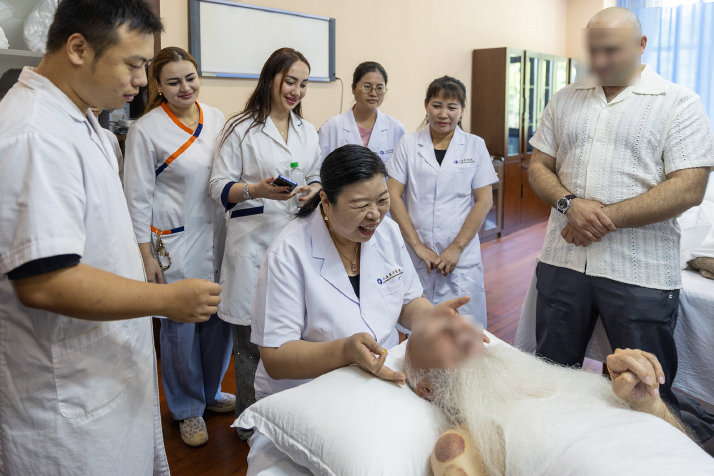 A patient receives acupuncture treatment at the Sanya International Friendship Traditional Chinese Medicine Rehabilitation Hospital in Sanya, Hainan Province, on January 18 (DUAN WEI)
The Hainan model Dun noted that alignment with international rules in trade in goods largely takes place at the border. In contrast, harmonizing rules for trade in services goes beyond borders, reaching deep into a country's domestic legal frameworks, industry standards and even cultural norms. This is reflected in practical questions such as whether foreign-invested firms enjoy equal access to licensing, whether they face discriminatory technical barriers, how freely and securely data can move across borders, and how easily can people move and have their professional qualifications recognized. Backed by national policy support, Hainan is testing a "Hainan model" for aligning with high-standard international economic and trade rules. Boao Lecheng International Medical Tourism Pilot Zone is described as a "medical special zone." Unlike the conventional process of "registration first, import later," innovative drugs and medical devices that have already been approved overseas but not yet registered in China can be brought into Lecheng through a special approval regime and applied directly in clinical practice. Supported by a pilot program for clinical real-world data application, the collected data can be used for domestic regulatory approval. To date, this mechanism has accelerated the market entry of 21 imported drugs and devices, with three included in China's national medical insurance reimbursement scheme. The approach has contributed a "Hainan Solution" to the reform of global medical product oversight framework. It has driven strong growth in cross-border medical consumption. On January 15 alone, Lecheng received more than 2,000 foreign patients, a 49-percent increase year on year. Hainan Bielefeld University of Applied Sciences (BiUH) is the first independent overseas university campus established in the Chinese mainland. Outside the Hainan FTP, China's higher education sector remains largely limited to China-overseas cooperative programs under Chinese leadership. BiUH is allowed to combine Germany's independent admissions system with China's unified enrollment process. Graduates receive degree certification recognized in both countries. While retaining a required share of courses taught in standard Chinese, the university has introduced Germany's practice-embedded teaching model, forging an approach that integrates the characteristics and regulatory frameworks of both systems. In 2025, U.S.-based business information provider Dun & Bradstreet launched its corporate information service application Longyicha in Haikou, capital of Hainan. "In the past, Chinese companies found it difficult to access information on overseas firms, while foreign institutions struggled to obtain reliable data on Chinese companies," Wu Qingji, General Manager of Haikou-based Fuxingcheng Industrial Park, said, adding Longyicha has a promising market. Foreign providers of such data services are required to obtain a value-added telecommunications business license. As of now, 13 foreign-funded companies, including Dun & Bradstreet, have secured the permit. In February 2025, Hainan released the Hainan FTP Data Export Management List (Negative List) (2024 Edition), the first of its kind in the country, clarifying that data not on the list may flow freely across borders. It provided the regulatory foundation for the launch of Longyicha, meeting both domestic and international compliance requirements. Moreover, Khan's story as a new physician in Hainan reflects the island's progress in aligning rules to facilitate the cross-border movement of professional talent, through mechanisms such as mutual recognition of vocational qualifications and streamlined procedures for cross-border practice. Taken together, these four cases correspond to the four modes of trade in services—consumption abroad, commercial presence, cross-border supply of services, and personnel movement. They offer concrete, on-the-ground illustrations of what has come to be known as the "Hainan model."  Tourists enjoy time at Dadonghai Beach in Sanya, Hainan Province, on January 11 (XINHUA)
A stress-test zone Dun said in developing cross-border trade in services, Hainan serves as a critical hub linking domestic and international markets. It functions simultaneously as a "stress-test zone" for high-standard international economic and trade rules, a "conversion interface" between domestic regulations and international norms, and a "potential incubator" for the next generation of global rules on services trade. In July 2021, the Ministry of Commerce released the Special Administrative Measures for Cross-Border Service Trade at Hainan FTP (Negative List) (2021 Edition). This was the country's first negative list for cross-border trade in services, signaling a shift from a positive-list regulatory approach to a negative-list approach. "Not all economies globally use the negative-list approach, and in that sense ours is relatively forward-looking," Zhou noted. "That said, the list itself still needs to be refined and improved through practice." In 2025, the revised Foreign Trade Law was adopted. Effective March 1, the law formally establishes a negative list system for cross-border trade in services nationwide. From piloting the country's first such list to seeing it rolled out nationwide, Hainan has effectively completed its role as a regulatory "pressure test." Dun noted that given China's vast territory and regional diversity, applying the highest standard of opening up nationwide in one step would carry risks. In sensitive areas such as cross-border service delivery, Hainan can move first by aligning with rules under agreements such as the Comprehensive and Progressive Agreement for Trans-Pacific Partnership. If the tests prove successful, the experience can be replicated elsewhere; if not, any spillover effects remain manageable. Differences between common law systems in Western countries and China's civil law system also pose challenges in legal application and business practice. Hainan's efforts to establish international commercial arbitration institutions and explore globally accepted mechanisms for resolving commercial disputes are aimed at building a platform for translating between legal systems and regulatory frameworks. "We should not be satisfied with simply aligning with existing rules," Dun emphasized. "Global economic and trade rules are undergoing rapid evolution, and in emerging areas such as digital trade and green trade, there is still no universally accepted framework." "Hainan can take the lead in areas where rules remain unclear or underdeveloped—such as data property rights, digital asset trading, and carbon footprint certification—by testing policies and accumulating real-world cases," Dun said. "This would provide empirical support for China's participation in global negotiations on digital economy governance and allow China to contribute its own rules-based solutions, shifting from a rule-taker to an active participant in rule-making," he added. BR (Reporting from Hainan Province) (Print Edition: From Trade to Services) Copyedited by G.P. Wilson Comments to zhangshsh@bjreview.com |
|
||||||||||||||||||||||||||||||
|