|
 |
|
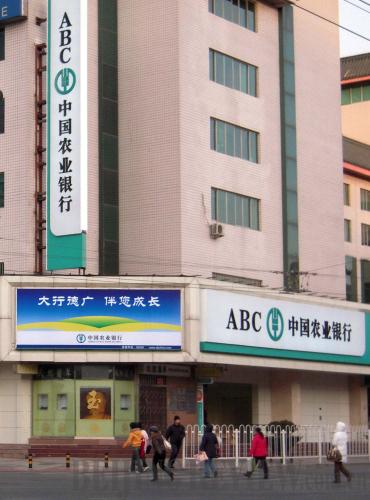
TRANSFORMING ABC: Agricultural Bank of China Ltd., founded in Beijing in January 2009, is preparing for public listing (LIANG ZHIQIANG) |
Agricultural Bank of China Ltd. (ABC), the last of the "big four" state-owned commercial banks that is not listed, is expected to float its shares in both Hong Kong and the mainland stock markets later this year. It cleared a preliminary hearing with the China Securities Regulatory Commission (CSRC) on May 25.
Analysts estimated the bank will raise $26 billion-30 billion in total in the two markets by issuing no more than 53 billion shares, making it the largest initial public offering (IPO) so far this year.
ABC's IPO is set to occur in a time of extreme uncertainties and market vulnerability due to recent global financial market turmoil. Internationally, the world economy has not been well healed as a sovereign debt crisis is dealing a heavy blow to European Union countries. On the domestic front, the benchmark Shanghai Composite Index nosedived to 2,555 points on May 20, the lowest level in the past 12 months, amid fears of accumulating banking risks.
Conundrum
ABC has more than 24,000 branches nationwide with more than 350 million customers. Though the second biggest in terms of assets among the "big four," it has always been the weakest link among China's state-owned commercial banks.
In the past, all state-owned banks made numerous "policy loans," meaning the loans were issued based on government directives instead of for commercial reasons. ABC shouldered the most "policy loans" as it focused on lending to rural areas. To date, ABC has been the only state-owned bank that is devoted to agriculture, rural development and farmers—an appropriate set of actions given the bank's name.
How to transform this policy-driven institution into a profit-seeking commercial lender has been a true challenge to ABC managers.
Experts feared the bank might have "too high moral standards" that could interfere with its actual profitability, which might be the biggest stumbling block for its listing.
ABC is striving to turn the previous burden into a competitive edge. Insiders from ABC, as reported by Caijing magazine, said the bank has extended the concept of "rural areas" by including county-level customers. As most of the loans to those clients are small, the risk of lending is adequately controlled. In addition, the loan-and-deposit interest rate difference of business relating to the rural areas is higher than that of urban business. In big cities, large companies are in a better position to bargain, and the lending interest rate is usually 10 percent lower than the benchmark rate. The case with small and medium companies is just the opposite—10 percent higher than the benchmark rate. As for ABC's customers in rural areas, the rate is mostly 50 percent higher than the benchmark rate. Analysts believed the clear-cut blue sea strategy will distinguish ABC from other banks.
Cash cow
ABC's Vice President Pan Gongsheng said as of May 25 the national social security fund (SSF) had been the bank's only strategic investor. People closer to the bank said it had no intention of inviting other strategic investors in the IPO.
|