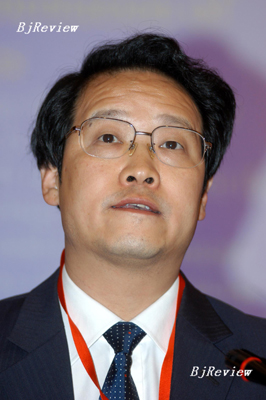
The Agricultural Bank of China (ABC) has a new president. The last non-publicly traded state-owned lender in China announced on July 6 that Xiang Junbo, former Vice Governor of the People's Bank of China, or the central bank, had been appointed to take over the reins of the ABC.
Xiang, 50, replaces Yang Mingsheng, who had been in the top seat for four years.
Xiang has a tough task ahead. He needs to transform the ABC, plagued by 732 billion yuan (nearly $99 billion) of bad loans, into a financially healthy joint-stock company and take it public.
A bailout of the ABC may cost the state as much as $140 billion to meet the central bank's 8-percent minimum capital adequacy requirement, Standard & Poor's estimates. Earlier, the Chinese Government decided to keep the bank whole rather than break it up, citing a need to preserve financial services for farmers who use its 31,000 branches.
The ABC reported a non-performing loan ratio of 23.44 percent in 2006, 2.73 percentage points lower than in 2005, but still high above the government-required 5 percent for commercial banks. Meanwhile, its reserves can only cover 4.59 percent of possible losses caused by bad loans, far from the 60 percent demanded by regulators.
The bad loans include more than 300 billion yuan ($37.5 billion) of policy credit, according to bank sources. Policy credit refers to loans the bank was required to make by the government to fund its development policies mainly in rural areas.
Despite the arduousness of his mission, Xiang's previous tenures as vice auditor general of the National Audit Office and vice governor of the central bank will stand him in good stead in his efforts to revitalize the ABC. Before transferring to the ABC, Xiang took charge of the central bank's Shanghai Headquarters, which is tasked with regulating the financial market, conducting financial supervision, making financial and trust analysis and coordinating regional financial cooperation. Xiang, who holds a Master's degree in economics and doctorate in law, is known for iron-fisted governance. |