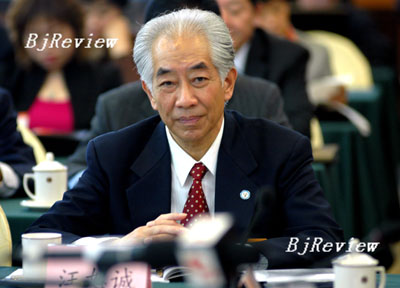
China's Minister of Water Resources, Wang Shucheng, is talking tough about the nation's most important river, calling for sustainable development and conservation of all life forms in the Yangtze River. Wang made the proposal at the Second Yangtze Forum on the protection and development of the river convened in Changsha, capital of central China's Hunan Province, on April 15.
An official report published earlier this year revealed that a large amount of waste continues to contaminate Yangtze water, with almost 30 percent of its major tributaries heavily polluted, causing aquatic extinction and higher risks of natural disasters.
Given the critical state of environmental affairs, the minister has pledged not to allow any further economic development at the expense of the environment. According to him, the Yangtze will be divided into several function sections in an attempt to develop a system for trading pollutant discharges along the lines of the Kyoto Protocol's carbon trading scheme. "The pilot program has already been put into effect in some provinces [along the river]," Wang revealed.
Wang also proposed that only 60 percent of the total capacity of the Yangtze be exploited. "The remaining 40 percent should be preserved to maintain the river's current ecosystem and biodiversity," he said.
However, a utilization ratio of 40 percent is considered the most appropriate worldwide to guarantee water quality, Wang warned.
The largest in China and the third longest in the world, the Yangtze flows 6,300 km, with a combined drainage area of over 1.8 million square km, accounting for 18.8 percent of China's total area. Its annual runoff stands at 951.3 billion cubic meters, accounting for 52 percent of the national total. The river is a major artery of inland water transportation in China.
The Yangtze Forum, held every two years, is a regular mechanism for brainstorming and sharing experience in pollution control, water resource conservation, as well as flood prevention and disaster relief.
|