|
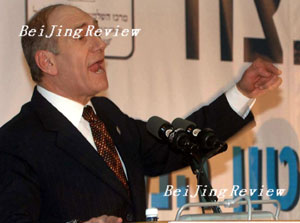
Politicians are known for reversing course, but not often as quickly as Israeli Prime Minister Ehud Olmert did on August 1, confusing the world over his government's attitude toward an expected ceasefire in the ongoing battle with the Hezbollah militias.
Olmert, who saw visiting U.S. Secretary of State Condoleezza Rice head back to Washington with "an optimistic consensus on what is necessary for an urgent ceasefire and a lasting settlement," told a group of mayors within hours of Rice's departure, "There is no ceasefire and there will not be any ceasefire in the coming days."
Despite worldwide criticism after an Israeli air raid killed 56 Lebanese civilians in the village of Qana, the prime minister insisted it was not in Israel's interest to agree to an immediate truce because every day of fighting weakens Hezbollah further.
However, Olmert, who is widely believed to take a firm stand in clashes with Palestinians and Hezbollah to show that he has a strong hand on security issues, did not completely rule out the possibility of a diplomatic solution in the end.
"We are at the beginning of a political process that I believe will end with a ceasefire that will create totally different conditions on our northern border,'' he was quoted by Bloomberg as saying.
According to Olmert, a real "hiatus" will be created between Israel and Hezbollah with the deployment of a multinational force, which is also included in Washington's three-part peace plan.
|