
|
| Xinjiang Today |
| Changji sets the pace for a more dynamic future | |
|
|
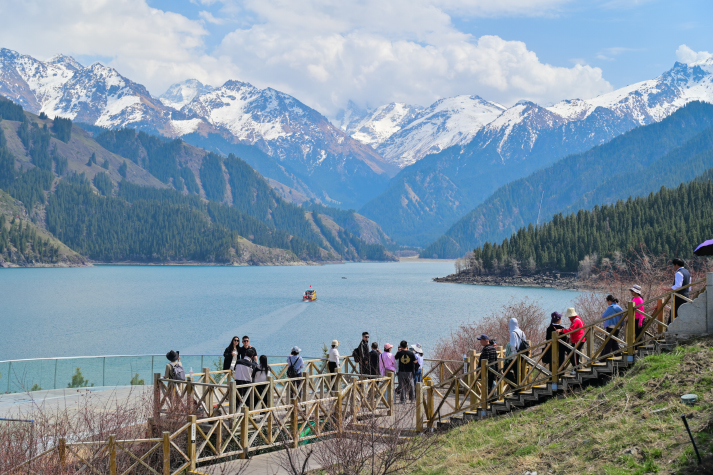 Tourists enjoy the scenery at the Tianshan Tianchi Scenic Area in Changji Hui Autonomous Prefecture on April 28 (CNSPHOTO)
Looking back at the 14th Five-Year Plan period (2021-25), Changji Hui Autonomous Prefecture has reason to be proud of its progress across all sectors. Its GDP exceeded 250 billion yuan ($36.8 billion), firmly ranking second in Xinjiang, with an average annual growth rate of 7.1 percent. The value added of major industrial enterprises, or those with an annual main business revenue of at least 20 million yuan ($2.8 million), grew from 34.3 billion yuan ($5 billion) to 95 billion yuan ($13.9 billion), leaping to first place in the autonomous region, with an average annual growth rate of 12.3 percent. Fixed assets investment rose from 49 billion yuan ($7.2 billion) to over 100 billion yuan ($14.7 billion), with an average annual growth rate of 16.8 percent. China's Five-Year Plans are government blueprints for guiding national economic and social development over five-year periods, with the 15th Five-Year Plan (2026-30) emphasizing high-quality growth, technological self-reliance and modernization. "Striving forward into the 15th Five-Year Plan period, Changji will take concrete actions for an even greater leap in high-quality economic and social development," Zheng Min, Commissioner of Changji, said at a press conference on May 25. At the event, Zheng and other local officials reviewed the prefecture's economic and social progress during the 14th Five-Year Plan period and outlined its key development objectives and priorities for the 15th Five-Year Plan period. "Changji is rich in mineral resources, has abundant wind and solar resources, and boasts prominent geographical advantages. We will stick to the blueprint and see it through, strengthening the bedrock of high-quality development and ensuring a more prosperous life for all ethnic groups," Zheng added. 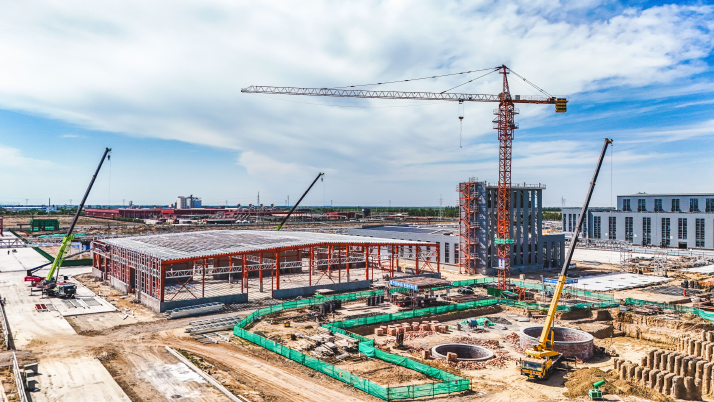 Phase I of a 400,000-ton bio-sugar production project under construction in Changji Hui Autonomous Prefecture on June 11 (CNSPHOTO)
Building a modernized system Changji aims to build a modern industrial system and generate new engines for high-quality growth, according to Zheng. Its strategy rests on three pillars: green foundation, new momentum and smart shift. She explained that a green foundation entails implementing a dual control system for carbon emissions that prioritizes emission intensity while capping total emissions accelerating the construction of large-scale new-energy bases, and speeding up the development of projects such as direct green power connections and new-energy storage. New momentum is driven by accelerated construction of coal-to-gas and coal-to-olefins projects, proactive cultivation of the industries of the future such as the low-altitude economy and hydrogen energy, and ongoing efforts to upgrade industrial chains to the mid-to-high end. Smart shift encompasses deepening and expanding the implementation of AI-driven projects, developing applications such as mine inspection and smart logistics, advancing intelligentization, digitalization and network connectivity for 400 enterprises, and empowering all industries and serving every household through digital intelligence. Zheng said Changji will also strengthen scientific and technological innovation to stimulate new drivers of high-quality development. It will focus on developing new quality productive forces featuring hi-tech, high efficiency and high quality according to local conditions, deepen cooperation with top-level national institutions such as the Chinese Academy of Sciences, and intensify efforts to build high-level innovation platforms. In addition, the prefecture will plan and build a high-standard integrated innovation park and attract more universities and research institutes to establish a presence there. These initiatives in turn will accelerate the formation of a coordinated development pattern led by science and technology, supported by education, guaranteed by talent and integrated with industry. In the agricultural sector, last year, gross output value of Changji's primary industry reached 28.8 billion yuan ($4.2 billion), with a growth rate of 6.3 percent, ranking second in Xinjiang. Per-capita disposable income of farmers and herders exceeded 30,000 yuan ($4,419) during the same period. This year, the prefecture will accelerate the promotion of smart technologies such as intelligent water and fertilizer management and smart breeding. It will also improve the mechanisms for delivering the benefits of industrial development to farmers, accelerate the implementation of a number of deep agro-processing projects, and enable more of Changji's high-quality agricultural products to reach the markets in other parts of the country. Developing tourism Recently, Changji's scenic spots such as Tianchi Lake in the Tianshan Mountains and Jiangbulake have been bustling with tourists, becoming some of Xinjiang's most popular destinations. Liu Xiaolong, Deputy Commissioner of Changji, said at the press conference that the prefecture will continue to improve its cultural and tourism industries. As a gateway to Xinjiang, Changji features a wealth of heritage sites, giving visitors a taste of many of Xinjiang's natural and cultural attractions. The prefectural government is also promoting local tourism through micro-dramas. For example, a piece about the Tianshan Mountains, released on April 30, has garnered more than 170 million views, driving a 28-percent year-on-year increase in tourist visits to Tianchi Lake during the same period. Beyond that, the government is incentivizing agencies that bring train and flight charters, large tour groups and self-driving convoys to Changji. Furthermore, Liu said 2026 will feature 3,500 mass cultural and sports activities, supported by extended opening hours of public cultural venues. 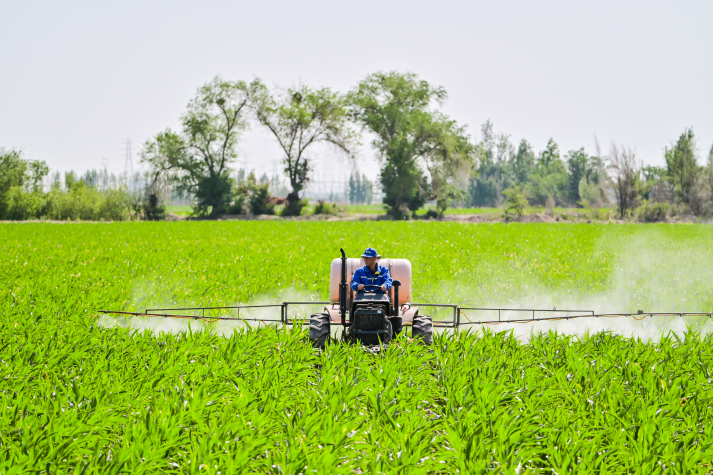 A farmer sprays pesticide in a corn field in Hutubi County, Changji Hui Autonomous Prefecture, on May 27 (CNSPHOTO)
Improving public wellbeing In recent years, Changji has focused on addressing pressing concerns of residents, annually launching and delivering a range of public wellbeing projects, while continuously stepping up efforts in inclusive, basic and essential public services. In 2025, expenditure on improving living standards hit 80 percent of fiscal spending for the first time. This year, the prefecture will roll out another round of 34 livelihood projects across 10 major categories, translating what the people expect into what the government delivers, and ensuring that the people can see real changes and tangible benefits. "We will implement the national demonstration project for public hospital reform and high-quality development, complete the strategic relocation of the Changji Prefectural People's Hospital, and promote integrated medical and elderly care projects, so that more people can receive quality medical care and treatment close to home, and enjoy a better life," Zheng said. Changji will also strengthen county-level high schools, foster a scholarly campus culture and enhance teachers' capacities, so that more children can access high-quality education, laying a strong foundation for a bright future, she added. (Print Edition Title: An Ambitious Course) Comments to taoxing@cicgamericas.com |
|
||
|
||||||||||||||||||||||||||||
|