|
| Xinjiang Today |
| From remote border outpost to opening-up frontier | |
|
|
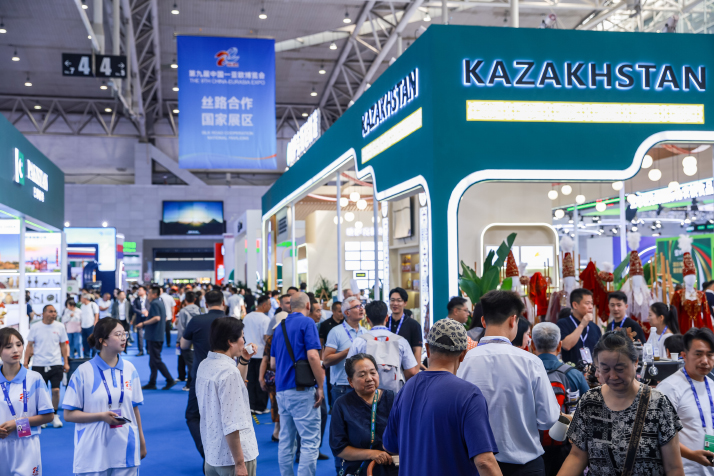 The Kazakhstan booth at the Ninth China-Eurasia Expo in Urumqi on June 26 (CNSPHOTO)
Deep in the heart of Eurasia lie the Altai Mountains, a geographic crossroads linking multiple Central Asian nations. In recent years, fueled by steady progress of the China-proposed Belt and Road Initiative (BRI), the Altai subregion has emerged as a vibrant hub for cross-border international cooperation. The BRI aims to boost connectivity along and beyond the ancient Silk Road routes. On June 10, the 2026 International Conference for Trans-Altai Subregional Cooperation was held in Altay City, with government and business representatives from China, Kazakhstan, Kyrgyzstan, Turkmenistan, Mongolia and Russia attending to map out new pathways toward shared prosperity. What is the Altai subregion? In academic and policy discourse, a "subregion" refers to a functional zone formed by geographically adjacent territories of different sovereign states, distinguished by geographic proximity, functional synergy and flexible administrative coordination. The trans-Altai subregion fits this definition, covering the transboundary junction of China, Kazakhstan, Russia and Mongolia centered on the Altai Mountains. Bound by shared mountains, rivers and intertwined cultural heritage, it stands as a pivotal platform for practical cooperation under the BRI framework. The subregion covers about 780,000 square km and has a population of more than 5.2 million. Endowed with extraordinary natural resources, it boasts abundant energy and mineral reserves, including gold, copper, lead, zinc, rare metals, oil, gas and hydropower, earning it global renown as a resource-rich belt. Its ecological and cultural tourism assets are equally remarkable: Kanas Lake, primeval Altai forests, sprawling grasslands and glaciers form an unbroken stretch of pristine landscapes on which distinctive nomadic folk customs remain well preserved. The area is crisscrossed by well-established border ports, including first-class border crossings at Takeshiken (Takixken) and Jimunai (Jeminay), connected by cross-border highways, railways and logistics corridors. These transport links render Xinjiang a critical pivot for China's westward opening up. Complementary industrial strengths further underpin regional integration. China holds distinct advantages in infrastructure, manufacturing, deep agro-processing, capital and technology. Meanwhile, Russia, Kazakhstan and Mongolia possess abundant natural resources, land reserves, robust livestock sectors and vast untapped consumer markets, laying a strong foundation for coordinated industrial development. The Altai subregion is not merely a geographical concept but also an area of unique cultural and historical significance as well as immense potential for cross-regional integrated development, Vitaliy Snesar, Vice Governor of Altai Region, Russia, said in 2025. 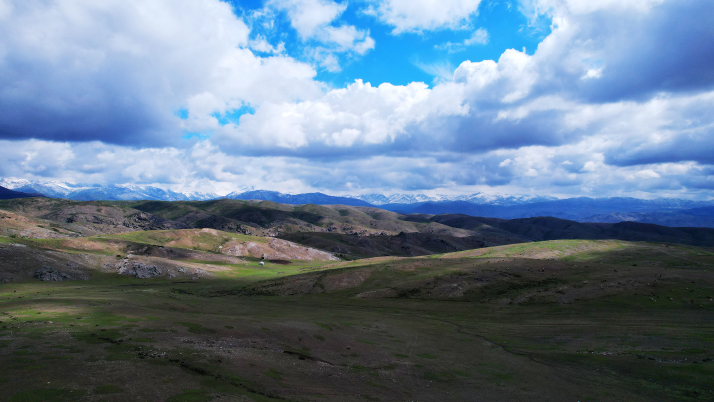 The Altai Mountains in Altay City, Altay Prefecture, on May 15 (CNSPHOTO)
A long-term mechanism Collaboration across the subregion did not materialize overnight. The journey dates back to July 2000, when the first international symposium on sci-tech cooperation between China, Russia, Kazakhstan and Mongolia was convened in Altay. The four countries signed an initiative, formally launching joint efforts spanning science and technology, trade, transportation, education, culture and tourism. In 2003, the International Coordination Committee Our Common Home—Altai was established, laying institutional groundwork through regular working conferences, specialized task forces and recurring thematic seminars. This solidified the long-standing "four countries, six parties" cooperation framework, made up of Altay Prefecture in Xinjiang, the Altai Region and the Altai Republic of Russia, East Kazakhstan Region of Kazakhstan, and Bayan-Ölgii and Khovd provinces in Mongolia. In the years that followed, collaboration expanded steadily, covering streamlined customs clearance, livestock trade, grassland cultural tourism, joint ecological conservation, university student exchange programs, sister-city partnerships and people-to-people exchanges. The very first edition of the conference for trans-Altai subregional cooperation was held in 2013. Over the course of its development, the number of participants has steadily increased. By the third conference in 2015, it had expanded to "four countries and nine parties," with the addition of the Tuva Republic of Russia, and Uvs and Govi-Altai provinces in Mongolia. By the fourth edition in 2016, participation further grown to 12 parties, with the addition of Karaganda Region and Almaty City of Kazakhstan, as well as Zavkhan Province in Mongolia. Its agenda has also grown increasingly diverse, expanding from an early focus on sci-tech cooperation and cultural exchange to a wide range of fields including economic and trade cooperation, tourism mining and e-commerce. For example, at the conference held during the Seventh China-Eurasia Expo in Urumqi in 2022, 10 cooperative projects were secured, covering interregional agreements and project orders. The rollout of the BRI in 2013 ushered in a strategic leap for trans-Altai subregional cooperation. National development strategies of China, Russia, Kazakhstan and Mongolia began to align, with top-level policy design reinforcing grassroots cross-border practices. Leveraging its unique geographic location, Xinjiang has accelerated the development of a comprehensive cross-border connectivity network, embedding its opening-up agenda into China's westward opening-up blueprint to build a key gateway linking China with Eurasia. Throughout this process, deeper economic integration and mutual trust have infused the subregion with unprecedented cooperative vitality. 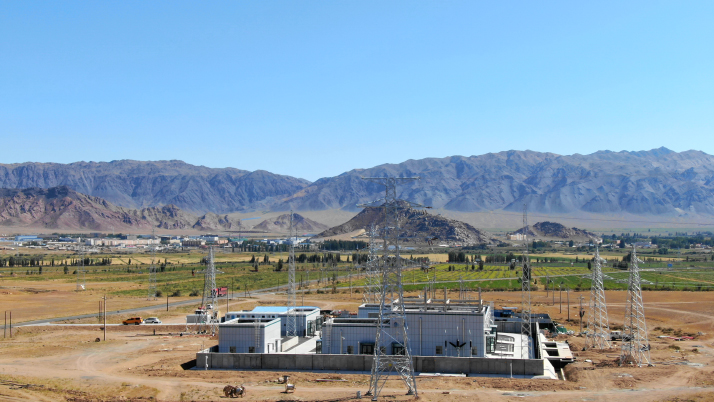 The Takeshiken Power Supply Station, which is part of the outbound electricity transmission project for Mongolia, in Qinghe County, Altay Prefecture, on August 23, 2023 (CNSPHOTO)
Delivering pragmatic outcomes This year's conference was a historic milestone for the cooperation mechanism, most notably because of its expanded roster of participants. Kyrgyzstan and Turkmenistan took part as official attendees for the first time, broadening the core cooperation circle. As economic integration gathers pace, conditions within the subregion are becoming increasingly conducive to strengthening cooperation, Chen Xiaojiang, Secretary of the Communist Party of China Xinjiang Uygur Autonomous Regional Committee, said in his keynote speech. Xinjiang will work with all parties in a more proactive manner to expand economic and trade cooperation, strengthen connectivity, deepen scientific and technological cooperation, promote people-to-people exchange and safeguard regional peace, he said, adding that it will help tighten the bonds of shared interests and contribute to building a regional community with a shared future. Nyamtaishiryn Nomtoibayar, Deputy Prime Minister of Mongolia, emphasized that amid sweeping shifts in global geopolitics and economic landscapes, the trans-Altai subregion has emerged as a vital platform for multifaceted Eurasian cooperation. He lauded Xinjiang's central role in boosting regional connectivity and economic convergence, and reaffirmed Mongolia's readiness to expand joint projects across mining, renewable energy, agriculture, digital economy, logistics and tourism to build a model area for peaceful, prosperous and mutually beneficial collaboration. Yazgeldi Bekmyradov, Deputy Khyakim (Mayor) of Ashgabat, Turkmenistan, said he was pleased to see the Altai Mountains region develop into an effective platform for representatives and business communities from different countries to exchange views and share experience. Strengthening ties via the platform will help promote cooperation in trade and the economy, science and technology, environmental protection, transport connectivity, education, culture and urban tourism while deepening sister-city relations, he said. The conference's most visible achievement lies in its sweeping portfolio of practical cooperation deals. The 100 signed agreements span cross-border connectivity and logistics, mineral and energy development, science and technology, medical and health services, cultural and educational exchanges, trade and investment, and sister-city partnerships, with aggregate contracted investment exceeding 7.84 billion yuan ($1.15 billion). Following the opening ceremony, delegates held five thematic panel discussions covering trade cooperation, agricultural technology, cross-border infrastructure, cultural tourism promotion and educational partnerships, paired with matchmaking sessions for domestic and overseas enterprises. For example, a government-business delegation from Xinjiang's Bayingolin Mongolian Autonomous Prefecture attended the conference, striking multiple preliminary cooperation intentions with foreign counterparts in cross-border logistics and agricultural trade. Representatives from Bayingolin said the prefecture will seize major opportunities such as the construction of the China-Kyrgyzstan-Uzbekistan Railway to fully integrate into the broader trans-Altai subregional cooperation landscape. As Deputy Chairman of the Cabinet of Ministers of the Kyrgyzstan Erlist Akunbekov said in a video address, the conference is a special event for the Kyrgyz delegation attending for the first time. Kyrgyzstan has solid good-neighborly relations, reliable partnerships and a foundation of mutual respect with all participants in the dialogue mechanism, he added. Kyrgyzstan stands ready to engage in open and candid interlocal dialogue and exchanges with all sides, enhance mutual understanding, promote practical cooperation, and jointly advance prosperity and development, Akunbekov noted. These tangible outcomes fully demonstrate that trans-Altai subregional cooperation has transitioned from consensus-building to project-driven collaboration. Characterized by continuously maturing institutional frameworks and a series of concrete achievements, this mechanism has evolved into a vital platform driving mutual benefits for Xinjiang and its regional partners. Comments to mamm@cicgamericas.com |
|
||||||||||||||||||||||||||||
|