
|
| Xinjiang Today |
| Frontier friendship | |
|
|
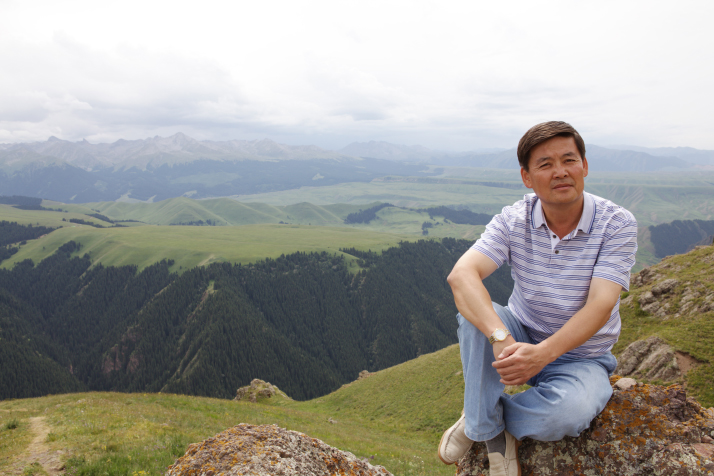 Wang Yali at the Kalajun Grassland in Yili (Ili) Kazak Autonomous Prefecture in August 2014 (COURTESY PHOTO)
Wang Yali's story I was born on a border farm of the Xinjiang Production and Construction Corps (XPCC) in Yili (Ili) Kazak Autonomous Prefecture. My parents were medical professionals. Growing up amid the dedication of XPCC pioneers shaped my life and made me choose a career in judicial administration. After graduation, I spent five years at the grassroots level. Then I was transferred to the Justice Bureau of the Fourth Division of the XPCC and my legal career began. The first decade involved intensive conflict investigation, mediation, and legal publicity across farms, companies, and schools—building the foundation of our grassroots legal work. The second decade focused on substantive legal services, expanding the scope and depth of my work. A major turning point came in 2001 when I was appointed director of the newly established Legal Aid Center under the Justice Bureau. Working with officials who were deputed to assist Xinjiang's development, we created a vital three-tiered legal aid structure encompassing division, regiment and company levels. This filled a major institutional gap in the XPCC's legal aid system. In the summer of 2014, I met Chen Ruijun, a former deputy commander of the 14th Division of the XPCC who despite returning to Beijing to work in a state-owned enterprise remained deeply committed to Xinjiang. I met Chen during his visit to Yili. Our conversation revealed his strong attachment to the region and his desire to understand the aspirations of the people in the north Xinjiang border farms. I was born in Zhaosu (a county in northwestern Xinjiang) and have been to all kinds of regimental farms. So the next morning, I took him to the Zhaosu border regimental farm. We drove to the summit of Gedeng Mountain. Standing by the Gedeng Mountain Tablet, a monument erected by the Qing Government in 1760 to commemorate quelling the rebellion by the Junggar, (a nomadic tribe), I felt immense emotion. Looking at the patches of fields, the hardworking XPCC personnel, and the border patrol guards, I was struck by the decades-long heroic undertaking of defending China's western frontier. The spot overlooks the border with Kazakhstan and four Zhaosu farms. Chen spoke eloquently about the rebellion and the history of the Western Regions, reinforcing my own connection to the frontier. 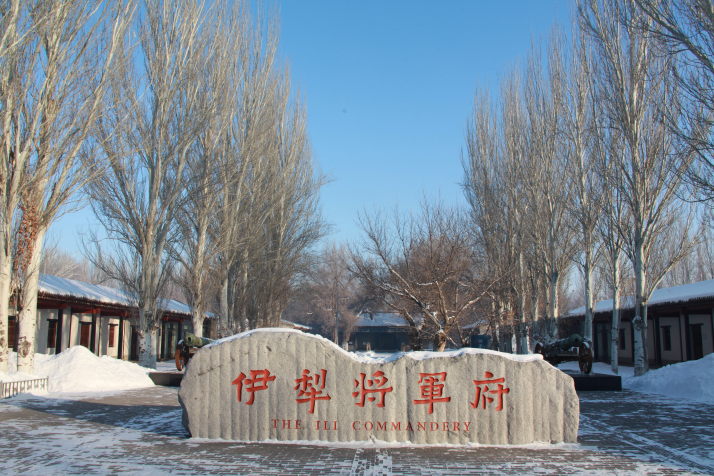 The former residence of the Yili General in Huocheng County in Yili in 2018 (COURTESY PHOTO)
I realized that while Xinjiang had changed dramatically, the core mission of the XPCC—border patrol—and the hardworking spirit of the XPCC people remained unchanged. The trip marked the beginning of our friendship. Years later, one winter night, Chen called from Yili. He invited me to visit the former residence of the Yili General in Huocheng. (The post was established in 1762. The general was the highest military and administrative official in charge of what is now Xinjiang Uygur Autonomous Region, the areas east and south of Lake Balkhash and the vast areas of the Pamir Plateau—Ed.) Due to historically low temperatures, we found the residence closed. After pleading in Uygur, the staff allowed us a private tour. To my surprise, Chen took the lead. He enthusiastically narrated the history of the exhibits with details he knew well and diligently photographed the things he didn't know, planning further research on them. 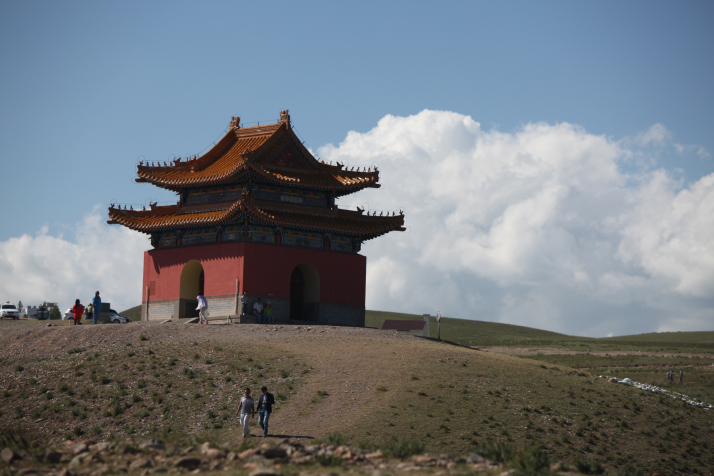 The pavilion housing the Gedeng Mountain Tablet in Yili in August 2014 (COURTESY PHOTO)
His deep familiarity with Xinjiang's history humbled me, a Xinjiang local, and affirmed his belief that "one journey supporting Xinjiang means a lifetime of affection for Xinjiang." Our next reunion was in the spring of 2019. Chen organized 18 entrepreneurs to visit Xinjiang to explore investment opportunities. Although the initial itinerary excluded the XPCC, Chen insisted on a last-minute visit to Cocodala (the city that is the headquarters of the Fourth Division of the XPCC). This helped the entrepreneurs understand the city, laying the foundation for future collaborations. Today, Cocodala continues to see new enterprises from other parts of China moving in, demonstrating a positive momentum of collaborative development. This progress is due to the tireless efforts of supporters like Chen. 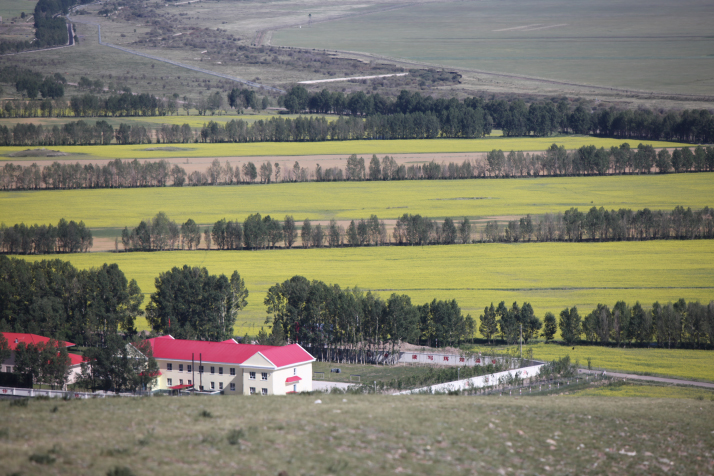 The China-Kazakhstan border in August 2014 (COURTESY PHOTO)
Chen Ruijun's words The Yili grassland has always been a spiritual homeland for me. During my term in Xinjiang, I found the scenery of the Zhaosu, Nalati, and Kalajun grasslands breathtaking. After my term ended, I returned repeatedly to capture the best photographs and write articles. One year, I took my annual leave specifically to return to Yili for creative inspiration. This time, I was able to take many satisfying photographs and write many articles due to meeting Wang Yali, the local "Living Map," who gave me unstinting help and inspiration. Wang, tall and handsome, is of Hui ethnicity. Though a judicial officer, he didn't have official airs and was very approachable. He knew the area intimately and spoke fluent Uygur, which helped him easily connect with the people. Familiar with this beautiful grassland, he took me off the tourist track and off the beaten path, leading me along the border line. 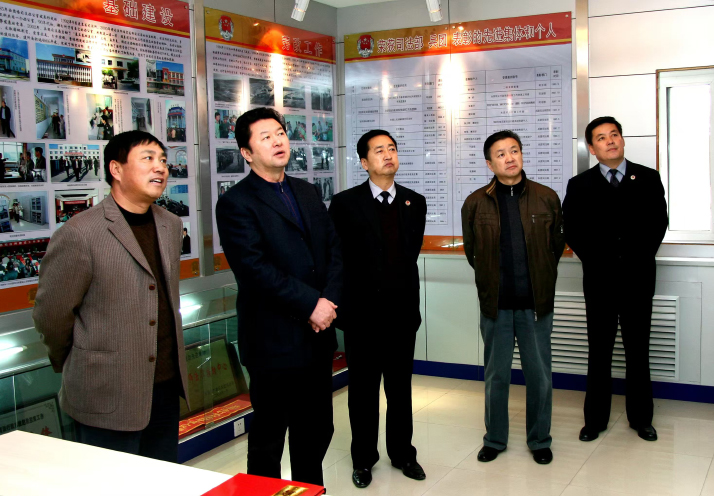 Wang Yali accompanies leaders of the Fourth Division of Xinjiang Production and Construction Corps to inspect grassroots judicial work in Cocodala City in 2008 (COURTESY PHOTO)
This helped me get authentic and moving XPCC stories, capture beautiful scenery that others rarely see, and acquire special photography techniques. For instance, when photographing birds, we often parked the car very close to the birds, and rolled down the windows to shoot. The birds wouldn't fly away. However, the moment someone stepped out of the car, they would scatter. It seems birds' intelligence grows through their interactions with people. Our last meal on that trip was mutton stew eaten in a yurt. Lost in the singing and drinking, I nearly missed my flight. Since then, we have maintained contact, our exchanges regarding work and life have deepened, and we help each other without hesitation or formality. Whenever we have a chance to meet, we always share a good drink and a meaningful conversation. The enthusiasm, simplicity, and kindness of Xinjiang people is genuine and enduring. This is why I love Xinjiang so deeply. Comments to yanwei@cicgamericas.com |
|
||||||||||||||||||||||||||||
|