
|
| Xinjiang Today |
| Ahead of the game | |
|
|
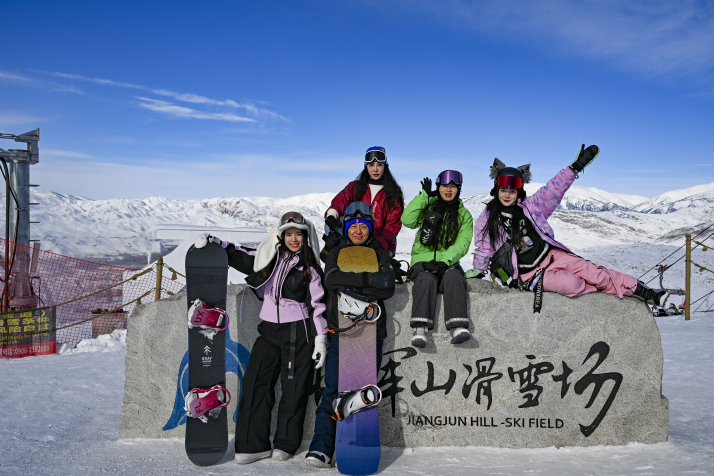 Skiing enthusiasts take a group photo at a ski resort in Altay on January 28, 2025 (XINHUA)
Yierfan Liwayiding is a key player for an amateur soccer club in Atushi (Artux), Kezilesu (Kizilsu) Kirgiz Autonomous Prefecture. By day he works in his market stall and by night plays soccer. The launch of the Pomegranate Seeds Cup 2025 soccer league last summer gave him a chance to showcase his talent. The league, running for approximately eight months, had 116 teams composed of soccer enthusiasts. They included farmers, delivery workers, doctors and students. They played nearly 800 matches, honing their skills and building friendship through the sport. Yierfan's team has over 30 players from various professions. "Everyone works during the day and meets up in the evenings to play. We train three times a week in free public sports fields." In the past few years, his team participated in several local tournaments and their performance won them a corporate sponsorship. "Soccer facilities in Xinjiang are improving and the local tourneys are growing in scale and quality. This has given me a much broader platform to pursue my passion," he added. In recent years, Xinjiang has built a thriving sports ecosystem that operates at multiple levels. At the grassroots, events like the Village Super League and village basketball tournaments have become immensely popular, fostering community health and strengthening social bonds. Building on this vibrant local foundation, Xinjiang has been hosting a growing number of international sporting events. These competitions serve a dual purpose: They provide a platform for athletic excellence and cultural exchange, while simultaneously acting as a powerful catalyst for regional development. By attracting visitors and global attention, these international events also boost tourism and economic growth in the region. 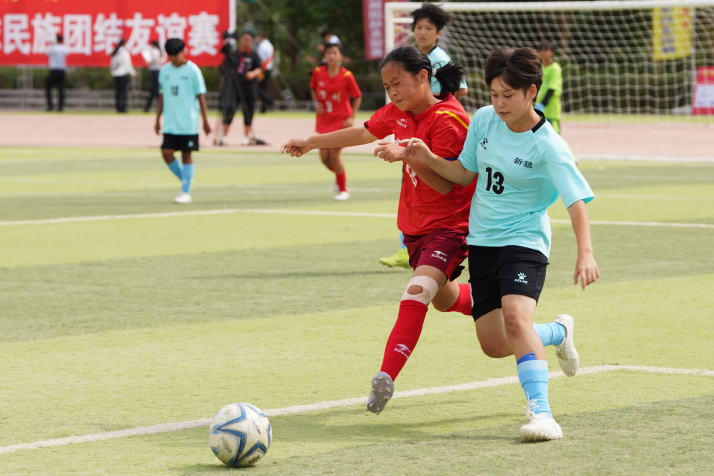 A match during the China Youth Girls' Soccer Unity Cup, which kicked off in Kashi (Kashgar) on August 5, 2025 (XINHUA)
Celebrations of identity Xinjiang's strategic position along the historical Silk Road was a precursor of its contemporary role as a cultural and economic crossroads. For centuries, this region witnessed the exchange of goods, ideas, and traditions between the East and the West. Today, that legacy continues through international sporting competitions that attract participants and spectators from across Asia and beyond. For example, the 2026 China International Snow Volleyball Invitational Tournament, held at the Tianshan Tianchi International Ski Resort in Fukang City in January, featured 17 Chinese teams and international athletes from France, Russia, Hungary, Kazakhstan and beyond. Dubbed "beach volleyball on snow," this innovative sport blends volleyball's intensity with winter agility, drawing record participation. The event highlights China's efforts in promoting snow volleyball globally, with the International Volleyball Federation supporting its potential inclusion in the Winter Olympics. Hosting the tournament in the Tianshan Mountains—a majestic range dividing Xinjiang into northern and southern parts—also showcased China's stunning landscapes to a global audience. The Central Asian Indoor Athletics Invitational Tournament was launched in 2024 to strengthen sports exchanges between China and Central Asia. The inaugural edition saw nearly 250 athletes from China, Kazakhstan, Uzbekistan, Tajikistan and Kyrgyzstan compete across four divisions and 26 events over two days. The second edition of the tournament last month welcomed nearly 800 athletes. The training camp organized during the event provided a valuable platform for technical exchange and cultural interaction. Another signature event is the Taklimakan Rally, Asia's longest and toughest off-road race. Launched in 2005, it is routed through the Taklimakan, the world's second-largest shifting sand desert. The 2025 Taklimakan Rally featured 23 motorcycles and 105 vehicles, with the riders tackling extreme heat and complex topography for approximately 5,200 km. Marking a milestone in its 21-year history, the 2025 edition introduced its first New Energy category in which 10 pioneering hybrid race vehicles took on a course that lay 65 percent in desert terrain, the highest proportion in the event's history.  A participant in the 2025 Taklimakan Rally in Kashi Prefecture on May 30, 2025 (XINHUA)
"I absolutely loved racing in China!" beamed Czech rider Martin Michek, whose debut at the rally was crowned with a stunning victory in the motorcycle category. While international events showcase Xinjiang's capacity to hold world-class competitions, the local sports culture shows grassroots energy and vibrant cultural heritage. Soccer is a universal language, enriching community life and providing a stage for spirited competition. From tightly contested neighborhood street leagues to structured inter-county tournaments, the game offers participants of all ages and backgrounds a chance to test their skills, foster camaraderie, and embody the local passion for sport. Considerable investment is being made to develop youth soccer. Over 900 schools in Xinjiang—more than 20 percent of all primary and secondary schools—have soccer programs. Then there are events like the Xinjiang Yili Heavenly Horse International Tourism Festival in Yili, now in its third decade. Here, ancient equestrian skills share the spotlight. Riding is not merely a sport; it's a living pageant of nomadic tradition, where the thunder of hooves connects the present to a centuries-old way of life. Traditional wrestling and archery matches are other vibrant celebrations of identity. 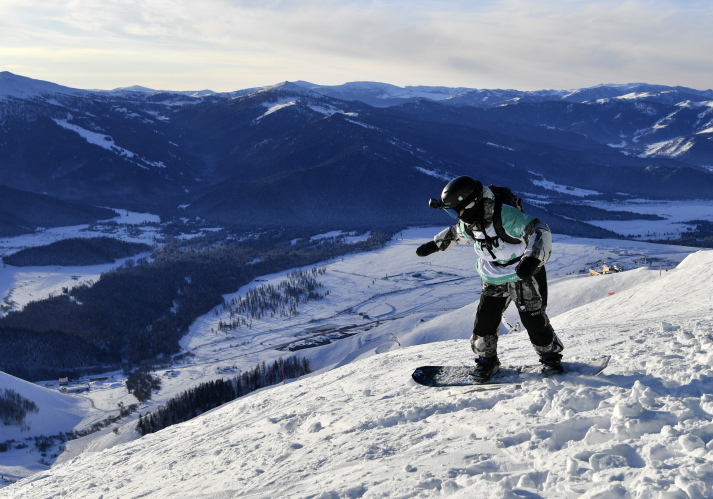 A contestant races down the slopes during the Snowboard Women’s category at the 2024/25 FWT Hemu Freeride week 3 Star qualifier at the Jikepulin International Ski Resort in Altay on December 7, 2024 (XINHUA)
The ski's the limit! Sporting events in Xinjiang have become engines of regional tourism growth and international engagement. The region is leveraging its natural landscapes—breathtaking sites like the Wensu Grand Canyon desert poplar forests in Darya Boyi, a town in the Taklimakan Desert, as well as UNESCO-listed Silk Road landmarks like the Kizil Caves, a cluster famed for their Buddhist art, and the Subash Buddhist Temple Ruins—and cultural heritage to attract visitors and build a sustainable model for event-based tourism. During the 2024 Taklimakan Rally, over 20 cultural and tourism events were held alongside more than 30 themed activities at scenic spots. They generated 1.8 billion yuan ($259 million) in tourism revenue, up from 530 million yuan ($76 million) the previous year. In winter sports, Altay Prefecture has established a reputation as an international ice and snow tourism destination, boasting facilities like the famous Jiangjun Hill Ski Field, the Jikepulin International Ski Resort with the largest ski run area in Asia, and the Koktokay International Ski Resort with a vertical drop of over 1,200 meters. According to data from the Altay Bureau of Culture, Sports, Radio, Television and Tourism, the area welcomed more than 16 million tourist visits during the last ski season, marking a year-on-year increase of 26.53 percent. Total tourism expenditure exceeded 14 billion yuan ($2 billion), reflecting a growth of more than 28 percent compared to the previous year. To attract more skiing enthusiasts, the local government has introduced multiple new urban flight routes and launched a dedicated express train service. Partnerships have been established with international ski training institutions, novel tourism products such as helicopter skiing and snowmobiling have been introduced, and the number of hotels operating during winter has significantly increased—all aimed at sustaining the tourism momentum generated by the growing popularity of skiing. Comments to luyan@cicgamericas.com |
|
||||||||||||||||||||||||||||
|