|
| Xinjiang Today |
| From ancient crossroads to modern mega-hub | |
|
|
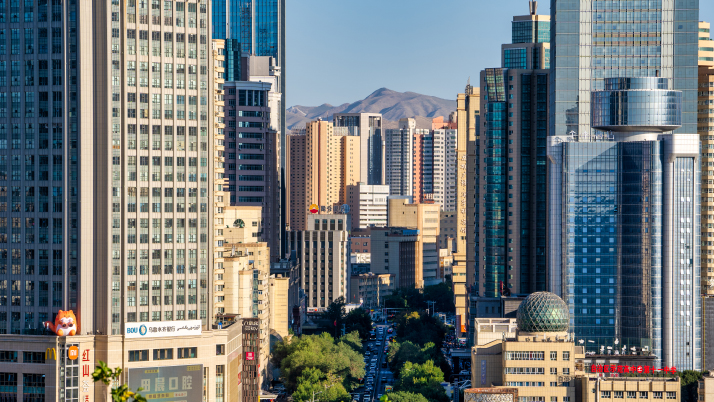 The urban skyline around Urumqi's Zhongtian Plaza on August 9, 2024 (VCG)
In ancient times, as Urumqi situated at a key connecting point between the Silk Road routes that skirted the Taklimakan Desert, it was an important stop where caravans could regroup and resupply before continuing their journey. Today, the city's massive international airport and rail networks connect China to Central Asia, Europe and beyond. As the political, economic and transportation heart of Xinjiang, Urumqi is the linchpin of China's Belt and Road Initiative, playing an important role in economic development, industrial innovation and intercultural exchange in China's far west. 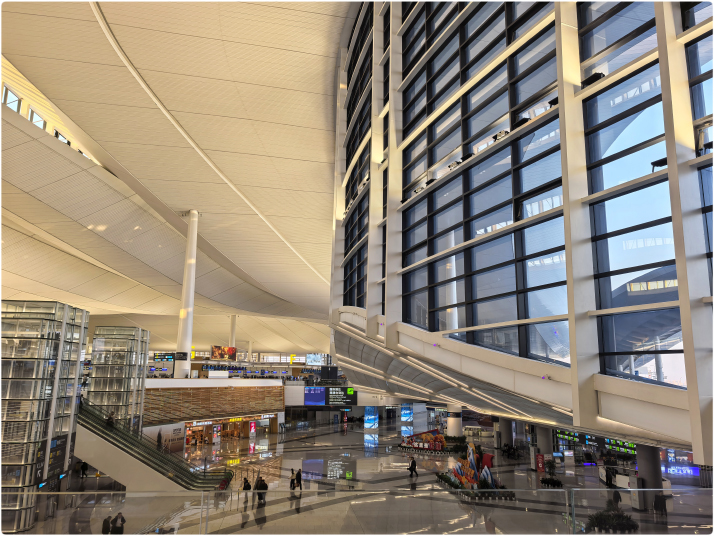 The Urumqi Tianshan International Airport in 2025 (VCG)
Airport that changed everything A transformation was made in air transportation. Before the 1970s, air travel from Urumqi was an ordeal. "If you wanted to fly to Beijing," recalled Yue Zhanshan, who oversaw the city's first and second airport expansion, in an earlier interview, "you first had to fly to Hami, change planes in Jiuquan, stay overnight in Lanzhou, and only then reach Beijing after two days." The Urumqi Diwopu International Airport, now Urumqi Tianshan International Airport, started out in the early 1930s as a humble flying area carved out on the barren Gobi Desert in the northeastern suburbs of the city. That changed in 1971 when then Premier Zhou Enlai ordered the development of new routes connecting Xinjiang with the outside world. The upgrading of the airport started in 1971 and was completed after 12 years of construction, which ended the era of dirt runways. The airport made Urumqi the fourth major gateway city alongside Beijing, Shanghai and Guangzhou. And in July 1989, when the Urumqi-Almaty route—the first international flight route in the region—was opened, the terminus of China's domestic air network became the launchpad for a new Eurasian vision. Since then, the airport has become a transit hub for tourists from all over, marking a new turning point for the city's development. With the advancement of the Belt and Road Initiative, Urumqi has leveraged its unique geographical location and its massive passenger and cargo flows to fuel its economy. In 2025, passenger traffic reached 29.18 million, up 5.09 percent year on year, while international flights soared by 62.31 percent with passenger traffic smashing records repeatedly during Spring Festival and summer vocations. Cargo throughput reached 338,000 tons, up by 40.65 percent, and international freight jumped by more than 200 percent. The airport ensured 194,900 flight takeoffs and landings in the year, representing a year-on-year increase of 3.27 percent, with the number of international and regional flights growing by nearly 80 percent, marking an accelerated formation of the Air Silk Road. 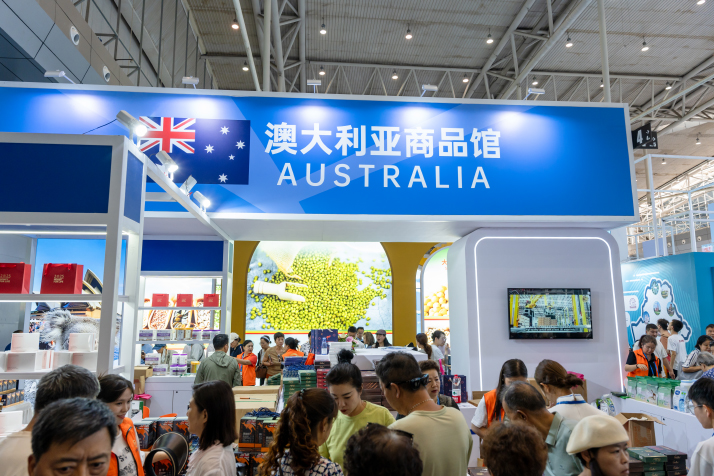 A scene from the eighth China-Eurasia Expo in Urumqi on June 28, 2025 (VCG)
A hub of industrial chains Strong industrial chains back strong industries while strong industries create thriving cities. In the energy sector, Urumqi is a hub for the west-to-east gas transmission project transporting natural gas from Xinjiang to the eastern coastal cities like Shanghai, and the Xinjiang electricity transmission project transmitting renewable energy to other parts of China. However, Urumqi's industrial focus goes beyond providing only natural resources; it is providing core equipment for the energy industry. Abundant in wind and solar resources, the region is not only a production hub for new energy power but also a manufacturing base for wind turbine blades, tower sections, photovoltaic modules, and even intelligent control systems. The 13th Five-Year Plan for Western Development released in 2017 designated Urumqi as a manufacturing base for wind power equipment. Locally produced equipment is not only serving the market in Xinjiang, but also the international market. Urumqi has become a hub for exporting green energy technologies and equipment. This transition from a resource producer to a technology provider is a significant shift in the industrial structure of Urumqi. Leading this charge is Goldwind, an Urumqi-born firm that has become a wind-power titan globally. In 2024, its international sales jumped 53 percent year on year to 12 billion yuan ($1.72 billion), bringing global installed capacity additions to 19.3 gigawatts—the largest worldwide for three consecutive years. 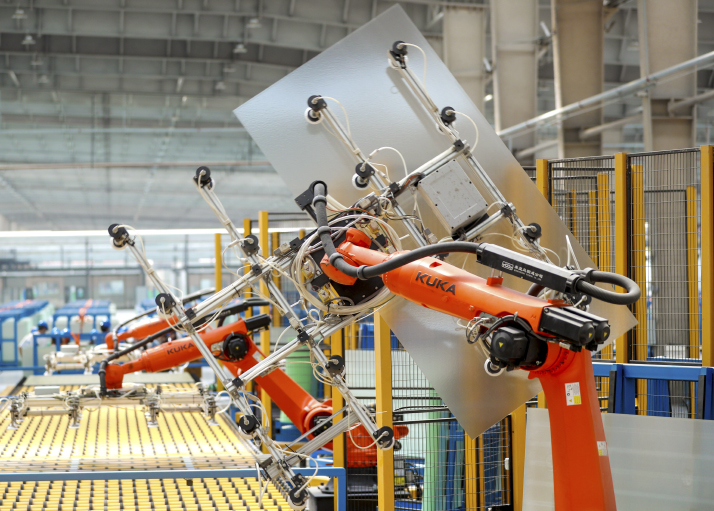 A smart assembly line of Hoshine Silicon Industry Co. in Xinjiang produces photovoltaic glass on May 24, 2024 (VCG)
Urumqi is also a logistics hub on the Eurasian continent. As the hub of the China-Europe Railway Express, a flagship project under the Belt and Road Initiative that connects China with Europe. Thanks to consolidated shipping and local processing, Urumqi has seen significant improvements in its logistics capacity, industrial clustering, and customs clearance efficiency. According to August 2025 statistics from Zhongguo Guomen Shibao, a publication on matters related to China's border inspection, quarantine, and potentially trade or logistical gateways, the Tianshan Express—a flagship China-Europe freight service—dispatched 480 freight trains in the first seven months of 2025, with cargo volume and value increasing by 56 percent and 48.47 percent year on year respectively. The Urumqi International Land Port today handles the consolidation and dispatch of goods nationwide. Over 270 enterprises operate in the core zone of the port, engaged in trade, logistics, processing and manufacturing, while the total number of market entities is 3,870. A complete industrial chain has been established around equipment manufacturing—spanning steel raw materials to complete vehicle assembly. In the future, the local supply chain is expected to meet the demand from 60 complete vehicle manufacturers across Xinjiang. The "port-rail integration" between the comprehensive bonded zone and the railway station yard has nearly tripled transport efficiency while customs efficiency has been boosted by an innovative "bonded logistics + scheduled freight" system, which brings an extra 3 billion yuan ($430 million) in export value annually. 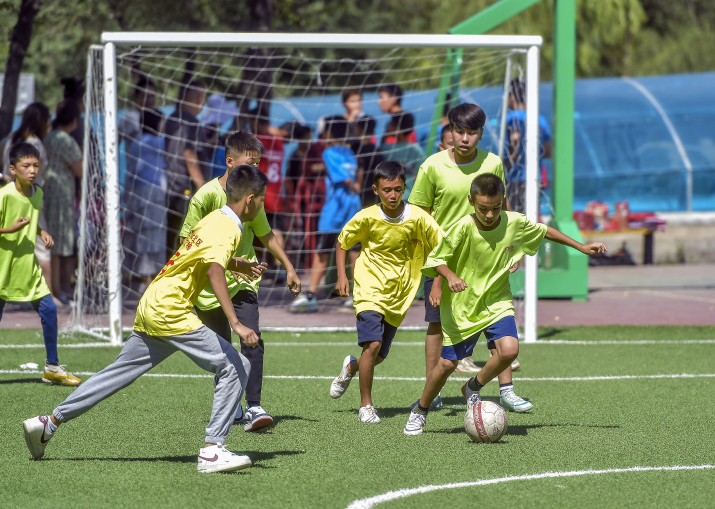 Students participate in summer vacation sports in Urumqi on August 1, 2025 (VCG)
A cultural crossroads reimagined If logistics and energy form Urumqi's skeleton, culture provides its soul. The city's name—derived from the Mongolian word for "beautiful pasture"—indicates its deep multicultural roots. Urumqi is home to all the 56 ethnic groups of China. As the political and cultural center of Xinjiang, it is a repository of the historical memories and folk resources from across the region. In the process of urban renewal, Urumqi has broken down old patterns of single-ethnic neighborhoods. Through initiatives such as affordable housing construction, renovation of old residential communities and equal allocation of public resources, the city has promoted the mixed habitation of various ethnic groups in geographic space and fostered their complementarity in social functions. With enhanced transportation and communication infrastructure, contemporary cultural exchanges have increased mutual learning. Cultural exchanges have been facilitated through platforms such as the China-Eurasia Expo, various international cultural exchange mechanisms and international medical service centers, as well as through international students enrolled in higher education institutions. As a core engine for Xinjiang's transformation into a golden corridor linking Asia and Europe and a bridgehead for opening up westward, Urumqi is integrating into the new development paradigm created by the Belt and Road Initiative. The city has demonstrated that a true hub not only facilitates the swift passage of goods and people but also attracts resources, technologies, talents and cultures to settle and accumulate, thereby creating new value. Comments to shangzhouhao@cicgamericas.com |
|
||||||||||||||||||||||||||||
|