
|
| Xinjiang Today |
| The enduring aroma of coexistence | |
|
|
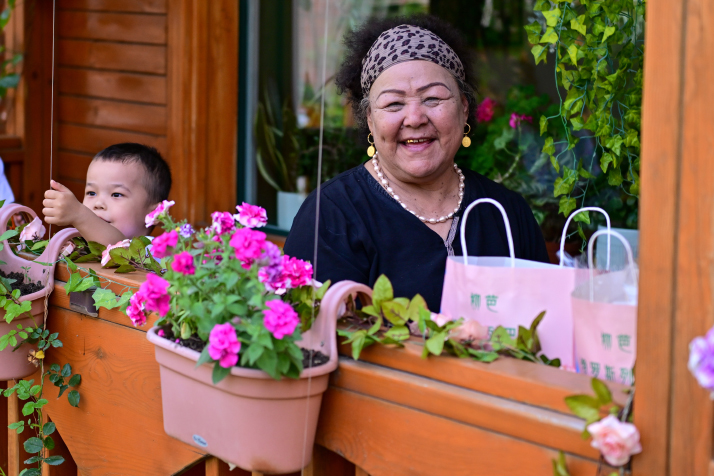 Tourists enjoy a leisurely time on Liuxing Street in Yining, Ili Kazak Autonomous Prefecture, on May 11, 2024 (XINHUA)
Dawn mist veils the lanes of Liuxing Street in Yining, the city in north Xinjiang famed as Flower City. The asphalt glistens with night dew. From the carved window of a colorful Russian-style cottage comes a distinctive fragrance—the earthy, robust scent of dark rye and wild hops, with a hint of gentle intoxication.
It drifts past a grapevine-adorned streetlamp, curls around a bronze accordion sculpture at the corner, and seeps into the quiet outside, rousing the multiethnic neighborhood from its sleep. Feng Xiaoli, wearing an apron, leans over to peer into the flickering flames of her earthen oven, turning a long metal hook slowly in her hand. The fire casts a warm glow on her cheeks and illuminates the sign above the entrance—Liuba Bakery—with a gentle, welcoming light. "Lilia, isn't it time for today's rye bread to come out?" calls a cheerful voice from outside the window. Feng turns her head and replies in the soft accent characteristic of Ili Kazak Autonomous Prefecture, "Almost ready! I'll save you a piece fresh from the oven!" Such morning exchanges have echoed through Liuxing Street for six years. The aroma of Russian lieba (the Chinese transliteration of rye bread in Russian), the smoky scent from Uygur naan pits, the traditional clay ovens where the staple flatbread naan is made, the warmth of Han-style steamed buns, and the lingering fragrance of Hui fried pastry—all these distinct smells weave together here, yet never overshadow one another. 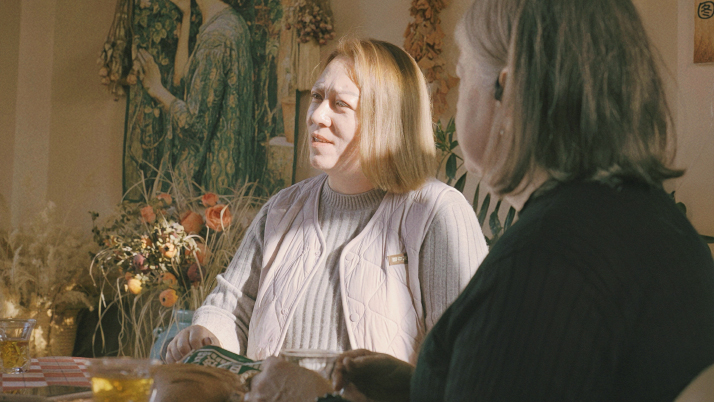 Feng Xiaoli (left) chats with a customer in her bakery on January 3 (SCREENSHOT) A family legacy Feng's Russian name, Lilia, was given by her grandmother. As the fourth-generation inheritor of the lieba-making craft, this name carries the story of nearly a century of family migration and steadfast perseverance. "My great-grandmother came to Ili from Russia in 1934, settling with the first residents in Liuxing Street," Feng told Xinjiang Today, her words seeming to knead rhythm into the dough itself. "People built adobe houses, dug wells and helped each other through life as neighbors. It was with her skill in making lieba that my great-grandmother put down roots in this land." The history of Liuxing Street forms the backdrop to Feng's family heritage. In 1934, a German engineer designed this hexagonally radial neighborhood, with six main roads converging at a central square like a blossoming snowflake. Russian, Uygur, Kazak and other ethnic groups gradually moved in. Her happiest childhood memories revolve around her grandmother's and mother's kneading boards. Watching her grandmother sun-dry and crush wild hops, mixing them with cornmeal to create the lieba starter; seeing her mother carefully work raisins and walnuts into the dough. Back then, Feng didn't understand what "inheritance" meant. "I just thought dough was something magical in their hands," she recalled. In 2015, Feng opened her first lieba bakery in Yining. In 2020, carrying her family's old recipes, she returned to her great-grandmother's street. Liuxing Street has been revitalized through protective renovations, yet the warmth between neighbors and the atmosphere of multiethnic coexistence remain unchanged. Her bakery attracted locals and tourists from the day it opened. "Once the lieba is baked, I just need to open the window, and tourists follow the scent here," Feng said with pride. 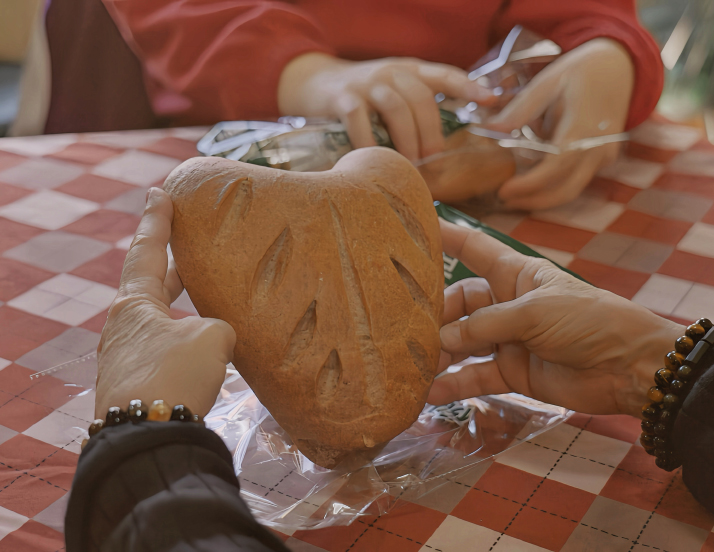 A heart-shaped lieba on display at Feng Xiaoli's bakery on January 3 (SCREENSHOT)
Ancient methods, new flavors In Feng's hands, the ancient family craft is preserved in its entirety. For the first step—making the lieba starter—she adheres to the hop fermentation method passed down by her great-grandmother: steeping wild hops in boiling water, mixing them with cornmeal to ferment for a full day and night, then adding beer to promote secondary fermentation. "This naturally fermented starter gives the lieba its unique aroma," Feng explained. When kneading, she employs the traditional technique of one hand supporting, the other pushing, following the "feel" of the dough until it becomes fluffy and soft. Finally, the dough is placed into a specially made earthen oven and baked with seasoned hardwood. Building on tradition, Feng has incorporated local wisdom. "Xinjiang has no shortage of wonderful things like raisins and walnuts," she said. She has developed various flavors such as yogurt lieba, purple sweet potato lieba and pumpkin lieba. She also adjusts recipes based on the taste preferences of different age groups, integrating this Russian ethnic craft into the fabric of life in Xinjiang. Bread as language For Feng, baking is not merely a profession but a solace for the soul. "When I feel down, I go to the back kitchen to make bread," she said, feeling the warmth and elasticity of the dough in her hands. "When making bread, you focus solely on the immediate actions, and you feel a deep sense of calm." This focus brings her inner peace while she transmits her skills. At her bakery, employees from diverse ethnic backgrounds work in seamless coordination, where cooperation becomes the most natural mode of interaction. Today, Feng's bakery has become a cultural hallmark of Liuxing Street. Every day, people from diverse ethnic and regional backgrounds visit, drawn by its reputation. 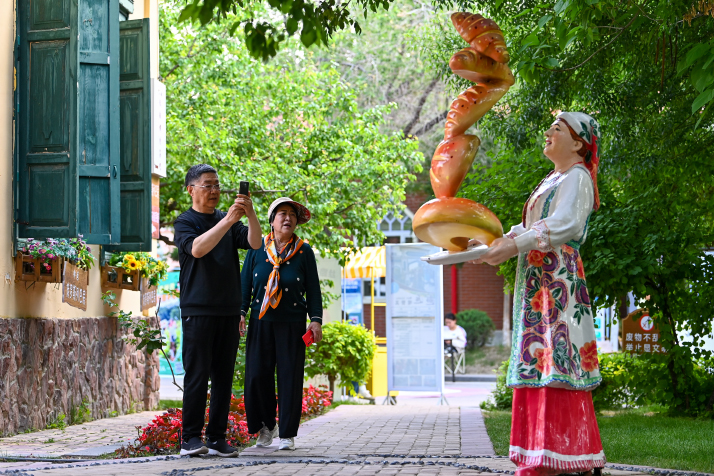 Tourists take photos in front of Liuba Bakery on Liuxing Street in Yining on May 19, 2023 (XINHUA)
"I hope that through this humble food, more people can learn about Russian ethnic culture and the stories of the street," Feng said. She will continue to uphold this heritage. As dusk falls, the setting sun gilds the street with a warm, golden hue. Feng turns off the oven and places the last batch of lieba on the counter. The sound of an accordion, played by an old man from Tatar, one of China's smaller ethnic groups, floats from a neighboring courtyard, intertwining with the wheaty aroma of the bread, lingering in the air between the lanes. Here, every food has its own language; every fragrance tells a story. Feng and her lieba represent a vivid stroke in this portrait of multiethnic symbiosis—unassuming yet indispensable; born of tradition, yet brimming with new vitality in daily life. Just like the dough transformed by fire in the earthen oven, the perseverance of four generations in this family has ultimately, in this century-old street, become the warm scent that awakens the entire neighborhood at dawn. Comments to taozihui@cicgamericas.com |
|
||||||||||||||||||||||||||||
|