
|
| Xinjiang Today |
| From connectivity to capacity | |
|
|
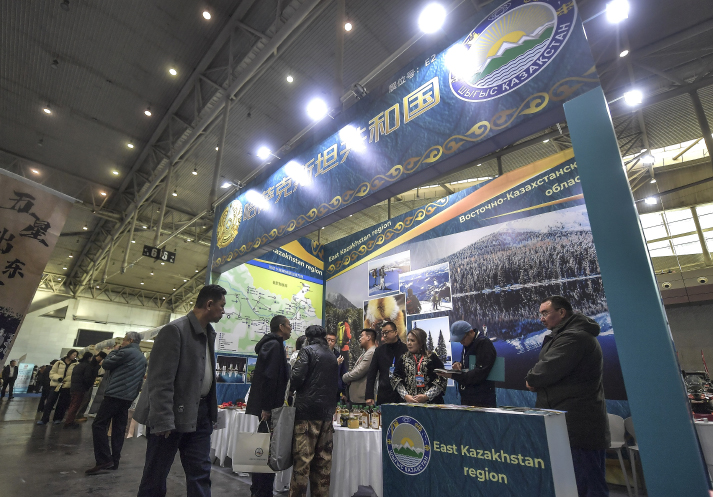 The Kazakhstan booth at the 19th Xinjiang Winter Tourism Industry Trade Expo in Urumqi on November 14 (VCG)
On December 2, the Tianshan Forum for Central Asia Economic Cooperation convened in Urumqi under the theme Unlocking Connectivity and Investment in Central Asia. The two-day forum brought together representatives of member countries of the Central Asia Regional Economic Cooperation Program to engage in discussions on regional cooperation, shared challenges and strategies to enhance connectivity. Edited excerpts of key viewpoints expressed during the forum follow:
Zhang Jun, Secretary General of the Boao Forum for Asia As the world moves deeper into the third decade of this century, momentous changes are reshaping international affairs, making uncertainty, instability and unpredictability a defining feature of the global landscape. Unilateralism and protectionism, most visibly manifested in tariff wars, have weakened the global trade order, strained international governance, and injected long-term risks into the world economy, testing not only economic resilience but also the international community's capacity to respond with coordination and foresight. At such a crossroads, the greatest danger is not turbulence but strategic drift. History suggests that periods of profound change demand clarity of direction, and the most credible path forward is to uphold multilateralism, remain committed to openness and improve global governance through win-win cooperation. Only by rejecting zero-sum logic and reinforcing shared interests can countries prevent fragmentation and preserve the foundations of global stability. Against this challenging backdrop, Asia's trajectory is particularly noteworthy. Despite strong headwinds against globalization and sustained pressure from protectionist measures, much of Asia has chosen progress over retreat. The region has maintained relatively stable growth, consolidated its role as a key manufacturing base and continued to serve as a major engine of global development. More importantly, regional cooperation in Asia has shown resilience, breaking through barriers and emerging as a stabilizing pillar for free trade and open economic integration at a time when such principles are under strain elsewhere. Within this broader Asian momentum, Central Asia is increasingly emerging as a new highlight of regional cooperation. Historically, the region occupied a central position in Eurasian exchange during the ancient Silk Road era, yet its landlocked geography later became a constraint on trade and industrial integration. Today, that constraint is being steadily transformed. Driven by globalization, infrastructure connectivity and regional cooperation, Central Asia is regaining strategic relevance as a land corridor linking East Asia and Europe, two of the world's largest economic poles. The expansion of transcontinental transport networks, including China Railway Express routes and multimodal logistics corridors, is reshaping Central Asia's development logic. What was once seen as isolation is becoming connectivity. The region is strengthening its role as a hub for energy, transport and communications, while gaining greater confidence in its prospects. This transformation is not automatic; it reflects deliberate choices to integrate more deeply into regional and global economic networks. To sustain this momentum, several priorities are critical. First, connectivity must continue to improve in both scale and quality. Infrastructure corridors and flagship projects should form more reliable networks that ensure supply chain stability and security, while helping Central Asian economies diversify exports and integrate into broader value chains. Second, connectivity should be paired with industrial and investment cooperation. Infrastructure opens pathways, but long-term development depends on productive capacity along those routes. Industrial parks, technology development zones and logistics hubs can translate transit advantages into real economic gains, attracting capital, technology and employment. Third, Central Asia should seize opportunities arising from global economic transformation. As digitalization and green transition accelerate worldwide, cooperation in renewable energy, digital infrastructure and emerging technologies, such as AI, can help the region move toward higher-quality growth. Finally, Central Asia's rise will be most sustainable when embedded within broader Asian regional cooperation. As global trade patterns adjust toward diversification and regionalization, deeper participation in Asia-Pacific frameworks can expand the space for development and enhance resilience. In this evolving Eurasian landscape, Xinjiang plays a crucial gateway role, linking China with Central Asia and beyond. Its growing connectivity and openness have supported deeper regional integration and practical cooperation.  A delegation from Uzbekistan visits the Xinjiang Software Park in Urumqi on November 3 (VCG)
Wang Chunying, President of the Export-Import Bank of China
The successful convening of the Second China-Central Asia Summit in Astana, Kazakhstan, in June marked a milestone in regional cooperation. President Xi Jinping's articulation of the China-Central Asia Spirit—mutual respect, mutual trust, mutual benefit and mutual assistance for the joint pursuit of modernization through high-quality development—laid out a compelling blueprint for regional collaboration. At the Export-Import Bank of China, we see this spirit as more than a diplomatic gesture, it is a call to action for practical, sustained financial engagement that drives shared modernization. As a policy bank dedicated to promoting China's foreign trade and international economic cooperation, we see Central Asia as a strategic priority. We have directed credit resources toward overcoming infrastructure bottlenecks and enhancing regional connectivity, aligning closely with the region's economic development goals. Projects like the China-Kyrgyzstan-Uzbekistan Railway and Tajikistan's north-south power transmission line exemplify how targeted financing can unlock regional potential and fuel long-term growth. But development must be sustainable. That's why we have made green finance a defining characteristic of our overseas operations. Since 2017, we have supported the renovation and construction of dozens of small and medium-sized hydropower plants in Uzbekistan, providing 275 megawatts of clean energy for local communities. Such projects not only reduce carbon footprints but also empower local economies with stable, renewable energy. We also champion open cooperation. On the ground, this means deepening ties with local financial institutions to expand the use of RMB in bilateral trade and hedge against currency volatility. At the international level, partnerships with multilateral banks like the Asian Development Bank allow us to co-finance projects, amplify funding sources and share risks, an increasingly necessary model in today's complex financial landscape. In 2024, we took a historic step by opening our first overseas representative office in Uzbekistan. This move made us the first Chinese financial institution to establish a branch covering all five Central Asian countries, enhancing our ability to deliver efficient, localized financial services. In an era defined by geopolitical shifts and economic uncertainties, deepening regional cooperation is not optional; it is essential. Advancing China-Central Asia financial collaboration will depend on a few practical priorities. First, strategic alignment must improve. Large-scale infrastructure projects should be coordinated with supporting industries, grounded in local development stages and resource endowments, to enhance the efficiency and sustainability of regional growth. Second, emerging industries deserve greater attention. Central Asia's rich resource base and expanding digital ambitions create strong potential for cooperation in green energy, digital infrastructure, AI and aerospace, moving beyond focus on oil, gas and transportation. Third, financial innovation should be expanded. A flexible mix of concessional loans, commercial financing and equity investment can better match diverse project needs and inject fresh momentum into economies in the region. Fourth, multilateral cooperation and capacity building must be strengthened. Funding gaps remain a key challenge. Joint participation from multilateral institutions, regional banks and national agencies, through syndicated loans and third-party market partnerships, can help bridge this divide. Equally important is knowledge sharing to build local expertise and ensure long-term project success. 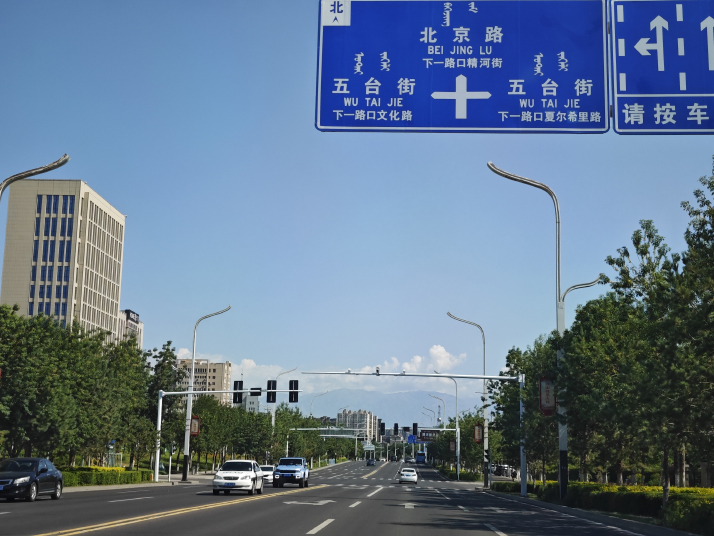 Alashankou City, Bortala Mongolian Autonomous Prefecture, on June 17, 2024 (VCG)
Roman Serob, Vice President and Chief Operating Officer of the New Development Bank (NDB)
Although the NDB has not yet been very active in the region, it has supported projects in China, such as the Xi'an Xianyang International Airport project and the Lanzhou Zhongchuan International Airport project. They help expand the mobility of people and goods to and from their respective cities, not only within China but internationally as well, particularly across Central and West Asia. In Xinjiang, meanwhile, the NDB is preparing the Xinjiang Alashankou Port Infrastructure Development Project, which would help develop Alashankou, on the border between Xinjiang and Kazakhstan, into a high-performing trade hub and significantly strengthen logistics capacity between the two countries. Comments to zhaowei@cicgamericas.com |
|
||||||||||||||||||||||||||||
|