
|
| Xinjiang Today |
| From family fields to digital dreams | |
|
|
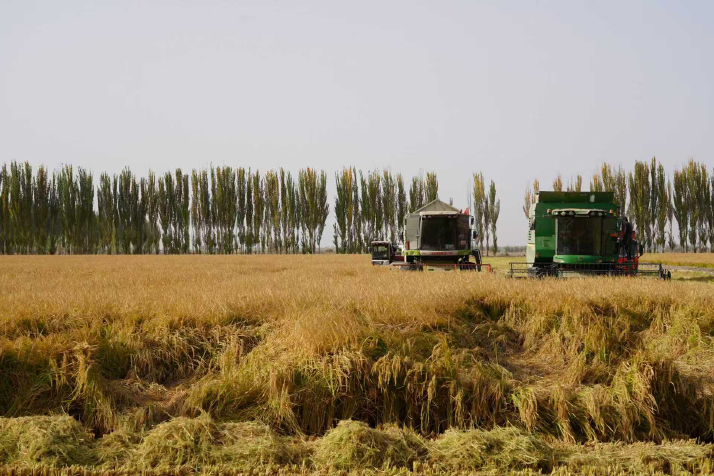 The harvest machinery in Ayinigeer's field stands ready (WANG YAJUAN)
Under the vast sky, golden rice stalks sway in the autumn breeze in Tuohula, a township in Wensu County, Aksu Prefecture of Xinjiang. Ayinigeer Tuoheti strides among the ripening crop purposefully, checking it carefully. This 28-year-old computer science graduate's quiet determination and digital expertise are bridging the gap between her family's traditional rice business and the digital age.
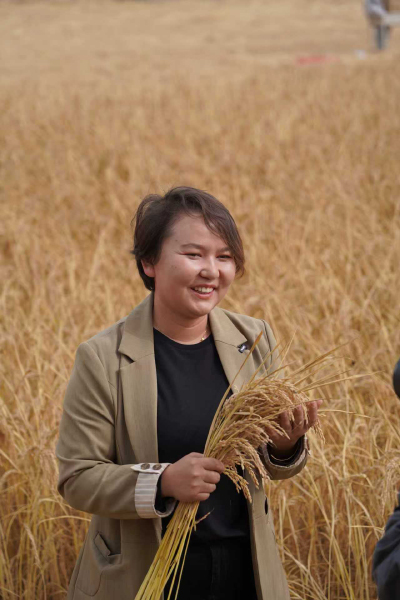 Ayinigeer Tuoheti in her rice field in Tuohula Township, Wensu County of Aksu Prefecture (WANG YAJUAN)
A digital turnaround "When my father looked at me and asked for help, I didn't think twice," Ayinigeer told Xinjiang Today, pausing near a patch of rice ready for harvest. "He built a processing plant in 1994 with his own hands, but his health then weakened and communication with business partners grew difficult, so he needed me." The Urumqi Vocational University graduate returned home in 2020, expecting to assist with paperwork and local sales. The reality that greeted her, however, was a world away from digital efficiency. In the dusty office, the ledger book and stamp pad were the most important tools and transactions were recorded by hand, using carbon paper to keep copies. A quiet but firm resolution crystallized in her mind: "This has to change." Her family also ran a small cooperative that helped other farmers sell rice, and her first major decision was to transform the cooperative into a company. Drawing on her computer science background, Ayinigeer automated the invoicing process, using software to handle everything from inventory management to processing orders. "Before, everything was handwritten," she said. "Now, it's all electronic and efficient." To ensure a stable supply of high-quality rice, she went beyond the factory walls into the fields. She established a partnership model, working with over 120 households who transferred the management rights of their land to her company. Under this system, her company is in charge of around 170 hectares. It provides the farmers with seeds, fertilizers and training, commits to buying their harvest at prices above market rates, and shares the profits back with them. This has not only ensured premium raw materials for her business but also significantly boosted the farmers' incomes and reduced their financial risks. With a robust supply chain in place, her next revolution was about to begin. In 2023, she and her sister made a decision that would transform their business. They started livestreaming and posting short videos on platforms such as Douyin, the Chinese version of TikTok. With a simple smartphone and abundant enthusiasm, they began showing viewers their rice fields, the processing plant and even their family meals featuring their products. "At first, it was just us," she said. "We'd stand in the fields for hours, talking about why our rice was special." The initial phase was particularly difficult. Fortunately, both the county and township governments provided them with training to enhance their livestreaming skills and resolve the technical difficulties encountered during the broadcasts. Their authenticity resonated with their viewers. People who saw their broadcasts began contacting them for their products. In the beginning, they received about a dozen orders per day, with the livestreams lasting just over two hours. Now, they broadcast for four hours daily, and get hundreds of orders per day. Their follower base has also grown steadily. Then something unexpected happened: Professional livestreamers took notice of their success. "By early 2024, influencers from across China were reaching out to us," she said. "They wanted to partner with us because our product had proven appeal." The numbers tell the resulting story. From March to September this year, they had 180,000 orders through livestreaming, with 7,000 on a single day—that's nearly 35 tons of rice moving directly from their fields to households across China. Today, e-commerce accounts for over 50 percent of their revenue, a figure that continues to climb. "We take part in promotion fairs in Xinjiang each year," she added. "It's a valuable opportunity to share our story with potential customers. Through these events, we've built a strong network of agents and distributors, which has strengthened our sales." 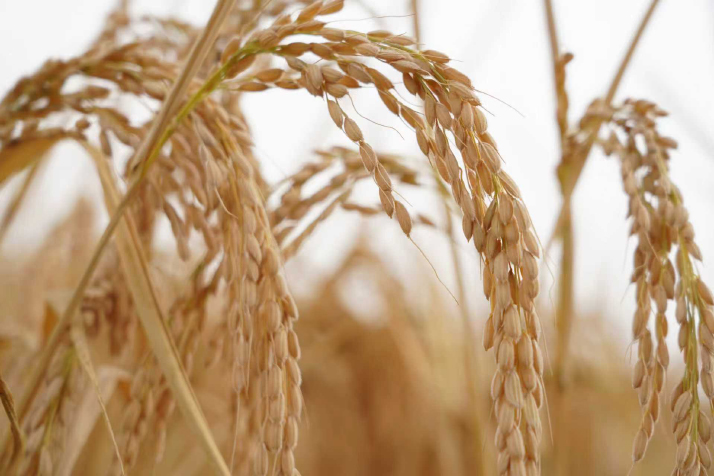 Rice produced in Ayinigeer's field (WANG YAJUAN)
A land blessed by nature
The phenomenal success of Ayinigeer's livestreaming, however, is not due to her being technology and management savvy alone. It is ultimately rooted in the unparalleled quality of the rice she sells—a quality defined by the unique land of Wensu and generations of dedication. The story of Wensu, one of the three main rice-producing counties in Xinjiang, is written with its water, soil and climate. The county experiences dramatic temperature swings like most regions in Xinjiang, hot days followed by cool nights that help the rice grains develop fully without losing their natural fragrance. Magic lies beneath the surface. The soil here is rich in selenium, a mineral essential to human health, and the water for irrigation comes from the pure snowmelt flowing down the Tianshan Mountains. The mighty mountain range spans the length of Xinjiang and is a critical water source for the region's agriculture. Local farmers have long claimed that rice from Tuohula tastes different—sweeter, richer and more aromatic. For years, this has remained a point of local pride. Building upon its superior agricultural resources, the area has undergone a modern transformation. Today about 98 percent of the entire farming process, from planting to harvesting, is mechanized, making agriculture efficient. This efficiency is directly reflected in the output. This year, Tuohula produced a record 10,950 kg of rice per hectare, showing a steady increase and setting a new benchmark for productivity. Moreover, Wenxu is making strategic investments in the science behind the grain to enhance both the quality and quantity of its renowned rice and strengthen its competitive edge. The cornerstone of this effort is a rice experiment, demonstration and breeding base established in Tuohula in 1998 by Xinjiang Jinfengyuan Seed Co. Ltd. This facility serves as a critical hub for the selection and testing of new rice varieties, focusing on improvements in grain quality, yield, disease resistance and regional adaptability—a commitment that has earned Tuohula rice numerous awards. "Our dedicated research team invests over 1 million yuan ($140,674) annually in variety development," explained Chen Changqing, head of the company's rice division. By consistently undertaking regional and production trials for the autonomous region, Jinfengyuan is vigorously researching and promoting new rice varieties and cultivation techniques. This focused effort has paid off handsomely: The company's eight proprietary rice varieties now command over 90 percent of the rice seed market in the southern part of Xinjiang. The seeds that Ayinigeer uses are from this base. Inspiring young generation When Ayinigeer returned to Tuohula to help her father, she was an exception among her peers. Most young people sought opportunities in cities, viewing agriculture as a fading tradition. But her success has helped change that perception. "Now, more young people are coming back," she observed. "They see that with digital tools, we can create real opportunities here." Over 20 livestreamers, many of them from outside Xinjiang, have joined her operation. Local youths who once might have left for urban jobs are now finding ways to thrive in their hometowns as technicians or salespeople. The phenomenon extends beyond rice. Young entrepreneurs are using similar models to sell local specialties such as walnuts, dates and apples. "They serve as bridges," Ayinigeer explained. Many senior farmers from the ethnic minority groups don't speak standard Chinese well, but these young bilingual entrepreneurs can connect them with customers nationwide. "I believe more young people, armed with expertise in modern technology and new vision, will come back to their home villages and contribute their knowledge and energy to rural revitalization," she said. Comments to luyan@cicgamericas.com |
|
||||||||||||||||||||||||||||
|