|
| Voice |
| Too costly: British steel nationalization | |
|
|
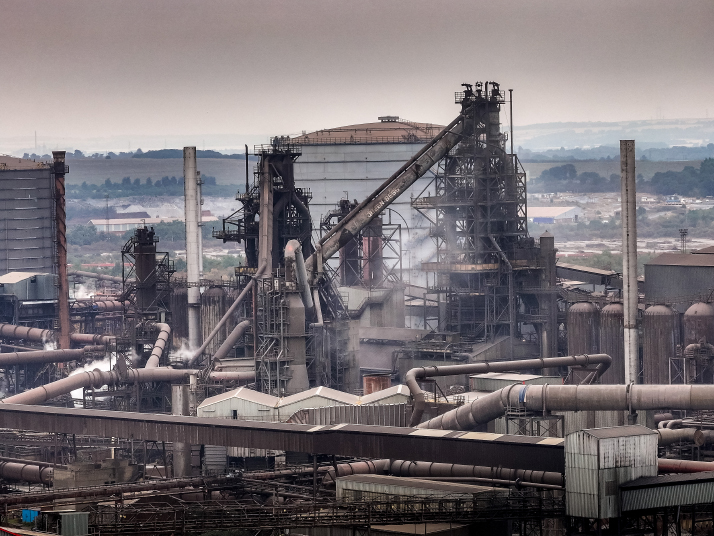 The British Steel Scunthorpe plant in Scunthorpe, the United Kingdom, on July 16 (VCG)
The British Government's decision to nationalize British Steel may have been presented as an act of economic patriotism. It was intended to preserve domestic steelmaking capacity, protect thousands of jobs and prevent Britain from becoming dependent on foreign suppliers for a strategically important material. These are understandable objectives. Steel remains essential to infrastructure, transportation, manufacturing, energy, construction and national defense. No responsible government should be indifferent to the disappearance of its remaining primary steelmaking capacity. But protecting a strategic industry does not mean that every government intervention is wise. By taking British Steel into full public ownership, the United Kingdom may have preserved its blast furnaces temporarily while creating much larger and longer-lasting problems. Nationalization will not eliminate British Steel's losses. It will not resolve the structural weaknesses that have troubled the company for years. Nor will it guarantee that the British taxpayer can turn the company into a profitable and internationally competitive producer. What it may do immediately is weaken Britain's reputation as a fair, predictable and dependable destination for international investment. Structural roots The history of British Steel matters. China's Jingye Group did not acquire a prosperous British company and then drive it into financial difficulty. British Steel was already losing money and had collapsed into compulsory liquidation before Jingye acquired it in March 2020. At that time, the company's future was uncertain and thousands of British jobs were at risk. Jingye acquired British Steel when few investors were willing to assume the financial and industrial risks associated with the troubled business. The British Government welcomed the acquisition. It announced that approximately 3,200 highly skilled jobs had been safeguarded. Jingye also pledged pivotal investment to modernize British Steel, improve its energy efficiency and place the business on a more competitive and sustainable footing. Jingye was not considered a threat when British Steel needed capital, employment protection and an owner willing to accept substantial risks. It was regarded as the company's rescuer. That history should not now be forgotten. Even if Jingye was ultimately unable to restore British Steel to profitability, it helped keep the company operating for several additional years. It maintained production, employed thousands of British workers, supplied capital and absorbed losses in a business that had already failed before the company even arrived. It is therefore misleading to place responsibility for British Steel's difficulties entirely on its Chinese ownership. The company's problems were structural, longstanding and deeply connected to Britain's broader industrial environment. British Steel has faced high energy costs, aging facilities, environmental transition expenses, fluctuating demand, global steel overcapacity and intense competition from lower-cost producers. These challenges existed before Jingye arrived and will remain after the company has passed into public ownership. The British Government may have prevented an immediate shutdown. But preventing closure is not the same as creating a commercially viable business. Changing the identity of British Steel's owner will not make electricity less expensive. It will not automatically modernize aging facilities, reduce carbon transition costs, eliminate global competition or create sufficient demand for higher-cost British steel. The credibility cost The real question is whether British Steel can become commercially sustainable. There is little reason to believe that nationalization alone will reverse years of losses or return the company to profitability within the next several years. British Steel is likely to require continuing operating subsidies, major capital investment, government-backed financing, preferential public procurement and possibly protection from international competition. Nationalization may therefore accomplish little more than transferring British Steel's losses from a foreign investor to the British taxpayer. What's more, the damage to Britain's international business credibility may begin immediately. Foreign investors do not evaluate a country solely on its market size, tax rates, skilled workforce or official investment incentives. They also study what happens when an investment becomes politically controversial or economically difficult. They ask whether contracts will be respected, whether foreign-owned assets will receive equal treatment, whether government intervention will follow transparent procedures and whether investors will receive fair compensation when private property is transferred into public ownership. The treatment of Jingye will therefore be studied not only in Beijing but in corporate boardrooms around the world. The message may be especially troubling to investors considering the acquisition of distressed British businesses. Britain cannot expect foreign companies to rescue failing industries, modernize aging factories, protect employment and bear years of losses if those investors believe the government may later take control when political pressures intensify. This would be a serious loss for a country that requires enormous amounts of international capital to modernize infrastructure, expand advanced manufacturing, develop clean energy, strengthen technology industries and revitalize economically challenged regions. Beyond British soil The decision also has implications for British companies operating in China. British banks, insurers, pharmaceutical companies, automobile manufacturers, professional services firms, retailers, universities and consumer brands have spent decades establishing operations and commercial relationships in the Chinese market. Many have made major investments and derive significant revenue and profits from China. Britain therefore has a direct national interest in defending the principle that foreign investment should receive fair, transparent and nondiscriminatory treatment. British officials would object strongly if Chinese authorities were to take control of a major British-owned company, transfer it into state ownership and offer little or uncertain compensation on the grounds that the business was strategically important. Britain should apply the same standards to Chinese investors that it expects China to apply to British companies. This does not mean the British Government had no right to intervene. Governments have a legitimate responsibility to preserve essential national capabilities, protect workers and prevent the sudden destruction of strategic industrial assets. But there were alternatives to outright nationalization. The government could have pursued a negotiated acquisition, temporary public administration, joint ownership, a minority public investment, loan guarantees, restructuring or an orderly transition to another industrial owner. If nationalization truly became unavoidable, it should have been conducted through a transparent process, with a clearly articulated legal basis and fair compensation for Jingye's legitimate investments and interests. Britain has long benefited from its reputation for the rule of law, contractual reliability, independent institution and respect for private property. These principles are not merely legal ideals. They are among Britain's most valuable economic assets. A reputation built over generations can be damaged by one high-profile case if international investors conclude that political expediency has displaced commercial fairness. The government must now publish a realistic plan explaining how British Steel will be financed, modernized and eventually made sustainable. It should disclose how much public money will be required, how long taxpayer support is expected to continue and what conditions must be achieved before the company can return to responsible commercial ownership. It must also acknowledge Jingye's role in rescuing British Steel in 2020, preserving thousands of jobs and keeping the company operating when its future appeared bleak. A credible and independent process should determine fair compensation for the investor. The United Kingdom has an interest in protecting domestic steelmaking. But it must also protect its reputation as a country where investments are secure, foreign businesses are treated fairly and governments honor the same principles they expect other countries to observe. If British Steel continues to lose money while international investors lose confidence in Britain, the government will have achieved the worst of both outcomes. It will have transferred an industrial loss to British taxpayers while creating a broader credibility problem for British businesses around the world. Nationalizing British Steel may preserve production for the moment. Rebuilding a competitive steel company will take much longer. Rebuilding lost investor confidence may be harder still. BR The author is president of the America China Public Affairs Institute (AmericaChina). He is also a fellow of the Foreign Policy Association, advisor to the George H. W. Bush Foundation for U.S.-China Relations and a visiting professor at the School of International Studies, Sichuan University Copyedited by Elsbeth van Paridon Comments to dingying@cicgamericas.com |
|
||||||||||||||||||||||||||||
|