
|
| Lifestyle |
| The curtain is rising on a new era for China's theater industry | |
|
|
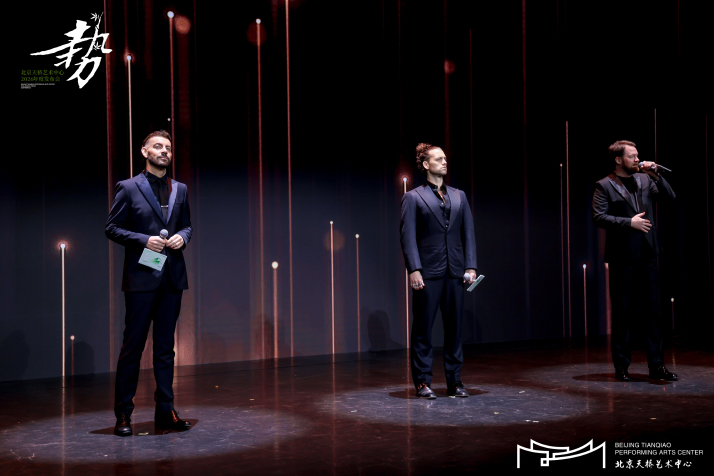 Artists perform The Leading Voices of Musicals, a series produced by the Beijing Tianqiao Performing Arts Center that brings together the classic excerpts from Western musicals (COURTESY PHOTO)
For Li Menghan, a 25-year-old interior designer in Beijing, 2025 was the year of the theater. It started almost by accident in January, when a friend dragged her to see an experimental drama at a small theater in Chaoyang District. "I didn't expect much, since the show cost only 60 yuan ($8.67)," she told Beijing Review. "But something clicked. The intimacy of the space and the energy between the actors and the audience felt completely different from watching a movie or attending a big concert." By the end of 2025, Li had been to 17 shows ranging from immersive Peking Opera fusions to a sold-out run of The Phantom of the Opera at the nationally renowned Beijing Tianqiao Performing Arts Center. "I'm not alone in this," Li said. "Among my friends, going to the theater has become as normal as going to the movies, and there are all kinds of performances on weekends." Li's personal transformation is part of a nationwide phenomenon. According to data released this January by the China Association of Performing Arts (CAPA), box office revenue from commercial performances at theaters in 2025 contributed a staggering 616.55 billion yuan ($89.05 billion), a 6.39-percent year-on-year increase. Total audience numbers had surged from approximately 117.6 million in 2015 to 194 million in 2025, representing a remarkable 65-percent increase over the decade. "The current boom in theater performances is the result of multiple positive factors," Luo Qun, Deputy Director of the China Culture Daily Brand Innovation Center, told newspaper People's Daily. "High-quality productions that make audiences feel they're getting their money's worth are key to solidifying the market's foundation, while the growing number of easily accessible performance venues has also lowered the barrier to attendance." 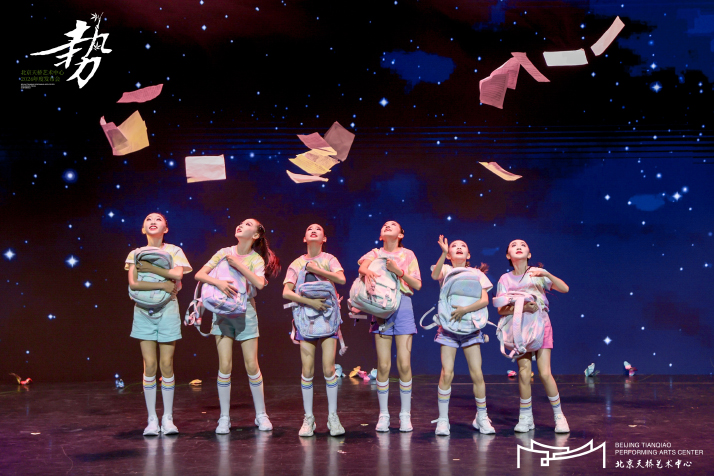 Children perform in a dance show at the Beijing Tianqiao Performing Arts Center (COURTESY PHOTO)
The pioneering years To understand where Chinese theater is today, one must look back to where it came from. For much of the 2000s and 2010s, the Chinese market saw many imported productions. Western musicals, in particular, held a strong appeal. Cats, The Phantom of the Opera, Les Misérables, Chicago, these titles drew massive crowds and introduced Chinese audiences to the conventions of Western musicals. The landmark moment came in 2002, when Les Misérables became the first full-scale Western musical to be staged in China. But the journey to that moment had begun years earlier. It was in 1997 that Qian Shijin, then art director of the Shanghai Grand Theater, first began efforts to bring the classic show to China. The negotiations lasted four years. "We hadn't seen any English musicals before, but I believed Chinese audiences would be able to understand. Since reform and opening up began in 1978, many foreign films had come to China," Qian said at a subforum of the 23rd China Shanghai International Arts Festival in 2024. In June 2002, Les Misérables opened at the Shanghai Grand Theater, setting a box office record for the city at the time with 21 performances. The impact was immediate and profound. Hot on the heels of Les Misérables came Cats, another Andrew Lloyd Webber classic. In 2003, the production arrived in Shanghai for an unprecedented run of 53 performances. Every show was sold out. The production's signature song, Memory, became instantly recognizable to Chinese audiences. The success of these early imports proved that Chinese audiences were ready for musical theater. By 2007, Cats had embarked on a second China tour, visiting Macao, Wuhan in Hubei Province, Chengdu in Sichuan Province, and Guangzhou, Dongguan and Shenzhen in Guangdong Province, all with packed houses. The Phantom of the Opera also made its China debut in Shanghai in 2004. With its iconic chandelier, lavish sets and haunting score, the production set a new standard for theatrical spectacle. Its choice as the opening production for the Beijing Tianqiao Performing Arts Center in 2015 was a symbolic moment—the first time a Western musical had been selected to inaugurate a major Chinese theater. The production's impact on the Chinese theater market has been lasting. In 2023, the first-ever Chinese-language version of The Phantom of the Opera premiered in Shanghai, becoming the 18th language version of the musical worldwide. The production embarked on a 24-week national tour, staging 159 performances in nine cities. In 2025, the original English-language version returned to Beijing for 24 performances, its third visit to the capital. The production's enduring popularity is a testament to the deep connection Chinese audiences have formed with these imported classics over two decades. The maturing market By the mid-2000s, a pattern had been established. Following the successful examples, a steady stream of major imports flooded in: The Sound of Music, Rent, Mamma Mia, The Lion King, Wicked and more. According to a report from the CAPA, by the end of 2019, imports accounted for as much as 90 percent of the musical theater market. These shows trained audiences and producers, and created a generation of theatergoers who knew what a musical could be and began to ask: Where are our stories? As Zhang Huiqing, General Manager of the Shanghai Dramatic Arts Center, wrote in a Guangming Daily newspaper analysis in 2025, the influx of imported productions in the 2000s and 2010s laid the groundwork for what was to come. "These shows didn't just sell tickets," Zhang observed. "They educated a new generation of theater professionals, including directors, designers, technicians and marketers who learned by working alongside their international counterparts. And they cultivated an audience with sophisticated tastes, one that would eventually demand homegrown productions of equal quality." It was in response to this demand that, alongside imported productions and Chinese-language adaptations, a new form began to emerge: the original Chinese musical. The breakthrough came in the late 2010s, as a new generation of creators began to explore what a distinctly Chinese musical could look like. Works like Butterflies and Jinsha experimented with fusing Western musical structures with Chinese aesthetics and narratives. "Butterflies adapted a classic Chinese love story using Western musical structures, while The Piano of Steel incorporated industrial sounds and working-class themes in a way that felt authentically Chinese. These productions demonstrated that original Chinese musicals could achieve both artistic sophistication and commercial viability," Zhang observed. Original creations By the early 2020s, the seeds that had been sown began to sprout. It became more universal for Chinese creators to produce original musicals, dance dramas and experimental works that drew not only on Western forms but also on China's own rich cultural heritage. By 2025, the shift was unmistakable—at least within the musical theater sector. According to the CAPA's 2025 China Musical Market Annual Report, total box office revenue for musicals reached 1.81 billion yuan ($270 million) in 2025, with original Chinese productions generating 879 million yuan ($127 million) and imported productions accounting for nearly 1 billion yuan ($145 million). "Since 2025, Chinese original productions and imported shows have basically split the market fifty-fifty," Pan Yan, Vice President and Secretary General of the CAPA, told People's Daily. "A telling sign of how far musical theater creation in China has come." One of the most striking developments has been the emergence of what critics call "neo-Chinese style" musicals, works that fuse Western musical conventions with Chinese aesthetics, stories and performance traditions. Jinyiwei: The Blade and the Flower, which premiered in Shanghai in December 2024, sold out on its first day of ticketing. Its fusion of martial arts aesthetics with contemporary musical theater conventions resonated deeply with younger generations. The production told a story of loyalty and sacrifice set against a backdrop of Ming Dynasty (1368-1644) court intrigue, using martial arts choreography as a form of physical storytelling. Zhang highlighted two other notable original productions. The Awakening Age, a musical based on a hit television drama about the early days of the Communist Party of China, employed a "sung-through" structure with musical styles tailored to each character. It applied Peking Opera elements to the traditionalist Gu Hongming and rap to the revolutionary Lu Xun. Meanwhile, the Cantonese musical The Great Judge blended Cantonese Opera, folk music and rock, creating a sound that felt both contemporary and deeply rooted in regional tradition. 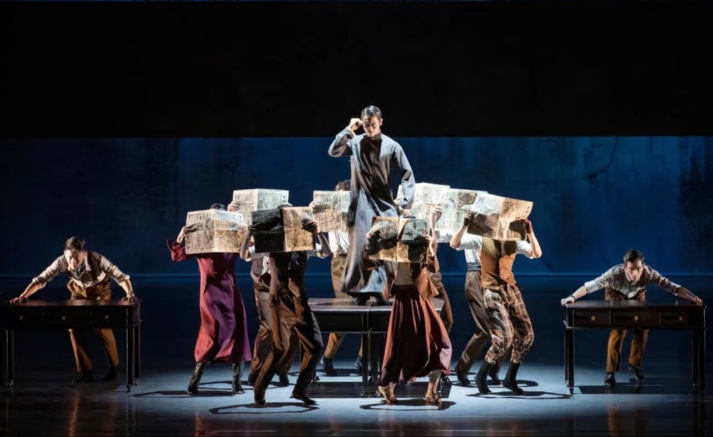 The performance of Eternal Wave, a dance show about the Communist Party of China in Shanghai, at the Beijing Tianqiao Performing Arts Center on July 27, 2025 (ZHANG YAGE)
Retelling the classics While musicals and dance dramas have captured much of the public attention in the theater boom, another significant trend has unfolded on China's stages: the adaptation of traditional Chinese operas for contemporary audiences. These productions seek not to discard the centuries-old art forms but to reinterpret them for a new generation, preserving their essence while making them accessible to theatergoers who might otherwise never set foot in an opera house. Among the most celebrated examples is The Peony Pavilion as reimagined by the Suzhou Kunqu Opera Theater. Premiering in 2004, the "youth version" of Tang Xianzu's Ming Dynasty masterpiece became a cultural phenomenon. Stripping down the original 55-scene epic to 27 scenes, the adaptation retained the poetic elegance of Kunqu, China's oldest surviving opera form, while streamlining its pacing for modern attention spans. "The youth version of The Peony Pavilion is an outstanding adaptation," Qiu Caiping, a National Grade-2 Kunqu performer, told Beijing Review. "The language is still classical, the movements are still authentically Kunqu, but the pacing, the staging and the way the emotions are projected have been adjusted to cater to contemporary audiences." Dance theater emerged as another powerhouse during the 2020s season. Headliners like the Jiangsu Center for the Performing Arts' A Dream of Red Mansions, China Oriental Performing Arts Group's Poetic Dance: The Journey of a Legendary Landscape Painting and Shanghai Dance Theatre's Eternal Wave maintained their market dominance with sustained runs and robust box office returns. These productions have become more than just performances; they are cultural phenomena in their own right. A Dream of Red Mansions, based on the classic Qing Dynasty (1644-1911) novel, has toured extensively across China, attracting audiences who are eager to see their beloved literature masterpiece and what it looks like when expressed in dance. "As a big fan of A Dream of Red Mansions, I have seen its performance in every Chinese opera category, and I never thought it could be performed in pure dance, given its complex plots and characters," Beijing resident Li Chunhong told Beijing Review. "And now I have seen two dance versions, in ballet and in traditional Chinese dance. I love them both." Zhang noted that dance theater's rapid growth over the past three years reflects a broader, structural market shift. "Audiences are increasingly seeking out productions with strong cultural resonance and high production values, like the classics of traditional Chinese art and literature, and the story of the Chinese nation," Zhang observed. Enduring appeal The two-way exchange in theater arts has deepened in recent years. John Owen-Jones, a Welsh tenor who holds the record for the most performances as the Phantom in the history of London's West End, made his China debut in 2020 and has since returned multiple times. During his 2024 China tour, he performed with Chinese actress Pan Hangwei as Christine. His upcoming album features a track from The Phantom of the Opera arranged with traditional Chinese folk instruments and bilingual vocals. "The future of musical theater lies in collaboration," Owen-Jones told China News Service. "I believe it's only a matter of time until someone in China finds the right music and the right story to create the next Hamilton, Wicked or Phantom." The relationship between Chinese and international theater is no longer a one-way street. In 2025, the world premiere of an English-language The Peony Pavilion took place during the Tang Xianzu International Drama Exchange Month in Fuzhou, Jiangxi Province. Created by the University of Birmingham's Shakespeare Institute, the production adapted Ming Dynasty playwright Tang's classic using Shakespearean English and poetic forms, achieving a remarkable dialogue between the two literary giants. "By adapting The Peony Pavilion in the style of Shakespearean drama, we've found a way to bridge two great theatrical traditions," Michael Dobson, Director of the Shakespeare Institute, told Xinhua News Agency. "We preserve the original play's core theme of transcendent love while blending classical Chinese operatic aesthetics with contemporary Western staging, using Shakespearean verse in English dialogue." "Collaborations like this help dismantle cultural barriers," Dobson added. "They allow Tang Xianzu's classics to reach audiences far beyond China's borders, speaking to them in theatrical forms they already understand while introducing something entirely new." At its 2026 season launch in March, the Beijing Tianqiao Performing Arts Center unveiled a lineup that includes original English, French, Russian and German productions, alongside a significant slate of Chinese musicals and dance works developed through its newly established creative hub. "This year, our international lineup brings in some of the biggest names in musical theater, from Chicago to the Beijing premiere of the German musical Einstein: The Relativity of Time. But at the same time, we're investing in original productions like The Longest Day in Chang'an and Ode to the Nine Songs. The goal is to give Chinese audiences the best of both worlds and to create a platform where homegrown work can stand alongside the greats." Yang Shucong, General Manager of the Beijing Tianqiao Performing Arts Center, told Beijing Review following the venue's 2026 season announcement. From niche to mainstream The diversification of genres has been another hallmark of the 2025 theater boom. Stand-up comedy, once a niche interest confined to small clubs, has exploded in popularity. According to CAPA data, the genre's box office revenue grew by 134.9 percent year on year in the first half of 2025, making it the second largest category in the theater market after dramas. A report from Securities Times highlighted the growth of stand-up comedy in Shenzhen during the 2025 summer season, with major venues such as Shenzhen Theater and Huaxia Art Center beginning to host large-scale comedy specials. The report noted that the proportion of stand-up performances taking place in large theaters rather than small clubs had risen from 2.1 percent in 2024 to 20.9 percent in 2025, a clear sign of the genre's transition from the margins to the mainstream. "Immersive shows that blur the line between performers and audiences offer something you can't get from a screen: a sense of novelty, yes, but also a shared social experience that people crave," Luo said. "Musicals, long considered a somewhat niche or dated format, have found new life through high-energy staging and the drawing power of name-brand performers. Stand-up comedy, raw and unfiltered, has become the go-to for younger crowds. Each genre has carved out its own space, and together they've pulled in audiences that might never have set foot in a theater before." "At a certain point, going to the theater stops being an occasional outing and becomes part of your lifestyle—something you do not just for entertainment, but for the sense of taste and identity it confers. And more and more people are willing to pay for that," Luo added. Copyedited by G.P. Wilson Comments to zhangyage@cicgamericas.com |
|
||||||||||||||||||||||||||||
|