|
| China |
| The 18th Straits Forum highlights the unbreakable bonds between people on both sides of the Taiwan Straits | |
|
|
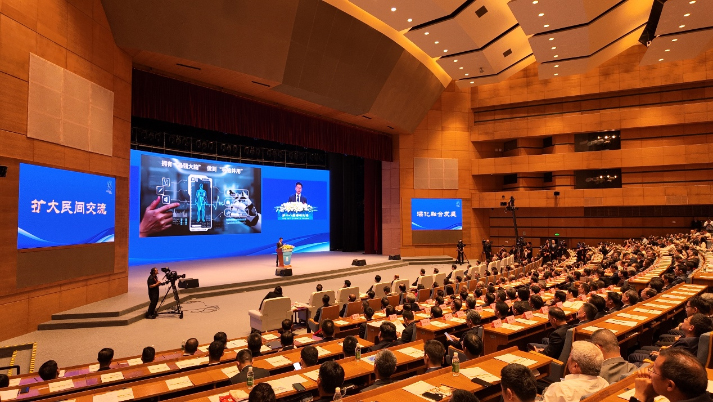 The 18th Straits Forum underway in Xiamen, Fujian Province on June 13 (COURTESY PHOTO)
Tianyang Village, in Baozhong Township, Yunlin County, Taiwan Province, is known for two things: It is the birthplace of legendary Mandopop singer Teresa Teng and is one of Taiwan's best-known sugarcane-growing areas. Across the Taiwan Straits, in Tong'an District of Xiamen in Fujian Province, another village bears the same name, and likewise produces sugarcane in abundance. The two Tianyang villages also share a folk custom: During the Lantern Festival, villagers head into the fields, cut the finest sugarcane stalks, and offer them in tribute to their ancestors. During the 2024 Lantern Festival, residents of the two villages jointly held a sugarcane-cutting ceremony via video link to honor their ancestors. "Our genealogy lays it out clearly. Our ancestors migrated from Gushi in Henan Province to Jinmen (the Kinmen Islands in the Taiwan Straits). From there, some moved to Xiamen, while others crossed to Taiwan Island," Chen Shuirang, head of Tianyang Village in Xiamen, said while telling Beijing Review about the ties between his village and its namesake in Taiwan, during the 18th Straits Forum. Launched in 2009, the Straits Forum is the largest cross-Straits grassroots exchange event. The 18th Straits Forum opened at the Xiamen International Conference Center on June 13. "There are about 280 pairs of villages in Fujian and Taiwan that share both a name and a common lineage," Nian Yue, Editor in Chief of the book Namesake Villages With Shared Ancestry in Xiamen and Taiwan, told Beijing Review. Over the centuries, large numbers of people migrated from Fujian to Taiwan. Many settled together with people from the same hometown and kept the names of their ancestral villages. They also compiled genealogies and built ancestral halls, strengthening clan ties while reminding later generations of their roots. These namesake villages are a testament to the shared roots of people across the Taiwan Straits and vividly reflect the 18th Straits Forum's theme Expanding People-to-People Exchange and Deepening Integrated Development. A new chapter in integration This year's Straits Forum came two months after the Chinese mainland unveiled a package of 10 policies and measures in April to promote cross-Straits exchanges and cooperation. The weeklong forum featured a main conference and 58 events covering grassroots, youth, cultural and economic exchanges. Over the years, the forum has drawn more than 370,000 participants from both sides of the Straits, including about 140,000 from Taiwan, with more than 800 associated events. Wang Huning, a member of the Standing Committee of the Political Bureau of the Communist Party of China (CPC) Central Committee and Chairman of the National Committee of the Chinese People's Political Consultative Conference, attended the forum. Addressing the forum, he said the mainland and Taiwan belong to one and the same China and form a community with a shared future. The mainland, he said, upholds the idea that "people on both sides of the Taiwan Straits are one family," implements equal-treatment policies for Taiwan compatriots, and is ready to share its development opportunities and achievements with them. He welcomed people and enterprises from Taiwan to take part in cross-Straits exchanges, cooperation and integrated development, as well as the mainland's high-quality development and modernization. Zhou Zuyi, Secretary of the CPC Fujian Provincial Committee, said that in 2023, the central authorities issued the Opinions on Supporting Fujian in Exploring New Paths for Cross-Straits Integrated Development and Building a Cross-Straits Integrated Development Demonstration Zone. Since then, arrivals of people from Taiwan through Fujian ports have risen from 573,000 in 2023 to a record 1.042 million in 2025. Fujian has hosted more than 300 major Taiwan-related exchange events each year, drawing over 30,000 participants from Taiwan annually. Fujian also enacted the Regulations of Fujian Province on the Protection of Archives Related to Fujian-Taiwan Relations and collected 67,000 archival records and documents on migration to Taiwan; introduced the Regulations of Fujian Province on Promoting Common Cross-Straits Standards, with 344 common standards issued; and made government services for Taiwan compatriots and enterprises largely available through a single online portal. "This is the 18th consecutive edition of the Straits Forum," Zhou said. "Its success over 18 editions has fully borne out General Secretary Xi Jinping's important observation: No matter how the international landscape or the Taiwan Straits situation changes, the historic trend toward the great rejuvenation of the Chinese nation will not change, nor will the broader trend of compatriots on both sides of the Straits visiting one another, drawing closer and coming together." 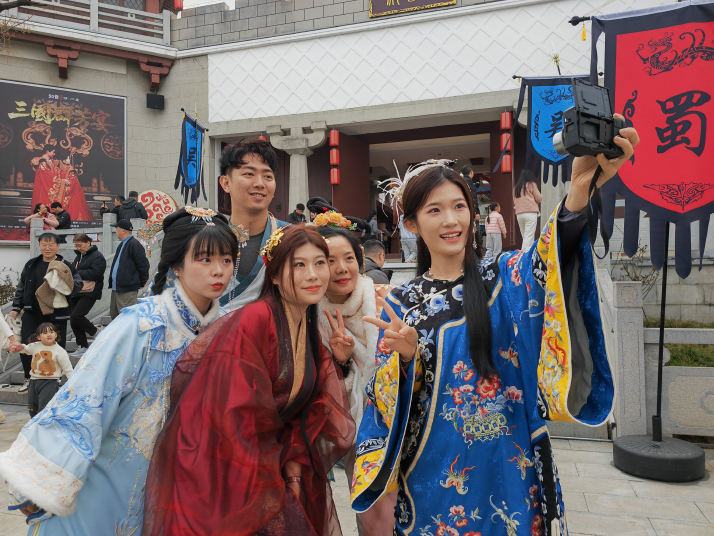 Participants pose for a photo during a cross-Straits exchange program in Wuhan, Hubei Province, on March 8 (XINHUA)
An unstoppable tide For many people from Taiwan who traveled to Xiamen for the forum, however, the journey was far from smooth. Ahead of the event, Taiwan's Democratic Progressive Party (DPP) authorities escalated their restrictions. For the first time, they openly barred local government personnel in Taiwan from attending, attempting to cut off local-level channels for cross-Straits exchange. They also groundlessly warned Taiwan residents of supposed personal safety risks in Xiamen, seeking to intimidate ordinary people and deter them from traveling to the mainland for forum-related activities, thereby obstructing cross-Straits people-to-people exchange. Despite the pressure, many representatives from a variety of sectors in Taiwan still traveled to Xiamen, including Chang Jung-kung, Vice Chairman of the Chinese Kuomintang (KMT) party. Addressing the forum's plenary session, Chang said the two sides of the Taiwan Straits share deep bonds of kinship, history and culture. As long as people on both sides recognize that they belong to one family, he said, there are no differences that cannot be discussed or resolved. "A shared national identity and mutual political trust are the fundamental guarantee for the peaceful development of cross-Straits relations. The two sides should work together for peace and prosperity," Chang said. "No matter what twists and turns cross-Straits relations may face, the Straits Forum has remained committed to promoting exchange, cooperation and the peaceful development of cross-Straits relations, and can continue to play a key role." "People in Taiwan are tired of having politics dictate their lives. We just want better lives," said Su Heng, a current affairs commentator and Chairwoman of Taiwan's Chinese Cross-Straits Economic and Trade Exchange Association, citing a recent online poll showing that 82 percent of respondents in Taiwan opposed the DPP authorities' ban related to the Straits Forum. "Farmers want market access, fishermen want their maritime rights protected, young people want opportunities, and every parent wants their children to grow up in a safe and stable environment. These are what truly matter to the people of Taiwan," she added. Shared future Another notable trend, according to the forum's organizers, was that the proportions of young and first-time visitors from Taiwan to the mainland both reached new highs at this year's forum. Lai Caida, co-founder and CEO of Jitai Technology, delivered a keynote speech at the plenary session of this year's forum as a young representative from Taiwan. He shared his experience of starting a business on the mainland and cited six friends from Taiwan who have all built careers in different sci-tech fields here, as an indication that young people from Taiwan pursuing development on the mainland are becoming more common. "The mainland offers young people from Taiwan sincerity, supportive policies and genuine warmth," Lai said. "As long as we stay grounded and combine our expertise with the mainland's industrial strengths, we can carve out a place of our own." Several interviewees at the forum said the future of cross-Straits relations lies with young people. Young people in Taiwan, they said, should both contribute to national development and deepen their cultural and national identity. At the forum, Li Chengxi, a veteran from Taiwan, told Beijing Review that he had moved there with his family in 1949, when he was still an infant, but the family has never forgotten their ancestral homeland. Over the years, he has regularly taken his children and grandchildren to Yunnan Province to trace their roots and visit relatives. He said decades of separation had left many young people in Taiwan estranged from their homeland and increasingly disconnected from their national roots. "Young people in Taiwan should visit the mainland more often. It would not only benefit them personally but is also essential to cross-Straits relations," he said. Li added that only by remembering where they came from, staying true to their roots and passing on their shared lineage and cultural heritage can young people in Taiwan help lay a solid foundation for the peaceful development of cross-Straits relations. (Print Edition Title: Straits Apart, Hearts Together) (Reporting from Xiamen, Fujian Province) Copyedited by G.P. Wilson Comments to liangxiao@cicgamericas.com |
|
||
|
||||||||||||||||||||||||||||
|