
|
| China |
| Nanjing event reaffirms Tokyo Trial's legacy 80 years on | |
|
|
|
|
|
Eight decades after the Tokyo Trial helped redefine international norms in the aftermath of World War II (WWII), its lessons on justice, responsibility and the rule of law continue to resonate. At a commemorative event in Nanjing, Jiangsu Province, marking the 80th anniversary of the opening of the trial, attendees reflected on its enduring legacy.
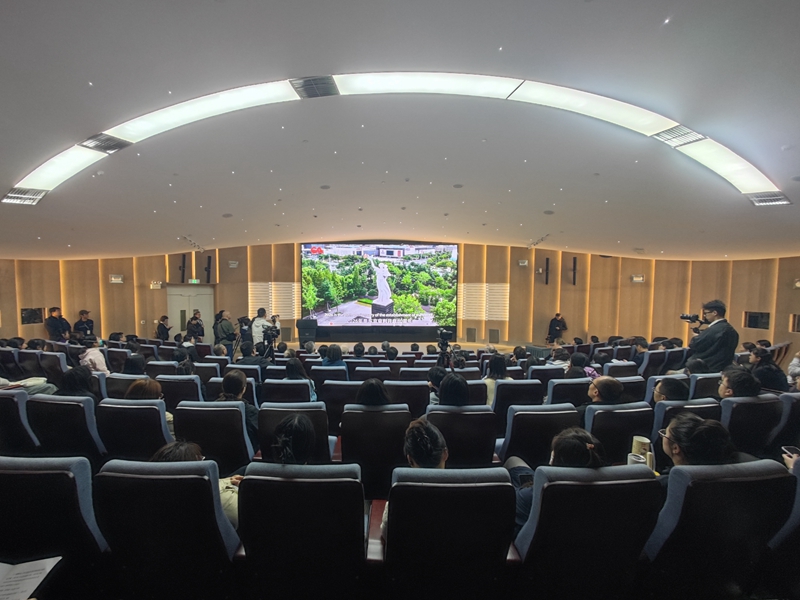
A commemorative event marking the 80th anniversary of the opening of the Tokyo Trial is held in Nanjing, Jiangsu Province, on April 29 (ZHANG WEI) On December 13, 1937, Japanese troops captured Nanjing, then China’s capital, slaughtering over 300,000 Chinese civilians and unarmed soldiers over the following six weeks. Eight months after World War II ended in September 1945, the International Military Tribunal for the Far East (IMTFE) was convened in Tokyo. The IMTFE, also known as the Tokyo Trial, was composed of judges from 11 nations, including China, the United States, the United Kingdom and France. From May 1946 to November 1948, the IMTFE tried 28 Japanese Class A war crime suspects.
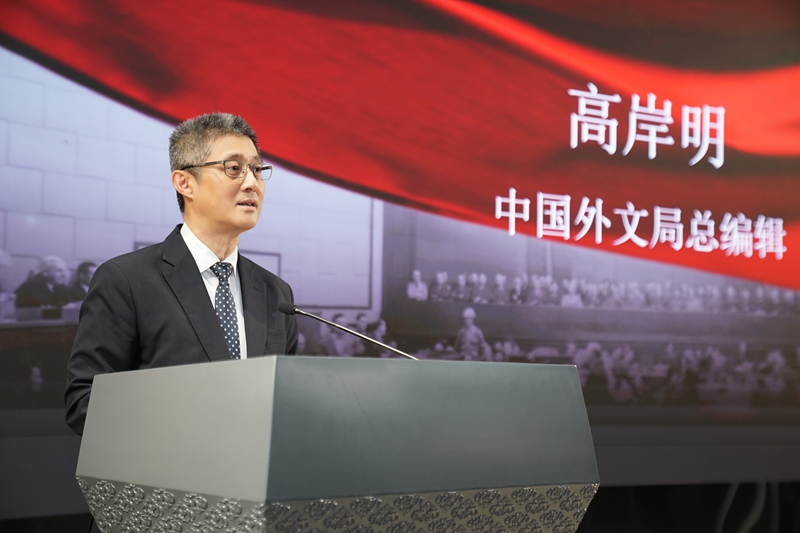
Gao Anming, Editor in Chief of China International Communications Group (CICG), speaks at the event on April 29 (ZHANG WEI) “For 80 years, the facts of the Tokyo Trial have never been shaken by revisionist noise. Court transcripts, witness accounts and archives stand as irrefutable evidence and a shared international memory,” Gao Anming, Editor in Chief of China International Communications Group (CICG), told the event, which took place at the Memorial Hall of the Victims in Nanjing Massacre by Japanese Invaders on April 29. Moving forward, CICG, a leading media and publishing organization based in Beijing, will expand cooperation with partners at home and abroad, uphold shared human values, and let the voice of justice from the Tokyo Trial ring out, he added.
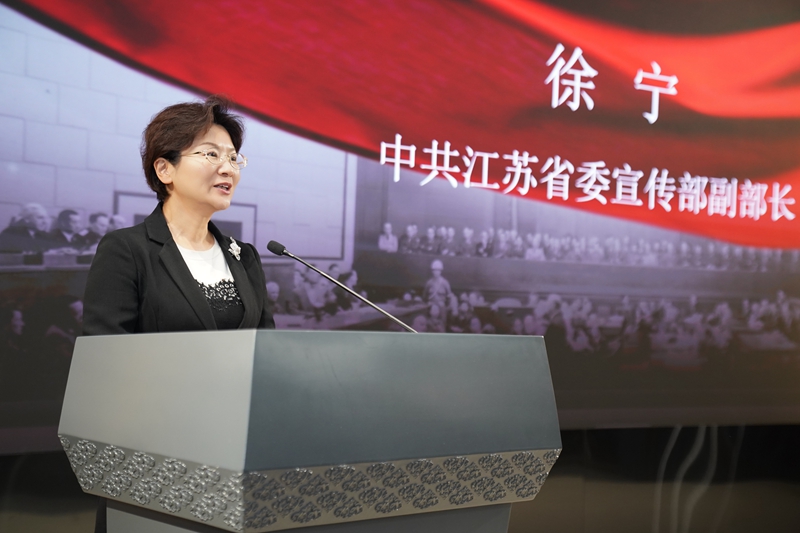
Xu Ning, Deputy Director of the Publicity Department of the Communist Party of China Jiangsu Provincial Committee, speaks at the event on April 29 (ZHANG WEI) Xu Ning, Deputy Director of the Publicity Department of the Communist Party of China (CPC) Jiangsu Provincial Committee, said Nanjing has held exhibitions abroad, hosted peace forums, and produced artistic works like operas, documentaries and films on the Nanjing Massacre to reach global audiences.
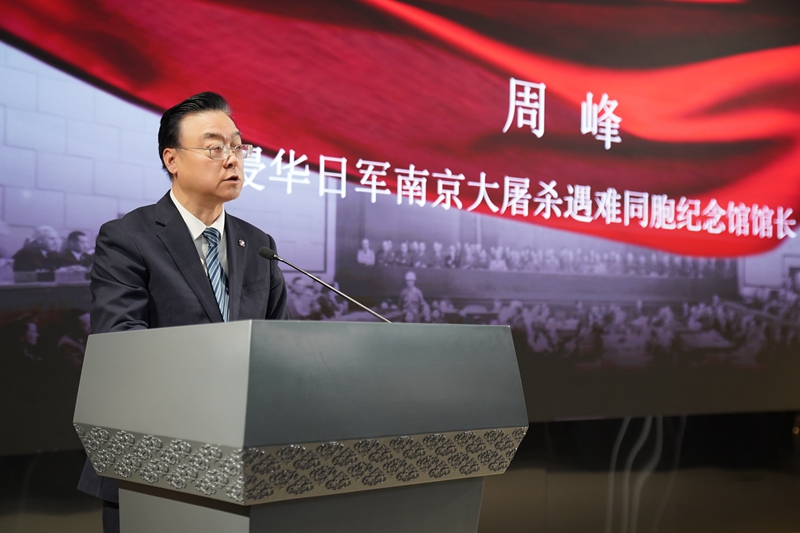
Zhou Feng, Curator of the Memorial Hall of the Victims in Nanjing Massacre by Japanese Invaders, speaks at the event on April 29 (ZHANG WEI) According to Zhou Feng, the memorial hall’s Curator, the memorial hall has assembled a team of inheritors of the historical memory of the Nanjing Massacre, and developed an international volunteer service team. The review of this history is aimed at safeguarding the hard-won postwar international order, promoting an objective understanding of World War II and defending justice, Zhou said.
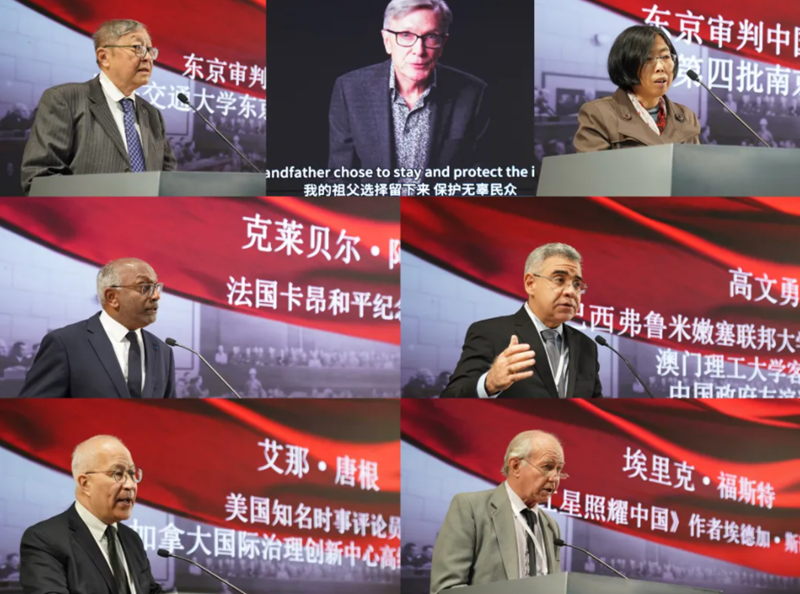
International participants share their views at the event on April 29 (ZHANG WEI) The descendants of witnesses of the Tokyo Trial shared their memories at the event. Eighty years ago, Chinese prosecutor Xiang Zhejun, also known as Hsiang Che-chun, stood before the Tokyo Trial and fought to define Japan’s aggression on its true terms. Recalling Xiang’s accounts of the trial, his son Xiang Longwan shared difficulties facing the prosecutors in collecting evidence as the Japanese military destroyed records. Xiang Longwan is now a professor at the Research Institute of War Trial and World Peace at Shanghai Jiao Tong University (SJTU). China’s prosecutors built an unshakable evidence case, Xiang Longwan said. His father challenged defense lawyers by keeping asking “If these are not wars, what is a war?” Those slaughtered in Nanjing would have no justice if the court accepted Japan’s claim that no war existed before the 1941 Pearl Harbor attack, he told the event. “Any denial of the Nanjing Massacre betrays the 300,000 victims. History cannot be altered; truth will never be absent,” Zhang Qing, great-granddaughter of Xu Chuanyin, a Chinese witness at the Tokyo Trial, said. As Chris Magee, grandson of John Magee, an American witness at the Tokyo Trial, said in a video message, he has passed on the legacy of his family through visual storytelling, as his grandfather remained in Nanjing after the invasion and documented and kept evidence of the atrocities. “It is not enough to establish the truth and to punish the crimes; we must also continually resist the twin poisons of the modern world: denial and oblivion,” Kléber Arhoul, Curator of the Caen Memorial Museum in France, a museum that aims to promote peace and pay tribute to WWII victims, said. According to him, only very few students in Europe have heard of the Tokyo Trial, following Japan’s defeat. It is because of this that the museum has launched a dedicated space for the Nanjing Massacre, seeking to challenge the overly Eurocentric chronology and geography of WWII. “The Tokyo Trial and the tragedy of Nanjing are not only about the past. They are about the kind of international order we seek to build now and in the future,” Evandro Menezes de Carvalho, a professor of international law at Fluminense Federal University in Brazil, said. The Tokyo Trial contributed to the evolution of international law by incorporating Asian perspectives into a system previously dominated by Western powers. From this standpoint, the trial was about recognizing that the suffering endured in Nanjing and across China must be integrated into the global legal and historical record, he said. The trial, however, was unable to deliver full justice because of constraints such as the destruction of evidence and political maneuvering. According to Einar Tangen, a U.S. commentator and senior researcher with the Center for International Governance Innovation in Canada, Japan remains unreconciled with its wartime past. The Yasukuni Shrine controversy, the revisionist history textbooks, the denial of the Japanese military’s use of sex slaves, known as “comfort women,” and the ongoing territorial disputes with China and the Republic of Korea (ROK) all trace their origins to the Tokyo Trial’s compromised proceeding. The Yasukuni Shrine in Tokyo holds the souls of Japan’s war dead. As they include those of 14 Class A war criminals from WWII, visits by senior Japanese politicians are seen as moves to rehabilitate a militarist narrative and spark wide condemnation. “China and the ROK live with those decisions every day. So does any hope for genuine reconciliation in East Asia,” Tangen said. During the event, organizers presented two books compiled by the memorial hall, Tokyo Trial: Evidence and Judgment of the Nanjing Massacre and The Nanjing Trial: Evidence and Verdict on the Nanjing Massacre, to international guests. Tokyo Trial serves as historical documentation, providing undeniable proof that the Nanjing Massacre did occur and that some of the major Japanese war criminals were held accountable, Eric Foster, nephew of Edgar Snow, a U.S. journalist who authored the 1937 book Red Star Over China, said. “In an era where historical denial and revisionism continue to obscure the truth of this tragic event, works like Tokyo Trial are essential. They preserve and record the factual history of these atrocities, ensuring that the lessons of the past remain clear and unaltered for future generations,” Foster said. During the event, Zou Dehuai, a collector of archives including the diary of David Nelson Sutton, a U.S. assistant prosecutor at the Tokyo Trial, donated the archives to the memorial hall. The memorial hall, the SJTU Research Institute of War Trial and World Peace, and the SJTU Press signed an agreement on jointly developing the Nanjing Massacre Documentation Center database.
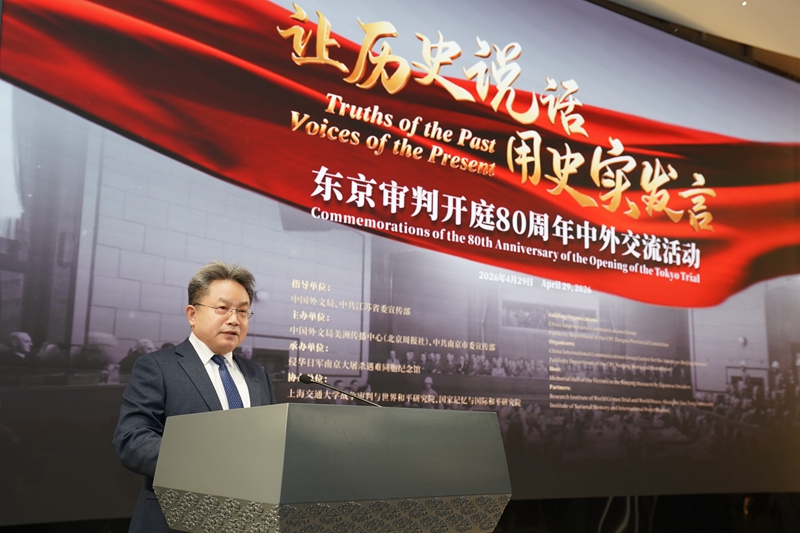
He Peng, Vice President of the CICG Center for Americas, hosts the event on April 29 (ZHANG WEI) Themed Truths of the Past, Voices of the Present, the event was organized by the CICG Center for Americas and the Publicity Department of the CPC Nanjing Municipal Committee. He Peng, Vice President of the CICG Center for Americas, hosted the commemorations. The event was hosted by the Memorial Hall of the Victims in Nanjing Massacre by Japanese Invaders.
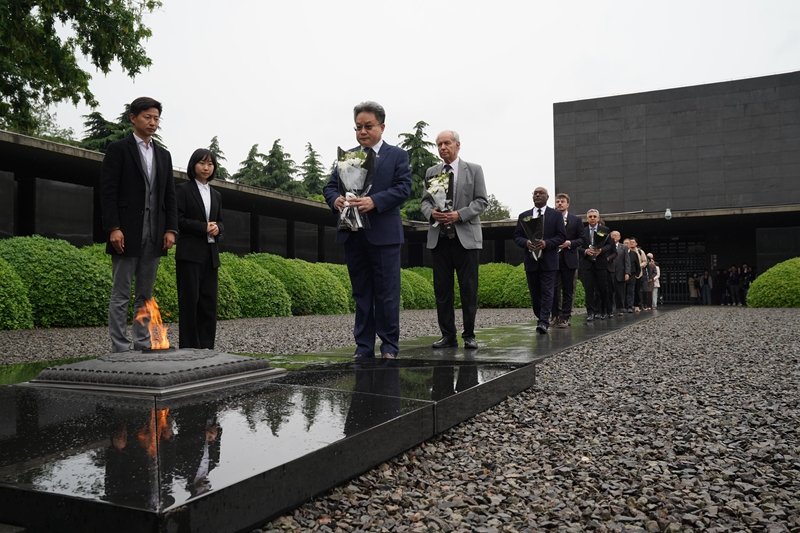
Event participants lay flowers and bow in mourning to the victims of the Nanjing Massacre at the Memorial Hall of the Victims in Nanjing Massacre by Japanese Invaders on April 29 (ZHANG WEI) Copyedited by G.P. Wilson Comments to lixiaoyang@cicgamericas.com |
|
||||||||||||||||||||||||||||
|