
|
| China |
| Flower-adoring tourists now seek more than just photo opportunities | |
|
|
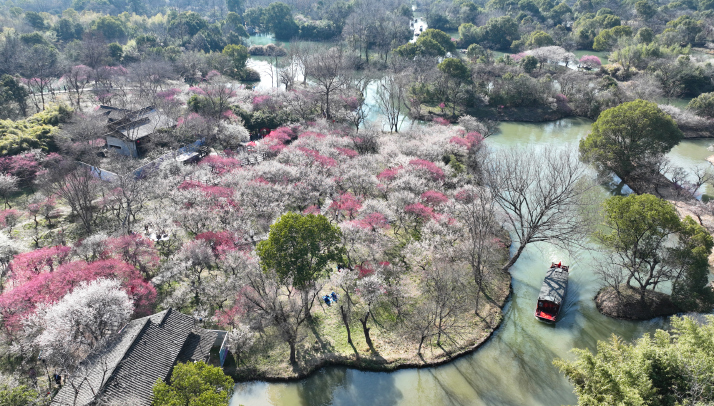 Plum blossoms at Xixi National Wetland Park in Hangzhou, Zhejiang Province, on February 18 (XINHUA)
As spring sweeps across China, seas of flowers begin blooming sequentially from south to north. This annual natural spectacle has established "flower appreciation" as a quintessential theme of spring travel, driving activity across the tourism sector. Data from online travel platform Fliggy confirm this surging interest. Since early March, searches for keywords such as "spring outing," "flower appreciation" and "spring tour" have surged by 380 percent month on month. Crucially, the nature of these tours is transforming. Consumers are evolving from passive spectators to active participants, moving beyond photo snapping to favor tour products emphasizing experience and emotional resonance. Immersive experiences "Travel is no longer just about snapping a few check-in photos [for social media]; we now seek immersive experiences and lasting memories," Shu Hua, a tourist from Beijing, told Workers' Daily newspaper. Captivated by online images of boating on a river through flower seas in Hangzhou, Zhejiang Province, she immediately undertook a weekend trip from the capital. Describing the experience, Shu said, "Drifting through the flower seas on a boat, it felt like truly entering a painting and becoming part of the scenery." This deepening quest for quality is evident even in China's more arid western regions. In Xinjiang Uygur Autonomous Region, the apricot blossoms of Toksun County in Turpan City mark the arrival of spring in the region, offering visitors a captivating first glimpse into the season's beauty in Xinjiang. Wang Shuangshuang, a self-driving tourist from Beijing, strolled through the vast orchards in hanfu (traditional Han Chinese attire), capturing the blend of blossoms and ancient culture. "I always heard that Xinjiang's autumn was beautiful, but I never expected the spring apricot blossoms to be so breathtaking," she told newspaper Xinjiang Daily. Her 12-day itinerary was designed for depth, allowing her to not only chase the Toksun blossoms but also study intangible cultural heritage skills in the ancient city of Kashgar, lending true substance to her "flower-chasing journey." Regions across Xinjiang are leveraging their unique local resources to innovate travel routes, tightly weaving the floral displays with culture and local industry. For instance, in Shache County, China's largest almond-producing base, the local government stages traditional folk song and dance performances in the orchards. Furthermore, counties like Huocheng and Yutian are developing flower-derived products, such as aromatherapy oils and specialty honey. This innovation transforms what was merely a sight to behold (flowers to look at) into tangible specialties to take home, thereby enhancing the added value of the flower economy. 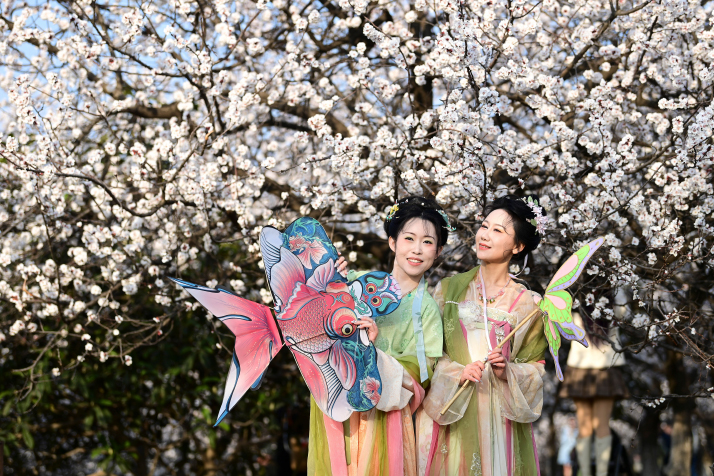 Tourists pose for photos at Daming Palace National Heritage Park in Xi'an, Shaanxi Province, on March 9 (XINHUA)
New trends The shift toward immersive travel is only part of the story. This year, the spring tourism landscape features several other trends: the rise of niche destinations, the growing preference for "micro-vacation" homestays and the emergence of cost-effective, long-distance flower chasing. While traditional flower-viewing cities like Hangzhou, Wuhan in Hubei Province and Kunming and Dali in Yunnan Province retain their popularity, new centers are rapidly gaining traction. Cities such as Pu'er in Yunnan and Xichang in Sichuan Province are showing exceptional ability to attract tourists. Zhou Haitao, CEO of Wenlu Shijie Cultural Technology (Beijing) Co. Ltd., told China City News newspaper that established hubs offer mature infrastructure, making them the natural first choice for novice flower chasers. However, the ascent of less-frequented destinations speaks to a growing desire for exploration among seasoned tourists, Zhou added. "Having visited major landmarks repeatedly, experienced travelers are seeking more unique and niche scenery," he said. "Moreover, where traffic was once narrowly concentrated, new attractions—like the jacaranda blossoms in Xichang or the bougainvilleas in Pu'er—have quickly gone viral through short video platforms. These smaller cities often boast a slower pace of life, perfectly aligning with contemporary travelers' psychological need to pursue genuine relaxation." Alongside the popularity of smaller cities, an increasing number of travelers are choosing to stay overnight near the flower fields. Data from homestay booking platform Tujia show that in the first week of March, search volume for "flower appreciation" on the platform grew by 70 percent compared to the previous week. Bookings for homestay units featuring terraces, picture windows and private courtyards outpaced the platform average, seeing a year-on-year growth of about 30 percent. Homestays situated within walking distance of prime viewing areas have become especially coveted. Cities known for specific blooms—Wuhan and Wuxi in Jiangsu Province for cherry blossoms, or Changsha in Hunan Province and Shangrao in Jiangxi Province for rapeseed flowers—have seen their homestay booking volumes for the period of March 10 to 31 rise to the national top 30. Furthermore, data from Tujia also indicate a surge in suburban stays near major metropolitan areas. From mid-to-late March, suburban homestay bookings in the vicinities of Shanghai, Beijing, Guangzhou and Shenzhen in Guangdong Province increased by about 20 percent year on year. Staying in a suburban retreat allows city dwellers to briefly step away from daily grind to enjoy sunshine and admire spring blossoms in a quiet courtyard setting. In Beijing's suburban Yanqing District, guests at some homestays can capture the iconic Great Wall framed by peach blossoms from their terraces. Some establishments have even introduced limited-time spring offerings, such as barbecuing under the apricot trees, pairing the fragrance of the blossoms with culinary comfort for a truly rejuvenating experience. Ma Shun, a veteran custom-travel professional, observed another significant change in an interview with China City News: While previous flower tours were dominated by short-distance self-driving trips, this year, there is a substantial rise in tourists flying across the country to chase blooms. This is a result of lower off-peak flight prices, which greatly reduce the cost of inter-provincial travel and make weekend flower-viewing trips to other cities more affordable. Compared to the Spring Festival holiday, which took place from February 15 to 23 this year, airfares for several popular flower-viewing routes in March dropped by between 30 and 70 percent. For example, the lowest one-way air ticket prices from Beijing to Hangzhou, Wuxi and Wuhan were just over 300 yuan ($44), cheaper than high-speed rail tickets. Airfares from Shanghai to Xishuangbanna in Yunnan dropped by 67 percent, with the lowest price being just over 300 yuan. The evolution of flower viewing tourism is driving the maturation of China's spring tourism as a whole, as travelers now seek not just a view, but a deeper, affordable and personalized story etched against a backdrop of ephemeral natural beauty. Copyedited by G.P. Wilson Comments to jijing@cicgamericas.com |
|
||||||||||||||||||||||||||||||
|