
|
| China |
| Guardianship revoked: Protecting children or punishing parents? | |
|
|
 LI SHIGONG
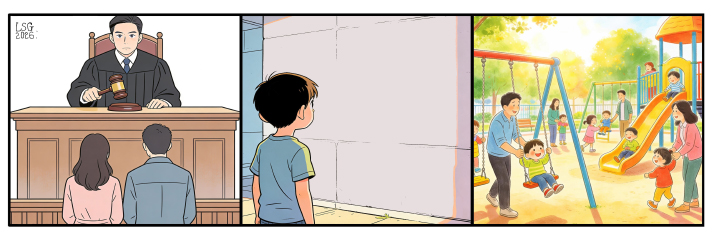
During this year's Two Sessions on March 4-12, China's most important annual political event that sets the national agenda for the year ahead, the Supreme People's Court, China's highest court, highlighted a shocking fact in its work report. In 2025, 997 unfit parents had their guardianship revoked in accordance with the law. Although the figure is small given China's large population, it represents a year-on-year jump of 66.7 percent. It indicates that authorities are strengthening legal protections for minors who suffer physical violence, emotional abuse or other forms of exploitation at home, observers say. Revoking guardianship, however, is seen not only as a last resort—a decision the court makes only when the harm to the child is considered severe—but also as the beginning of a complex process of arranging proper care and long-term support. What truly matters is the next question: Who will look after the child once the guardian is gone? Jia Liang (Beijing Evening News): Some parents are indifferent and callous toward their children. For this cohort, only decisive action can help children escape hardship, physical abuse and mental anguish, conditions that can cause lifelong harm or even death. Beyond overt violence, more cases of unfit guardianship hide in daily neglect and malice. Some parents give birth but fail to raise their children, abandoning them, losing contact for years and leaving them to struggle alone. Others, after bitter breakups, weaponize their children: hiding them, blocking visitation and using them to wound the other parent. Family bonds do not override the law. Revoking guardianship is not about tearing families apart; it's about saving abused children from the most dangerous place they know: their own home. It is not inhumanity. It is drawing a line at the fundamental boundary of human ethics. When humanity fades and parental love vanishes, the judiciary must step in to provide a safety net and build a barrier around the child. By removing unfit parents and compelling all parents to raise children lawfully, we ensure minors the safe, happy childhood they deserve. Chen Aiwu (China Newsweek): In practice, when parents are stripped of guardianship, relatives are often unwilling to step in. That leaves civil affairs authorities as the last resort, placing children in already overburdened welfare institutions. But who tutors these children? Who ensures their safety, guards their mental health and guides them through adolescence? Welfare institutions are running out of capacity. Institutions are not families; children raised there often face difficulty integrating into society. The Minors' Protection Law lists six types of protection. The first is family protection, strengthening support for struggling families before crisis hits. Rescue efforts must be exhausted before judicial intervention begins. Only then should guardianship revocation be considered, with a new guardian appointed. There is no perfect replacement for a parent. That's why prevention matters most: stopping unfit parents before they harm. And that requires the state to invest more—in people, in resources and in the communities that raise children long before the courts step in. BR Copyedited by Elsbeth van Paridon Comments to yanwei@cicgamericas.com |
|
||||||||||||||||||||||||||||
|