|
| China |
| The Hong Kong connection | |
|
|
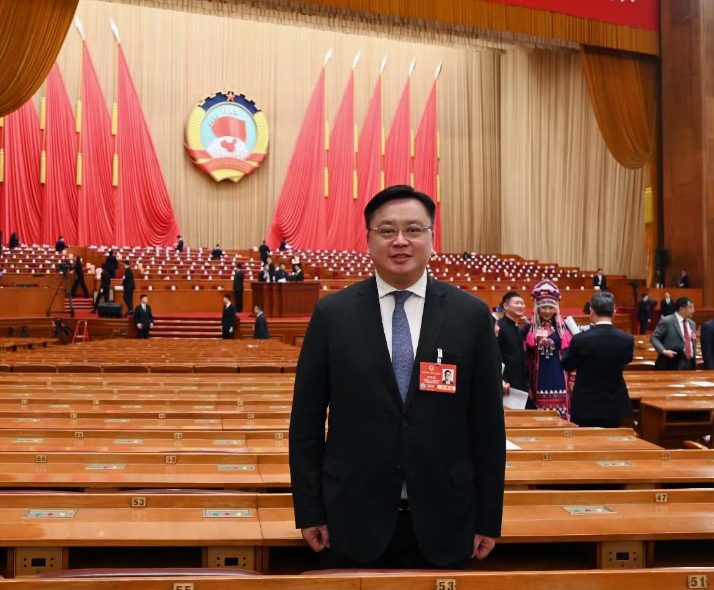 Ling Chun-kit at the 2026 Two Sessions, the annual meetings of China's top legislature and top political advisory body, in Beijing on March 11 (COURTESY PHOTO)
For much of his career, Clarence Ling Chun-kit, a member of the 14th National Committee of the Chinese People's Political Consultative Conference and founding chairman of the Hong Kong-headquartered Chinese Young Entrepreneurs Association, has long worked to foster exchange between Hong Kong Special Administrative Region and the Chinese mainland. In an exclusive interview with Beijing Review during the 2026 Two Sessions, Ling discussed the opportunities the 15th Five-Year Plan (2026-30) could bring to Hong Kong, the region's role in helping Chinese companies expand overseas and how Hong Kong youths can better integrate themselves into the country's broader development scheme. Beijing Review: As China embarks on its 15th Five-Year Plan, what new opportunities do you think the plan could open up for Hong Kong's development? Clarence Ling Chun-kit: The 15th Five-Year Plan sets out a clear direction for Hong Kong's future development and, in my view, presents four major opportunities. First, it will consolidate and elevate Hong Kong's position as an international financial, shipping and trading center. Under the 15th Five-Year Plan, Hong Kong's offshore renminbi business and cross-border logistics networks will be better positioned to serve the country's growing demand for two-way investment. Second, it will accelerate Hong Kong's development as an international hub for science and technological innovation. By drawing more deeply on the innovation ecosystem of the Guangdong-Hong Kong-Macao Greater Bay Area (GBA), Hong Kong can better address the structural constraints that have long limited its industrial transformation. [The GBA is a major economic region in south China that promotes deeper integration among nine Guangdong cities in the Pearl River Delta and the two special administrative regions of Hong Kong and Macao]. Third, the plan further highlights Hong Kong's role as a "super connector." By leveraging its global networks and familiarity with international rules and standards, the city can serve as a key platform for mainland enterprises seeking to expand overseas. Fourth, it will deepen Hong Kong's regulatory alignment within the GBA. Development platforms such as the Northern Metropolis, a major development corridor in northern Hong Kong bordering Shenzhen, and the Hetao Cooperation Zone, another major cooperation platform in the region, will help facilitate closer integration of talent and industries across the GBA. What are the key challenges facing mainland companies going global? How can Hong Kong leverage its unique strengths to help them address these challenges? In my view, mainland enterprises currently face multiple major challenges in their global expansion. The first is information asymmetry. Many mainland companies still have a limited understanding of overseas industrial policies, market demand and regulatory frameworks. They also often lack reliable channels for market research and professional information support, which makes it harder for them to keep up with real-time developments in overseas markets. The second challenge lies in their limited ability to integrate key overseas resources. Many mainland companies still lack sufficient global talent and experience in supply chain management, which directly affect the scale and speed of their global expansion. Last but not least, while many mainland companies possess cutting-edge technologies, they still face major gaps in translating these technologies into standardized products that meet the requirements of overseas markets. They also need to strengthen their capabilities in building localized marketing networks and fostering cross-border technological collaboration. Since 2009, I have been committed to supporting mainland enterprises in going global. Drawing on this experience, I believe Hong Kong's core strength in addressing the above-mentioned challenges lies in its ability to serve as a portal for mutual integration—linking mainland companies with global markets, while also helping global partners better access opportunities in the country. To begin with, Hong Kong professionals have a deep understanding of both the realities of mainland industries and international business practices, which enable them to bridge communication barriers for mainland enterprises when navigating overseas business environments. Meanwhile, Hong Kong possesses a common law system, world-class professional services and a globally connected finance and commercial network. This combination enables Hong Kong to offer mainland companies a full spectrum of services, including cross-border financing intellectual property protection and risk management. [Hong Kong maintains a unique, bilingual common law system under the One Country, Two Systems framework—one that is based on the principles of the rule of law and the independence of the judiciary.] Looking ahead, Hong Kong could translate these advantages into more practical mechanisms to support mainland companies in their global expansion. One step would be to bridge information gaps by organizing Hong Kong-based research teams to track developments in overseas markets. At the same time, small, highly specialized support groups could foster deeper and more targeted connections between mainland enterprises and their Hong Kong partners, which would help mainland firms better integrate key global resources. In addition, Hong Kong could assume a larger role in establishing cross-border certification systems for technical trade, which would provide standardized pathways for mainland technological innovations to enter global markets. This would also help mainland companies better align their technologies with international market standards. 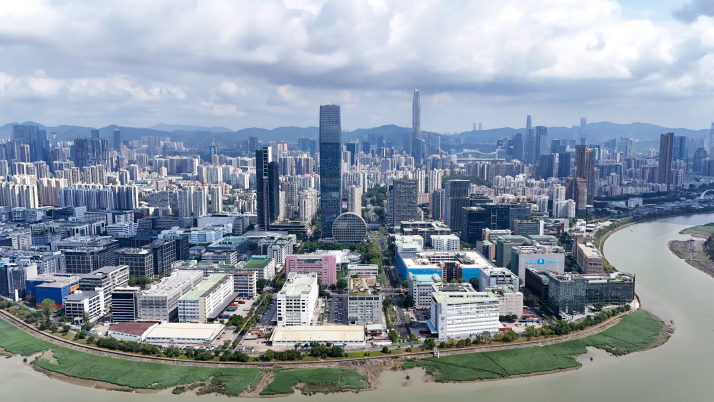 The Hetao Shenzhen-Hong Kong Science and Technology Innovation Cooperation Zone in Shenzhen, Guangdong Province, on December 11, 2025 (XINHUA)
In which areas do you see Hong Kong playing a deeper role or achieving greater integration within the GBA? One such area is AI. For Hong Kong to participate more fully in the coordinated development of the AI industry in the GBA, it should pursue integration in three key areas. The first is integration in scientific research. By leveraging the strong research capabilities of Hong Kong's world top-100 universities, the city should focus on advancing fundamental AI research and serve as a source of original innovation for the GBA. The second is integration in talent. We should promote mutual recognition of AI-related professional qualifications between Hong Kong and Guangdong Province. This would allow skilled professionals to move more freely across the GBA and help build a more integrated talent pool across the region. The third is the integration of industries. The Hetao Cooperation Zone, for instance, can serve as a central platform linking Hong Kong's global network with the mainland's extensive AI application scenarios. Furthermore, Hong Kong's role as a major financial center allows it to provide AI companies in the GBA with a wide range of services and thereby support the development of a complete industrial chain that extends from basic research to AI application. Given your extensive experience in facilitating youth exchange between mainland and Hong Kong, how can Hong Kong youths better integrate into China's overall development and play a more active role in the country's further opening up? My main intention in promoting exchanges between Hong Kong youths and the mainland is to help them gain a deeper understanding of the country's development, so they are no longer mere bystanders. I believe that, for Hong Kong youths to integrate into the overall national development, they need to first take the initiative to go to the mainland and gain firsthand insight into its market opportunities and industrial demands. They should also apply their language skills and international perspective to serve as a bridge between mainland enterprises and global markets. This can include participating in overseas market research or business coordination roles. At the same time, they should align their personal goals with the global ambitions of Chinese enterprises by actively engaging in trade and technological innovation in the GBA. In doing so, Hong Kong youths will not only find broader opportunities for themselves but also become active participants in the country's continuing engagement with the world. BR Copyedited by G.P. Wilson Comments to pengjiawei@cicgamericas.com |
|
||||||||||||||||||||||||||||
|