
|
| China |
| How domestic films are fueling a travel boom in China | |
|
|
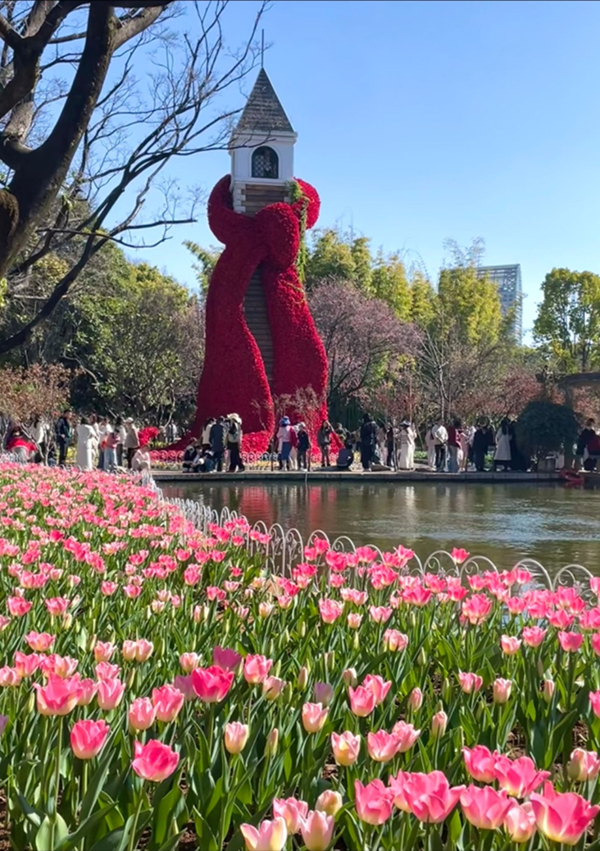 Tourists admire the beauty of Green Lake Park in Kunming, Yunnan Province, on February 8 (SCREENSHOT)
Both ancient myths and local folklore point to Tianjin Municipality, to Beijing's southeast, as the hometown of the mythical boy hero Nezha. Last year, that claim to fame brought tangible benefits to the city. When the animated blockbuster Nezha 2 stormed theaters during the 2025 Spring Festival holiday from January 28 to February 4, sparking an intense interest in the hero's origins, Tianjin Tourism Group moved quickly. It rolled out four Nezha-themed travel routes, weaving together heritage sites, Haihe River bridges, and local culinary spots tied to the film. The result, according to the tourism group, was a nearly 30-percent jump in visitors to the city over the past year. This phenomenon, known as film-induced tourism, turns viewers into active participants in the stories they love. It is not confined to Tianjin. In Yibin, Sichuan Province, the Nezha Temple in Cuiping Mountain Scenic Area saw visitor numbers surge nearly 300 percent in 2025 compared to 2024. In Xixia County, Henan Province, where local lore places Nezha's birthplace at the Chentang Relics Park, tourist traffic also tripled during the Spring Festival holiday of 2025. "Film constructs dreams, while travel fulfills them," Sun Chengjian, Deputy Director of the Film and Television Research Institute at the Chinese National Academy of Arts, told Beijing Review. "When a movie captivates audiences with evocative storytelling and striking visuals, it sparks a deep emotional connection that compels them to step into that dreamlike world themselves, which means visiting the real sites." Beyond the boy hero Nezha isn't the only movie character powering China's film-induced tourism boom. Multiple films screened during the recently concluded 2026 Spring Festival holiday (February 15-23) have driven travel to their respective locations. The drama sequel Pegasus 3 featuring rally driving emerged as a particular standout in driving holiday travel market, following the similar success of the previous movies in this series. The first film of this series, Pegasus, raced into theaters during the 2019 Spring Festival holiday. Its depiction of the dramatic landscapes of Bayanbulak Grassland in Xinjiang Uygur Autonomous Region, where the leading character Zhang Chi's rally car tore through vast, snow-dusted plains, imprinted the remote region on the national imagination. In the years following the film's release, tourism operators in the area reported steady increases in visitors seeking to experience the "Pegasus highway" for themselves. The first sequel, Pegasus 2, arrived in 2024, becoming the runner-up of that year's Spring Festival box office. While the film's narrative focused on Zhang's transition from professional racer to driving instructor, its visual language continued to celebrate west China's rugged beauty. Locations in Gansu Province, particularly the winding mountain roads of Longnan and the desert stretches near Dunhuang, became pilgrimage sites for fans. According to Yang Han, a researcher at the travel platform Qunar, the impact of the third film of this series was notable. "The anticipation for Pegasus 3 was high even before its release, building on the success of its predecessors," Yang told news portal Phoenix New Media. "Many fans began researching and planning trips to filming locations well in advance." Data from Qunar revealed that hotel bookings in Garze, Sichuan Province, a key filming location of the movie, jumped 40 percent year on year before the Spring Festival period. In Delingha, Qinghai Province, another filming location, bookings surged an impressive 71 percent. Fellow travel platform Fliggy reported that searches for "Garze tourism" spiked after the film's release, with actual bookings nearly doubling from the previous week. The martial arts fantasy epic Blades of the Guardians also showcased the appeal of China's western landscapes. Filmed in Karamay's "Devil City" in Xinjiang, the film's depiction of vast desert scenery captivated audiences. Data from Qunar showed that searches for desert tours and desert road trips increased by 60 percent as the film neared its release date, following the 20-percent increase since the official filming started in 2024. Local authorities responded swiftly, introducing ticket-stub discounts for scenic spots and distributing tourism vouchers. Local dialect and heritage are not only a popular addition to the movie but the bedrock of tourism activities. The live-action drama As The Water Flows has brought a different kind of film-induced tourism to Yunnan Province in southwest China. Shot entirely in the provincial capital Kunming and performed in the local dialect, the film showcases the natural beauty and urban charm of the city's iconic Green Lake Park. In addition to areas with splendid scenery and natural appeal, even established urban centers found new life through cinema, adding to the attractiveness of a successful movie. Famous director Zhang Yimou's national security thriller Scare Out, shot almost entirely in Shenzhen, Guangdong Province, transformed the city into a character itself. With approximately 90 percent of filming locations in Shenzhen, landmarks such as the Futian CBD and Gangxia North transport hub became instant tourist attractions. The film partnered with Baidu Maps to develop themed city walk routes, while Shenzhen Bus Group launched dedicated shuttle services connecting multiple filming locations across Futian and Longhua districts. The international dimension The cultural influence of Chinese cinema is increasingly crossing borders. In February, the China Film Administration and China Media Group jointly launched the China Travel with Chinese Fims international promotion campaign. Through the campaign's Thousand Screens Overseas program, promotional videos reached audiences across 28 countries on more than 1,400 public screens, inviting international viewers to experience China's rich cultural heritage through the lens of its films. The impact is already visible. The international rollout of Spring Festival titles was equally impressive. Major releases screened in over 10 major global markets, including North America, Australia, New Zealand, the United Kingdom, as well as China's Hong Kong and Macao special administrative regions. This cinematic reach contributed directly into inbound tourism growth, with the inbound trips during the Spring Festival holiday doubling year on year in 2026. "Chinese cinema is generating an increasingly significant spillover effect—not only driving multiple aspects of social and economic life but also enhancing international communication and telling China's story to the world," Sun said. "When foreign audiences watch these films, they become genuinely curious about the real lives of Chinese people, which in turn inspires them to travel here." Policy support and industry integration The China Travel with Chinese Films initiative, first launched in July 2024, is a systematic effort to integrate cinema with tourism development. Since its inception, the program has expanded to include sub-initiatives such as Follow Films to Taste Cuisine and Follow Films to Appreciate Intangible Cultural Heritage, broadening the scope of film-tourism integration. The results are evident in places like Laoling Film and Television City in Shandong Province, which saw year-on-year increases of 57 percent in visitor numbers and 51 percent in tourism revenue in 2025. Similarly, Xiangshan Film and Television City in Ningbo, Zhejiang Province, recorded a 33-percent increase in tourist visits during the same period. The initiative has also encouraged cross-sector collaboration. National railway and aviation groups have introduced film-themed trains and flights, creating immersive travel experiences. Financial institutions including China Construction Bank and China UnionPay have joined the effort, offering payment incentives to boost consumption. "Film has become a value source and core driving engine within the cultural and entertainment landscape, fostering deep integration with gaming, cross-sector resources, and cultural tourism. This synergy generates even stronger momentum for market growth," Sun said. Copyedited by G.P. Wilson Comments to zhangyage @cicgamericas.com |
|
||||||||||||||||||||||||||||||
|