|
| China |
| The green line | |
|
|
|
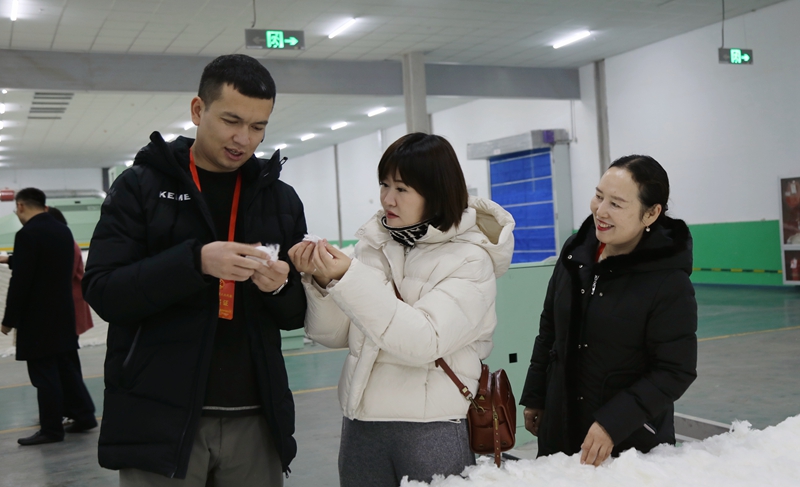
Omarjan Kurban conducts research at a chemical enterprise in Kashi, Xinjiang Uygur Autonomous Region, in December 2025 (COURTESY PHOTO) In early March, as Beijing eased into early spring, Omarjan Kurban stepped once again into the Great Hall of the People for the annual session of the National People’s Congress (NPC), China’s top legislature. This time, he felt a heightened sense of responsibility. Omarjan is an NPC deputy and a senior management professional at the Energy Research Institute of Xinjiang Energy Group. At last year’s NPC session, also held in March, he submitted a suggestion calling for national support to prioritize pilot programs for point-to-point green electricity supply in Xinjiang Uygur Autonomous Region. The suggestion reflected the aspirations of enterprises and industrial parks Omarjan had consulted across the region. Today, his suggestion has been incorporated into national-level policy arrangements, giving him a deeper understanding of what it means to fulfill his duties as an NPC deputy. From paper to practice The story began in the months leading up to the 2025 NPC session. During that period, Omarjan was constantly on the road, traveling across Xinjiang to visit industrial parks and energy companies. In his field research, he encountered a shared concern. “Xinjiang has abundant wind and solar resources. We have no shortage of green power,” Omarjan told Beijing Review. Installed capacity of new energy power generation has reached 167 million kilowatts (kw), accounting for 64 percent of the region’s total installed capacity. “But enterprises encounter difficulty obtaining reliable and cost-effective green power.” What many enterprises hope for most, he said, is dedicated “green power lines,” linking power generators directly with users, cutting intermediate links, lowering costs and ensuring stable supply. Based on his research, Omarjan proposed prioritizing pilot programs in Xinjiang for “point-to-point” green electricity supply, allowing renewable energy power generators to connect directly with load centers nearby. After submission, NPC deputies’ suggestions are reviewed, classified and forwarded to competent departments for handling. Throughout the process, assigned departments maintain communication with deputies through calls, meetings and joint research. According to legal provisions, deputies’ suggestions must be replied to within three months, or no later than six months, from the date of assignment.. Feasible suggestions will be incorporated directly into laws, regulations, or policy documents. In 2025, departments of the State Council, the highest state administrative organ, handled 8,754 suggestions from NPC deputies and 4,868 proposals from members of the National Committee of the Chinese People's Political Consultative Conference, China’s top political advisory body, accounting for more than 95 percent of the total submitted. All were processed on time. More than 4,900 suggestions were adopted, leading to over 2,200 new policy measures, according to a State Council Information Office briefing held on February 27. Omarjan’s suggestion was among them. “Not long after the 2025 session concluded, I received a written reply from the National Energy Administration (NEA),” Omarjan said. “It clearly expressed support for Xinjiang to carry out green power direct connection projects in line with national and local policies, and to encourage local enterprises to consume renewable energy.” In May 2025, the National Development and Reform Commission and the NEA jointly issued a circular on the development of green power direct connection systems, providing a policy framework for implementation. This is one example of how, within a matter of months, a suggestion raised by an NPC deputy can become a national policy. Grassroots concerns were heard and solutions were incorporated into top-level design. Today in Xinjiang, a number of green power direct connection projects are being implemented concurrently. In the Tarim Oilfield area, photovoltaic stations have established dedicated power lines linking petrochemical deep-processing projects. In key development zones such as Zhundong-Xinjiang Economic and Technological Development Zone, similar projects help companies lower energy costs, achieve measurable carbon reductions and meet international green standards for export products. Electricity generated in the Gobi Desert now flows directly into production lines and workshops around the region, strengthening both enterprise competitiveness and local development. “The implementation of this suggestion is not the effort of one person,” Omarjan said. “It is the result of coordination between the government and enterprises.” He said the process affirms a simple truth: When rooted in local realities and aligned with national strategy, good suggestions can become sound policy, and sound policy can deliver real results.
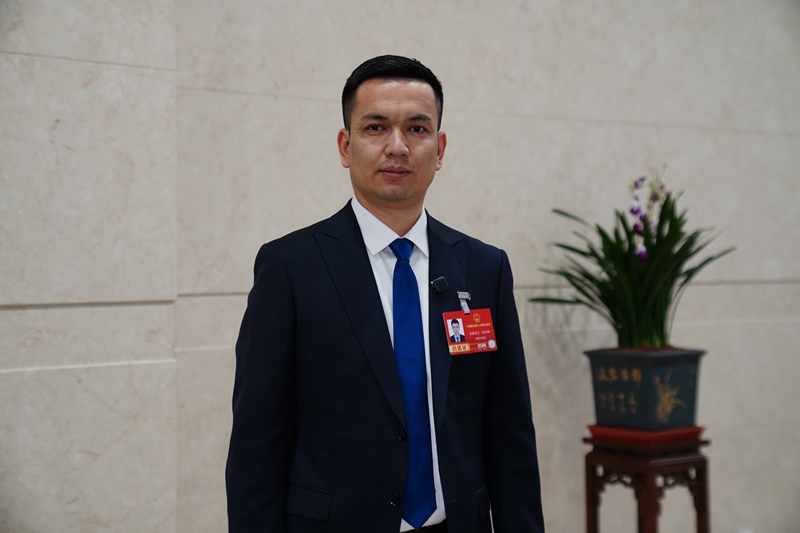
Omarjan Kurban in Beijing on March 4, preparing to attend the annual session of the National People's Congress as a deputy (ZHANG SHASHA) Serving grassroots communities From May 2020 to February 2023, Xinjiang Energy Group assigned Omarjan to a village in the region to assist initiatives promoting ethnic unity, rural development and public services. His contributions earned recognition from both the company and local residents. It was at the First Session of the 14th NPC, in March 2023, that Omarjan began directly participating in the administration of state affairs as a national lawmaker. “Being elected as an NPC deputy is a form of trust given by the people,” Omarjan said. To honor that trust, he added that he is committed to bridging enterprises and villages, actively conveying public opinion and contributing to Xinjiang’s stability and development and the country’s modernization. In carrying out these efforts, he has conducted field research in rural areas, industrial workshops, residential communities, schools and hospitals. In a remote village once marked by poor roads and fading industry, the secretary of the Communist Party of China branch, who had worked there for more than 20 years, led Omarjan across its hills, fields and workshops. “Our land yields abundantly, yet without processing facilities and reliable markets we cannot turn that abundance into prosperity,” he said. Over time, roads were paved, a cooperative was set up, orchards and processing lines took shape and e-commerce livestreaming was introduced. On a later visit, Omarjan saw some young people returning, workshops running and basic elderly and childcare services in place. “Grassroots initiatives bring gradual progress, but we can’t stand still,” the secretary said. That experience inspired Omarjan’s suggestions on supporting rural industries, encouraging entrepreneurship and improving equal access to public services.
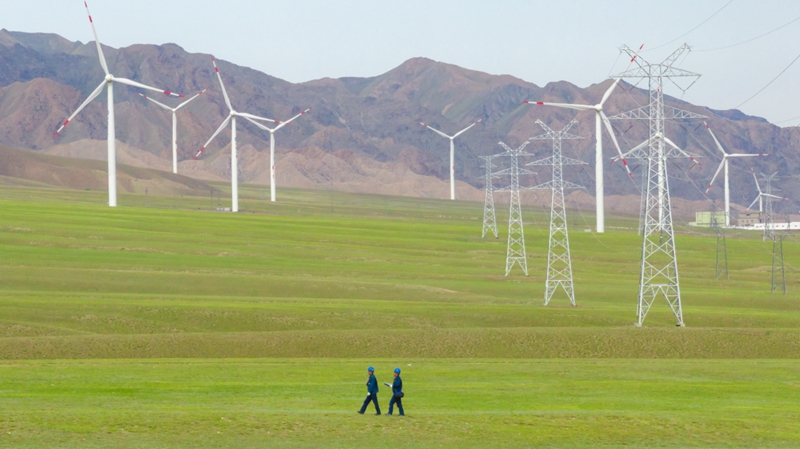
Workers inspect power lines in Bortala Mongolian Autonomous Prefecture, Xinjiang Uygur Autonomous Region, on July 17, 2025 (XINHUA) Green energy for the nation Omarjan said he will continue to focus on how to convert Xinjiang’s resource advantages into strong drivers for the country’s high-quality development. During recent field visits, Omarjan found that while Xinjiang has become a major cross-region electricity transmission base, three deep-seated challenges remain: existing channels are fully occupied by early-stage renewable energy projects, leaving no room for new projects; technical restrictions remain as the tightly coupled model in which coal-fired power underpins renewable generation limits the possibility of transmitting green electricity at scale; and during peak periods of wind and solar generation, generated electricity cannot be fully delivered to the grid or end users, leading to curtailment and a decline in overall utilization efficiency. He suggested that at the national level, the electricity transmission channels supported by three major clean energy bases in Xinjiang—Ruoqiang West in the Taklimakan Desert, Shanshan in the Kumtag Desert and Ruoqiang East in the Taklimakan Desert—should be incorporated into the country’s 15th Five-Year Plan (2026-30) for power development, so that Xinjiang can better serve the national balance of electricity supply and demand and strengthen overall energy security. Environmental legislation is another focus for Omarjan. He said the draft environmental code, which will be reviewed at this year’s NPC session, is a milestone in China’s environmental rule of law. By applying the strictest standards and the most rigorous legal framework to coordinate carbon reduction, pollution control, ecological restoration and economic growth, it places ecological progress firmly on a law-based track and provides unified, binding institutional safeguards for high-quality development and high-level environmental protection. Omarjan said the code supports coal-to-oil and coal-to-gas projects, Xinjiang’s outbound electricity transmission and renewable energy development. He said he believes advances in these fields will bring opportunities for Xinjiang’s green transition. Omarjan envisions three roles for Xinjiang during the 15th Five-Year Plan period: as a national strategic hub for renewable energy, expanding outbound green power transmission; as a role model for clean transformation, building a new system combining renewable energy, dispatchable coal-fired power and energy storage; and as an ecological security barrier for northwest China, using energy development to promote desert control and greening, achieving both growth and protection. Copyedited by G.P. Wilson Comments to zhangshsh@cicgamericas.com |
|
||||||||||||||||||||||||||||
|