
|
| China |
| Unmanned and unregulated: Who's to blame for driverless damage? | |
|
|
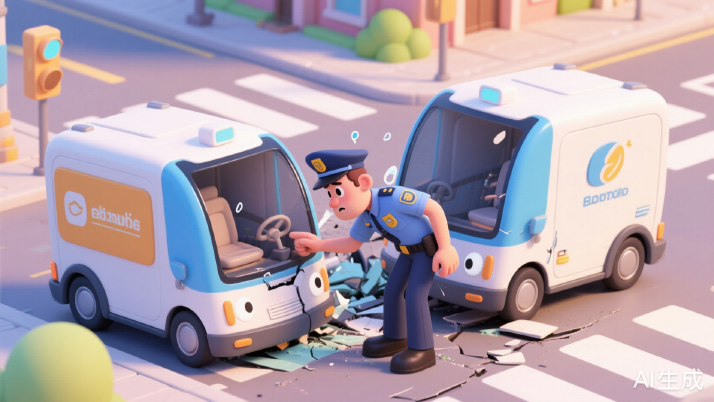 AI
A growing number of Chinese firms have begun to adopt driverless delivery vehicles in autonomous driving demonstration areas in big cities like Beijing, Shanghai and Shenzhen to enhance logistics efficiency, reduce logistics costs and improve user experience. Violations by these vehicles, including obstructing traffic, running red lights and failing to yield in time. They are raising widespread public concerns about road safety and about who is responsible in the case of an accident. The lack of clear legal guidelines is leading to disputes, wrangling and buck-passing when it comes to determining liability and compensation, making the protection of victims' rights elusive. Ding Jiafa (Rednet.com): There are currently no unified national rules or standards for unmanned delivery vehicles; they have not been clearly defined as either motor vehicles or non-motor vehicles, which means the Law on Road Traffic Safety does not necessarily apply. In practice, liability is often placed on the unmanned vehicle's manager or owner. However, the cause of an accident may involve various factors like design flaws in the vehicle or hacker attacks, potentially implicating multiple parties, including algorithm providers and technical personnel, as responsible parties. In legal cases that have already been heard in several cities, the operator of the unmanned delivery vehicle, such as a courier company, food-delivery platform or logistics company, has usually been designated as the vehicle's owner or manager and has been required to shoulder the major responsibility for the accident. When an accident has occurred, victims have usually first claimed compensation from the operating company, which then seeks recourse from other responsible parties based on the cause of the accident. However, it's unfair to always turn to driverless vehicles for damages. If an accident is indeed caused by pedestrians jaywalking, or other vehicles illegally changing lanes or failing to maintain a safe following distance, the pedestrians or drivers of the other vehicles must bear corresponding liability according to their respective degrees of fault. Mu Xuchong (Yangcheng Evening News): The current traffic regulatory system is still predicated on human drivers as the presumed agents, making the behavior of driverless delivery vehicles difficult to govern under traditional legal frameworks. To break the impasse, it's necessary not only to fill the legal gaps but also to build up a new governance framework adapted to intelligent transportation. First, legislation should be accelerated to clarify related standards, conditions of road use and regulatory authorities responsible. Second, it's important to reasonably determine the degree of fault of manufacturers, operators, insurers and other relevant parties in an accident based on whether it's due to design flaws, system failures or operational misconduct. Meanwhile, all unmanned vehicles should be equipped with a "black box" data recording system to provide a basis for accident investigation and traceability. Additionally, it is essential to encourage local pilot projects to develop replicable institutional models. For example, Shenzhen has introduced management regulations for intelligent vehicles, accumulating experience for national legislation. Unmanned delivery vehicles should not be "vehicles beyond the law." Technological progress should not come at the expense of safety and fairness for overall road traffic. BR Copyedited by G.P. Wilson Comments to yanwei@cicgamericas.com |
|
||||||||||||||||||||||||||||
|