
|
| Business |
| The world needs a new analytical framework to understand China's economy | |
|
|
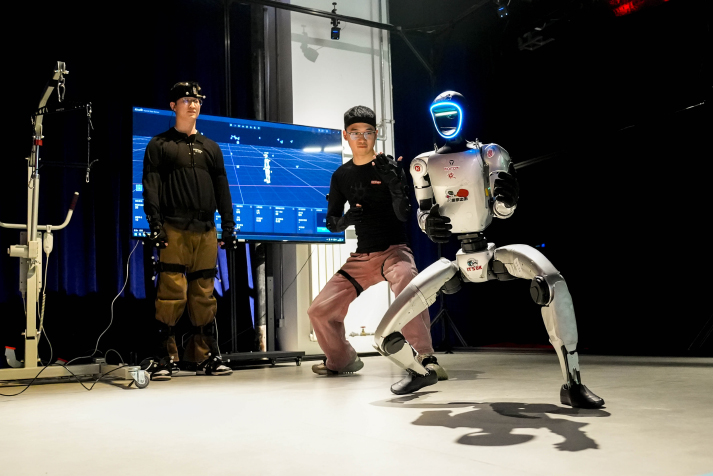 A humanoid robot controlled via motion capture technology on display at the Beijing International Sci-Fi and Future Industry Expo on March 26 (XINHHUA)
At a time when the global economic landscape is undergoing profound transformation, a striking reality is becoming increasingly clear: The world's understanding of China's economy is lagging behind the pace of change within China itself. At the Boao Forum for Asia Annual Conference 2026, held in the resort town of Boao in Hainan Province on March 24-27, former Chief Economist of the World Trade Organization Robert Koopman told Beijing Review that many foreign observers do not truly grasp just how broad and intense competition within the Chinese economy really is. This misunderstanding is far from an isolated case. From the relationship between government and market to China's development strategy and its role in the global economy, the reality is far more complex and dynamic than prevailing narratives in the West suggest. Observations shared by international participants at the conference point to a common conclusion: It is time to renew the world's perspective on China's economy. Government and market Some observers often equate the role of the Chinese Central Government with "planned economy," overlooking its distinctive and pivotal function within a market economy. Michele Geraci, former Undersecretary of State at the Italian Ministry of Economic Development and an adjunct professor of Finance at New York University, Shanghai, said China's strength lies precisely in the government's ability to drive development through forward-looking policies such as its five-year plans. These plans are a series of national development frameworks established in 1953 that set medium-term priorities for national economic and industrial strategies. This is the first year of the 15th Five-Year Plan (2026-30) period. Through policy and financing mechanisms, the government sets direction for the market, shaping incentives without directly commanding every enterprise. "This is the essence of the Chinese model," Geraci added. It helps explain how China consistently achieves ambitious goals, including stable economic growth, he said. Justin Yifu Lin, former Chief Economist of the World Bank and Dean of the Institute of New Structural Economics at Peking University, said he believes economic development is a continuous cycle of technological innovation and industrial upgrading. He told Beijing Review that this process requires the sound interplay between an efficient market and a well-functioning government. The government supports startups in emerging industries with necessary incentives and helps address infrastructure bottlenecks. Once the industries gain competitive advantage, the government steps back, allowing market forces to drive the survival of the fittest and steady productivity gains. Closed or open? According to Geraci, some of the Western interpretations of China's latest five-year planning framework are also misleading. "China does not want to become an isolated country," he emphasized. Whereas China does seek greater self-reliance in key sectors such as energy, education and healthcare, this is not about decoupling. Rather, it signals new areas of opportunity for foreign investors. He often advises people to read China's annual government work report outlining the country's development priorities for the year ahead and beyond to understand which industries are being prioritized. "We need to properly understand the concepts embedded in these plans, rather than misread them," he said. "China will continue to open up, balancing domestic and international markets while boosting domestic consumption." Former Italian Prime Minister and former European Commissioner for the Economy Paolo Gentiloni pointed out that while much attention is paid to the spillover effects of U.S. national security policies, people often overlook that China has integrated national security into its economic development strategy. This is deeply embedded in its five-year plans and has major implications for companies entering the Chinese market. Zheng Yongnian, Dean of School of Public Policy at The Chinese University of Hong Kong, Shenzhen, and Board Director of the Guangzhou Institute of the Greater Bay Area, stressed that China's five-year plan approach matters not only for China but for the world. "Such a planning mechanism is rare globally," Zheng said. "In an era of geopolitical uncertainty, it provides a form of institutional predictability." He said China has clearly defined its development goals and is moving decisively to implement them. One key target is to elevate its per-capita GDP to the level of moderately developed countries by 2035, which requires annual growth of around 4.5 to 5 percent. This implies that China will continue to contribute roughly 30 percent of global economic growth over the next five to 10 years. He described a defining feature of Chinese modernization as "open-source modernization." China has long recognized that development cannot be considered balanced or sufficient if prosperity benefits only a portion of the population while others are left behind. As a result, common prosperity is central to its modernization drive. 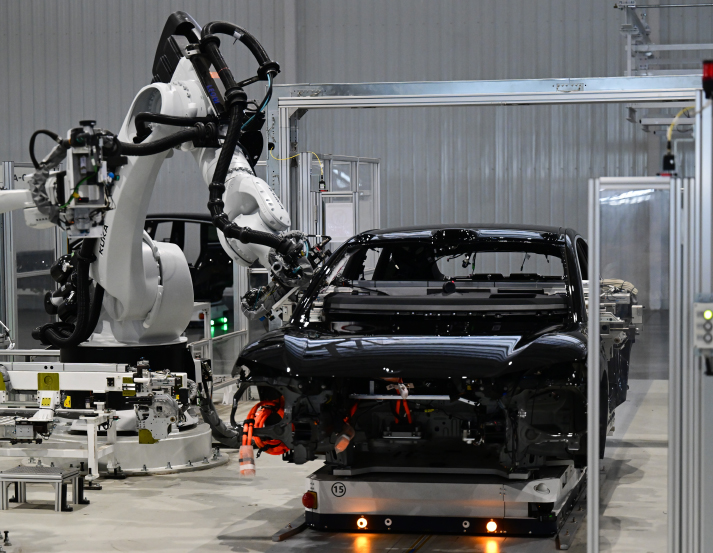 A production line at electric vehicle manufacturer NIO’s factory in Hefei, Anhui Province, on July 1, 2025 (XINHUA)
Competition and cooperation Bernardo Mendia, Secretary General of the Portugal-China Chamber of Commerce and Industry, said there's a lot of work that needs to be done to explain what's actually going on in China. "Most of the world remains unaware of it. Only expats in China would be sensitive to all this development," Mendia told Beijing Review. Peter Burnett, CEO of the China-Britain Business Council, said some still view China as it was 15 or 20 years ago, a country competing primarily on cost and serving as a manufacturing base. In reality, China has long since moved beyond that stage and is now a center of innovation and research and development. This is something the business community needs to recognize, according to Burnett. Birgit Murr, Consul (Commercial Affairs) and head of the Austrian Consulate General in Guangzhou, illustrated this transformation through her 35 years of experience. In the early 1990s, she sourced raw materials from China and exported entire steel plants and wastewater treatment facilities to the country. Today, she said, the situation has reversed: She imports consumer goods, machinery and advanced equipment from China. Jiang Xiaojuan, former Deputy Secretary General of the State Council, China's highest state administrative organ, and Director of National Data Expert Advisory Committee, said in the coming years, the relationship between China and developed economies "will shift from complementary specialization of labor to more horizontal competition." They will be competing at similar levels of technology and product quality, though the transition is set to remain uneven across sectors. Geraci said Europe's concerns about competition from China stem from the pressure Chinese success places on manufacturing in countries like Italy and Germany. However, cooperation remains a viable path. China and Europe could collaborate in over 150 third-party markets. In green energy, for example, Europe faces land constraints, while North Africa has strong geographic potential. Joint development of solar energy there could supply electricity to Europe, creating a win-win outcome. Wu Chun, Managing Partner of Greater China at Boston Consulting Group, said while foreign-funded companies have continued to perform well in China, their positioning has evolved. Initially, the focus was on selling products and entering a vast market. As Chinese industries expanded, foreign-funded companies began to recognize China's supply chain advantages and sought to integrate more deeply into its market, leveraging local talent for efficiency. In sectors such as solar panels and biopharmaceuticals, China is not only a major market and manufacturing base but also a source of innovation. Many leading multinationals are exploring how to align with China's pace of innovation and better leverage its innovation ecosystem, Wu said. Burnett suggested that some who have never visited China may worry about cultural differences and uncertainties. His advice is simple: Embrace them. "Don't hold back or hesitate. Come and experience China firsthand. Understand what it offers, and then assess whether your products have a place in this market. If they do, the opportunities are vast," Burnett said. (Lu Yan contributed to this report) (Print Edition: A New Read) Copyedited by Elsbeth van Paridon Comments to zhangshsh@cicgamericas.com |
|
||||||||||||||||||||||||||||||
|